BOAT wrote:Yeah, what Bob said is true - wire too big makes for resistance and also will slow down the speed of breakers and fuses.
Very interesting and informative post BOAT.
I'm confused how thicker (larger) wire makes for resistance. I've always gone with the assumption that bigger is better with wire. That SMALLER wire creates resistance and therefore voltage drops.
Next to the starter motor (which is wired direct to the starter battery) my fridge/cooler is the biggest consumer of power. It's also furthest away from batteries and sometimes struggles to start. Probably because of the voltage drop from undersized wiring.
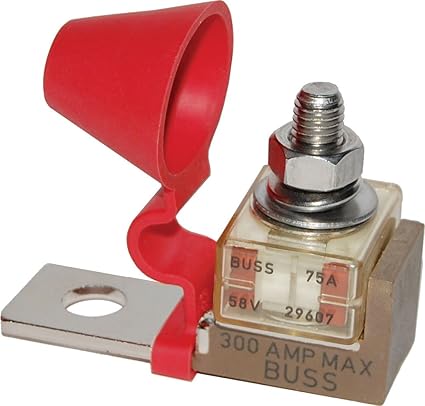
I'm rethinking some wiring. Factory wiring is adequate for the few stock lights. But not sufficient for much else. I replaced the panel source power wiring with what I thought was heavy wire. Now I'm questioning that. The panel power source wire is fused close to the battery with an in-line fuse. I don't like this in-line fuse and thought the terminal fuse would be cleaner and safer.
So.... this thread has made me think it's time to redo a lot of stuff. I
The stock panel location (in retrospect) is a stupid location. To get power to it requires long lengths of wire. Power from it (to my cooler) requires long runs as well.
For low power stuff like LED cabin lights and mast lights, small wire is probably fine. It's the heavy amp stuff that becomes problematic.
I finally cracked open Nigel Calder's book to learn more. His chapter on batteries and charging is fascinating. His "tank" analogy makes this so much easier to understand. My boat is totally off grid, so all charging comes from the outboard and solar. It's given me some food for thought, however, I don't see our outboards giving us many charging options.
--Russ