

Docking line questions
-
trswem
- Chief Steward
- Posts: 61
- Joined: Wed Jul 05, 2023 1:02 pm
- Sailboat: MacGregor 26D
- Location: Spokane, WA
Docking line questions
Hello all. I use permanent docking lines at my slip and then carry transient lines in my lazarette. It's time to replace the permanent lines. I currently use a stern line and a bow line, and then two spring lines. The cleats at my slip are perfectly positioned right off the stern, right off the bow, and one dead center. My two springs lines go from the center dock cleat to my stern cleat and bow cleat. Are there any issues with me combining the spring lines and bow/stern lines? I'm thinking I could run a line from the bow dock cleat, to the bow cleat, tie a hitch, then run to the center dock cleat and hitch. Then a second line would repeat the process from the stern, running from the stern dock cleat, to my stern cleat, tie a hitch, then run to the same center dock cleat the bow line ran from. Is this problematic? It would save two lines on the dock and look a bit neater, in addition to saving me a few bucks.
-
OverEasy
- Admiral
- Posts: 2873
- Joined: Mon Sep 28, 2020 11:16 am
- Sailboat: MacGregor 26X
- Location: NH & SC
Re: Docking line questions
Hi Trswem!
This is just my perspective….
Using a single line to accomplish both a fwd-tie-and-spring-line OR an aft-tie-and-spring-line could be problematic.
If either portion of the line (tie or spring) were to break there is a strong possibility that the remaining length would also loosen and effectively fail to constrain the vessel. (Note: Line typically fail at bends, knots and chafe locations…not mid sections)
The solution is to have an appropriate line/cleat securement at the line mid connection point that will not be compromised (undo itself) should one leg or the other fail at the securement. (Yeah I know it sounds like word salad …)
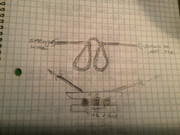
When I’ve had to deliberately use a single line in such a manner I have generally tied two figure-8-knot loops at the mid point with a short ‘dead’ length between them. I then insert each loops through the center of the mid connection point cleat and lead the free-ends to their respective destinations. That way should either of the mid connection loops fail it does not impact the holding integrity of the other half. The short ‘dead’ length isn’t under strain and each of the figure-8-knot loops are not compromised should the other fail.
I’ll try and draw a picture and attach it….
Best Regards,
Over Easy


This is just my perspective….
Using a single line to accomplish both a fwd-tie-and-spring-line OR an aft-tie-and-spring-line could be problematic.
If either portion of the line (tie or spring) were to break there is a strong possibility that the remaining length would also loosen and effectively fail to constrain the vessel. (Note: Line typically fail at bends, knots and chafe locations…not mid sections)
The solution is to have an appropriate line/cleat securement at the line mid connection point that will not be compromised (undo itself) should one leg or the other fail at the securement. (Yeah I know it sounds like word salad …)
When I’ve had to deliberately use a single line in such a manner I have generally tied two figure-8-knot loops at the mid point with a short ‘dead’ length between them. I then insert each loops through the center of the mid connection point cleat and lead the free-ends to their respective destinations. That way should either of the mid connection loops fail it does not impact the holding integrity of the other half. The short ‘dead’ length isn’t under strain and each of the figure-8-knot loops are not compromised should the other fail.
I’ll try and draw a picture and attach it….
Best Regards,
Over Easy


