NiceAft wrote: ↑Sun Jul 14, 2024 7:59 am
Thanks for the detailed info Jeff.
Third time: how warm does it get in the cabin during those cool nights? Inquiring minds want to know.

Ray,
Depends on the thermostat setting. Most of those units will have enough capacity to easily heat a Mac to comfortable temps.
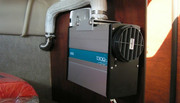
The Wallas, and the Chinese diesel heaters have a combustion air intake pipe and an exhaust pipe. The flame is fully enclosed in a sealed combustion chamber/heat exchanger so that combustion products don’t wind up in the occupied space served by the heater. Then cabin air is drawn (or blown) across the heat exchanger to warm the air; in-turn warming the cabin. Basically, air blowing across a can with a fire sealed inside.
Since cabin air is recirculated while being warmed, you’ll want to make sure there are some small openings for ventilation air (my washboard/companionway hatch has a gap you could sling a cat through).
Also, the heater doesn’t remove moisture from the air. Heating the air INCREASES the amount of moisture that the air can absorb (lowers the relative humidity). Heating the air and warming the interior surfaces, to get them above the dew point of the interior air, will prevent condensation - by allowing the moisture in the air to stay in the air. But, make no mistake, any moisture that’s actually leaving is going out due to ventilation - not heating.
As humans, we off-gas water vapor constantly. So, if you have the cabin sealed leak-tight, the water vapor will accumulate until you have saturated air (or until you suffocate - whichever comes first). Also, cooking, bathing, dishwashing, etc, release water vapor into the occupied space. So, even if your cabin was dry while you were sailing, when you hunker down for the night in cold weather, you’re likely to see a lot of condensation after awhile as you trap the vapors and build moisture content in the space.
In winter, the moisture content of the outside air is virtually always lower than the moisture content of the indoor air. So, some ventilation will limit moisture content of the occupied space (as well as keeping the occupants alive).
Unfortunately, some climates (and waters) are so cold that, condensation on an uninsulated boat like our Macs is unavoidable - while maintaining an indoor humidity that I can find comfortable. You folks in cold, and/or dry country can probably stand 10-15% RH. My gills dry out, and I turn into a cracking bleeding pile of skin flakes. All that to say, finding comfort and keeping the boat bone-dry in winter can be a challenge.
The small portable propane and butane heaters use space air for combustion and release combustion products to the space. Ideally, these are CO2 and H2O. So, if you use one of these in your cabin, you’ll want to make sure you have adequate ventilation. You will be adding a good bit of moisture WHILE heating. This is one big difference between the Wallas and other heaters that use sealed combustion and heat exchangers.
Probably missed your question, but thought I’d take a shot.
Jim