DaveC426913 wrote: ↑Mon Oct 14, 2024 3:32 pm
This came up in another thread.
I thought it wasn't unreasonable to be doing 3 knots in a 4 knot wind.
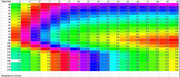
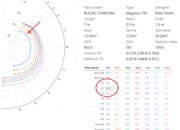
This diagram - which admittedly is not for Macs - nonetheless seems to suggest one can easily have a greater boat speed than the wind speed.

In a 3 knot wind, on any pont of sale from close reach to broad reach, this boat is doing between 3 and 5 knots.
In a 6 knot wind this boat can apparently hit 8 1/2 knots.
(Out of morbid curiosity, I checked what size boat this would need to be, based on hull speed calculation. For a max boat speed of 20kts, it would have to be 230ft long!)
Has anyone done one of these for our boats?
It's not unreasonable to go 3 knots in a 4 knot wind. It all depends on the boat. A MacGregor can't do it though.
It is also not impossible for a boat to go faster than the wind. My racing catamaran could do it on certain points of sail. A MacGregor can't do it though.
The polar you posted appears to be for a Volvo Ocean 60. That's a 64 foot boat with an 85' mast. There were only 32 of them built (1993-2002) and a used one will set you back between $250,000 and $500,000 (or more). They were built for round-the-world racing and 28 actually competed. Under the right conditions it could hit 30 knots.
In its day, that boat was the sailing equivalent of an F1 race car. We would be a VW bus.
Good polars are hard to make and tend to be more "ideal" than "reality" in a lot of cases. Polars supplied by the manufacturer are almost invariably optimistic (if not outright fantasy). I've been working for several years to refine the polars for my boat. I've found them to be useful when planning long trips; less useful for short ones.
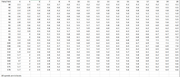
These work for my boat. If you have an X with a hank-on jib, stock main, keep your heel no more than 15 degrees (and reef accordingly), cruise heavily loaded and single-handed then your numbers might possibly be similar.





 )
)