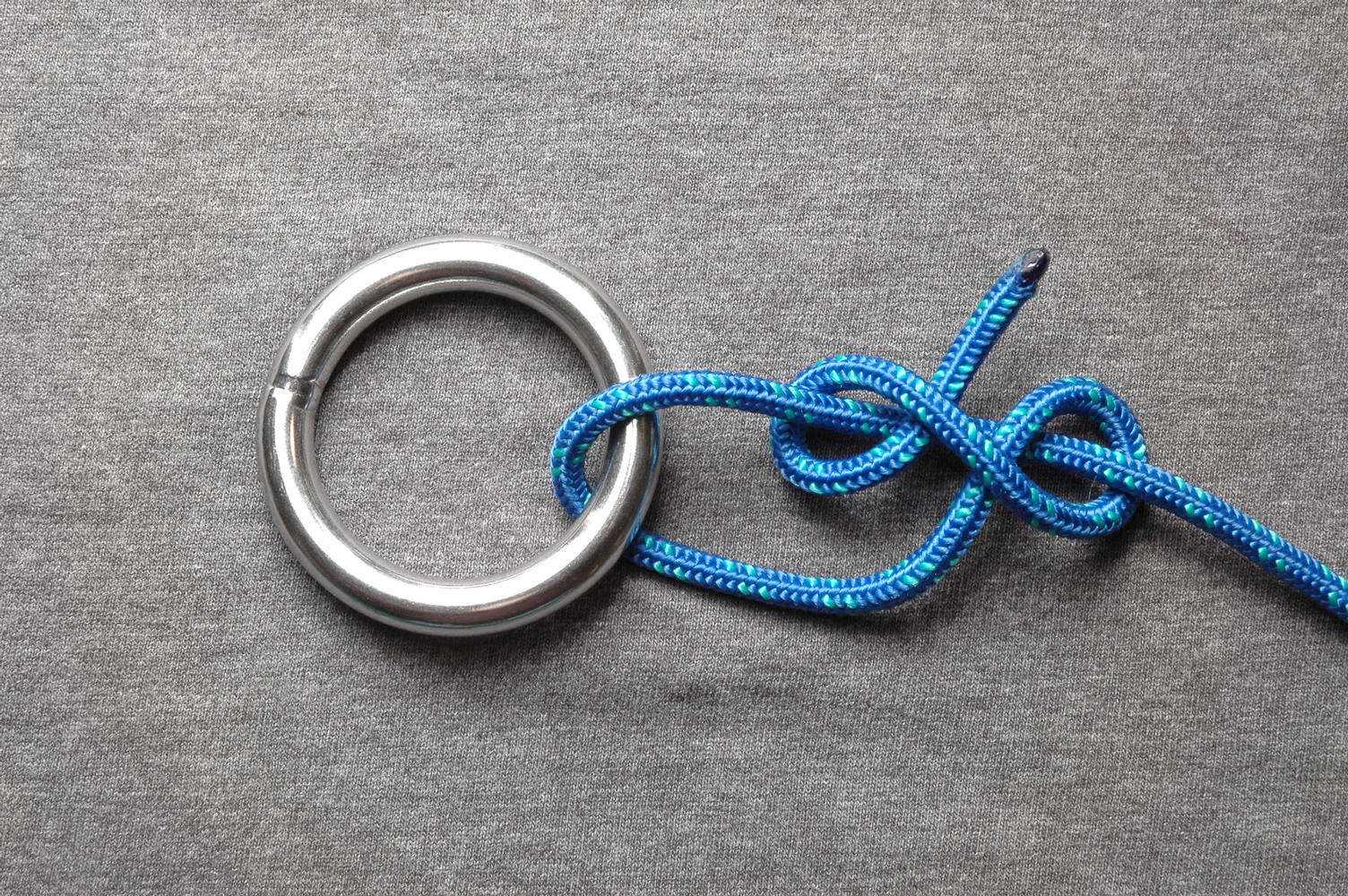
Got new lines for everything, color coded to help teach the kids. The main halyard will be led aft in a loop the returns as a downhaul. Among other lines I'm also setting up a tack line for the spinnaker. I wanted to splice the up side of the halyard, the end of the tack line, and the spinnaker halyard.
I've followed the internet instructions best I can on this 5/16" double braid line but when I get to the first point of insertingn the core into the cover where there already is a core it doesn't fit. I've been careful not to snag the existing core with the fid and i can barely get the fid through but the core comes off the end no-matter what type of tape I use to hold it (masking, duct). Is there something that can lubricate this without damaging the line? Something I'm doing wrong? Or should I just use a bowline knot?
BTW Genco has this stuff line very cheap compared to others everyday prices.
Thanks for the help.
Tom
New lines aft / splicing woes
-
Frank C
I've done a couple of eyesplices into 1/4" Staset double braid (by NER). IIRC, the fid was a tight fit, not impossible. Is your fid the proper size? Try experimenting with a different brand of double braid, or maybe with the next smaller size of fid.
I bought Brion Toss's superDooper fid, at about 50 bucks. It's expensive, but a very worthwhile design, so I figure he's earned it for the patent. His fid is extremely long, but very small diameter due to the design. It's especially easy if you get his package deal, includes his splicing video for about $80. Since then I've done a dozen eyesplices, mainly in single braid. I've replaced my cockpit lifelines, also my baby stays, using eyespliced 3/8" single braid. I gotta get busy & find those pix!
Extra set of 3 tapes available ... Brion Toss videos.
I bought Brion Toss's superDooper fid, at about 50 bucks. It's expensive, but a very worthwhile design, so I figure he's earned it for the patent. His fid is extremely long, but very small diameter due to the design. It's especially easy if you get his package deal, includes his splicing video for about $80. Since then I've done a dozen eyesplices, mainly in single braid. I've replaced my cockpit lifelines, also my baby stays, using eyespliced 3/8" single braid. I gotta get busy & find those pix!
Extra set of 3 tapes available ... Brion Toss videos.
-
kziadie

- First Officer
- Posts: 242
- Joined: Thu Apr 26, 2007 5:17 pm
- Location: "Sundancer" 2006 26M Honda 50 MACM1338C606..... BAZS-3601239..... Central Chesapeake Bay
I have to concur with Frank's assessment of the Toss splicing wand... you use the same splicing procedure but it is much easier to use than the classic fids/pusher. Regardless of what tool you use, a tip that could help your specific problem is to pull out some more of the core from the standing part of the rope while holding the cover. This introduces more slack into the cover because it bunches up and helps to get the fid through.
Kelly
Kelly
the FID I have is about 6inches long made of Aluminum has a female threaded tail end, and was sold as being for the 5/16" line. I try to insert the core into the threaded end but end up taping it, is there a secret to getting it into the threads?
Also thought about using a water based lubricant (yep, you know what I'm talking about) to ease it through; wondering if this would damage the rope?
Also, what about the bowline idea? Anybody else use a bowline instead of a splice?
I'll look into the FID and video you mentioned.
Thanks for the help
Tom
Also thought about using a water based lubricant (yep, you know what I'm talking about) to ease it through; wondering if this would damage the rope?
Also, what about the bowline idea? Anybody else use a bowline instead of a splice?
I'll look into the FID and video you mentioned.
Thanks for the help
Tom
Just did what I should have done in the first place; I read Roger's manual.  The manual for the 26X (linked on the left bar) shows bowline knots used on the halyards.
I'll still mess with the splicing on junk rope just for the challenge of it but for now the ropes will just be tied.
Thanks again.
Tom
The manual for the 26X (linked on the left bar) shows bowline knots used on the halyards. I'll still mess with the splicing on junk rope just for the challenge of it but for now the ropes will just be tied.
Thanks again.
Tom
-
kziadie
- First Officer
- Posts: 242
- Joined: Thu Apr 26, 2007 5:17 pm
- Location: "Sundancer" 2006 26M Honda 50 MACM1338C606..... BAZS-3601239..... Central Chesapeake Bay
Bowlines work, many people use them and that indeed is what Roger calls for. That however does not mean that they are superior to splices. You lose 40% of the rated strength of the rope with a bowline as opposed to 5% with a properly done eyesplice. It is a good idea to practice your splicing so that your next set of lines can be spliced, but I would forget about using used line for your practice. It is much harder to splice and many professionals refuse to touch a used line. The reason is that the cover and core stretch at different rates and so are no longer "in sync" with each other. There are some tricks which you can use to splice used line, but for a beginner just trying to get comfortable with the basics it is better to stick to new rope. If you really want to learn, invest in one of the Mcgrew or Toss videos and 50 ft. of new cheap double braid nylon. After you have practiced for a while you can decide whether you want to invest in a gadget like the splicing wand.
Kelly
Kelly
-
Frank C
Actually Tom, the bowline isn't a great choice for the halyard, for 3 reasons.AmyTom wrote:Just did what I should have done in the first place; I read Roger's manual.
- 1. A bowline's great advantage is that it never jams, but its downside is sometimes working free (halyard are the last places you want that!);
2. The bowline is a rather bulky knot;
3. As Kelly noted, it costs about 40% of a line's working strength.
Use the one at left for haylards (link), slipped version for Fenders, etc.
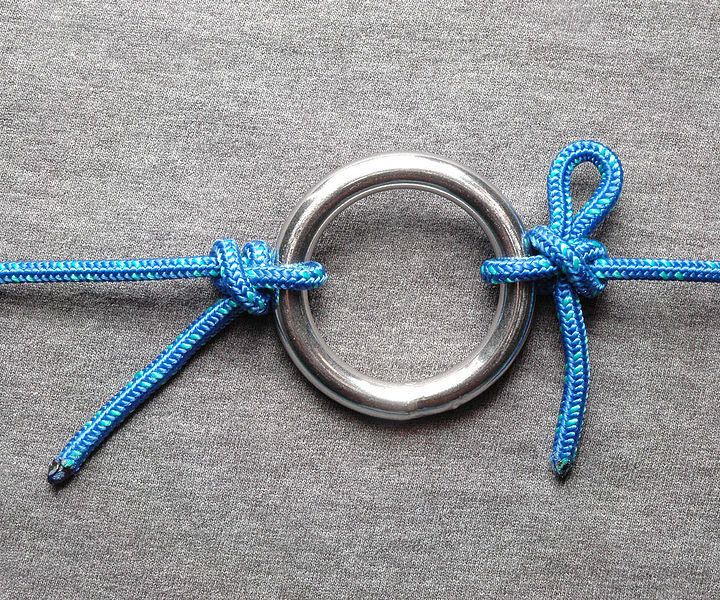
Kelly, I found that I hated dealing with loose wires, such as babystays and cockpit lifelines. Though costly, the newest high-tech lines are stronger than wire, yet flexible when slack . . . much easier to handle and easier on the back, too. Eyesplices at both ends permitted shackles to attach to the stanchion and pelican hook. I'll post them as a Mod when I find the pictures.