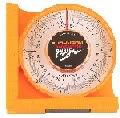
mast angle more than 94 deg

A forum for discussion of how to rig and tune your boat or kicker to achieve the best sailing performance.
User avatar
Scott
Admiral
Posts: 1654
Joined: Tue May 18, 2004 12:46 pm
Sailboat: Venture 25
Location: 1978 Catalina 22 with all the Racing Goodies!! 4 horse fire breathing monster on the transom

Re: mast angle more than 94 deg

Post by Scott »

Mac.X should have a 1.5-2 degree aft rake with a slight bend aft at top of Mast.
I played around for years with mine and wound up settling on 2 deg based on common loading in the water. By that I mean measure it wet. On he trailer gives a not so good result.
Image
User avatar
Terry
Admiral
Posts: 1487
Joined: Thu Feb 19, 2004 2:35 pm
Sailboat: MacGregor 26M
Location: Vancouver, B.C. Canada. '03 26M - New Yamaha 70

Re: mast angle more than 94 deg

Post by Terry »

raycarlson wrote:94 degrees to what ???? boat on or off trailer or floating in water???? my M floats nose down when viewing water line stripe so thats not accurate. 94 degrees + or - 4 is prettty hard to keep in tolerance with out some expensive jigging of boat
Well, I don't know how it can be done on water because when you and your passengers are sitting in the cockpit the boat is aft heavy. If you are alone and walk up to the mast to take a measurement your weight will move forward and change the angle and then the angle will change again when you go back to the cockpit and then change again when you take on a crew. The angle will always fluctuate while floating on the water, there is no consistency.
What I did was set the angle while on the hard, in the driveway. I set the trailer and bootstripe level using the nosewheel jack then set the boat level abeam by putting a board under one wheel. I used a four foot level to make sure the boat was level the went about setting the mast while the boat was static, and used the blue stripe waterline as my actual waterline. There does not seem to be any other way because once in the water the waterline is in constant fluctuation. I did at one time have some onlookers tell me where the bootstripe was relative to the water while my wife & I were sitting in the cockpit at the dock (us=main crew) and we were told the boat and bootstripe was pretty much level to the water so my land based setting is fairly accurate. :wink:
User avatar
DaveB
Admiral
Posts: 2543
Joined: Mon Jan 07, 2008 2:34 pm
Sailboat: MacGregor 26X
Location: Cape Coral, Florida,1997 Mac. X, 2013 Merc.50hp Big Foot, sold 9/10/15

Re: mast angle more than 94 deg

Post by DaveB »

Terry,
Thats the way I measure mine except I use a Transit but a 4-6ft level works good to. I also level the Mast without the backstay attached and use a 6 ft. level. The bottom of the level is against the mast and I want between a 3/8-1/2 inch air gap at the top of the level to get the 1.5-2 degree aft rake.This will equal to a 2-2-1/2 half inch rake aft.
These are approx.figures but gives others a guide line How To. The top of the Mast will actually curve more because you want a slight bend at the top. Those who use drop lines won't get close enough measurements.
I use a 1 ft. level for beam at the companion way cockpit floor.
My boat sits 2-3 inches down at the Bow with no one in the cockpit and when two of us are in cockpit (410 lbs ) the boat is sitting very close to the boot stripe being same distance fore and aft.
The main thing is to beat to windward in 12-15 knots and see how much weather helm you have, there should be a natural round up to windward when gusts hit but not a noticeable preassure on wheel sailing with correct trimed sails.
Just one thing more, when I replaced my upper Stays I found them to have a diffrence in length by 3/8 of a inch. No wonder I sailed better on one tack better than the other. It now sails even on both tacks.
Dave

Well, I don't know how it can be done on water because when you and your passengers are sitting in the cockpit the boat is aft heavy. If you are alone and walk up to the mast to take a measurement your weight will move forward and change the angle and then the angle will change again when you go back to the cockpit and then change again when you take on a crew. The angle will always fluctuate while floating on the water, there is no consistency.
What I did was set the angle while on the hard, in the driveway. I set the trailer and bootstripe level using the nosewheel jack then set the boat level abeam by putting a board under one wheel. I used a four foot level to make sure the boat was level the went about setting the mast while the boat was static, and used the blue stripe waterline as my actual waterline. There does not seem to be any other way because once in the water the waterline is in constant fluctuation. I did at one time have some onlookers tell me where the bootstripe was relative to the water while my wife & I were sitting in the cockpit at the dock (us=main crew) and we were told the boat and bootstripe was pretty much level to the water so my land based setting is fairly accurate. :wink:[/quote]
User avatar
bscott
Admiral
Posts: 1143
Joined: Mon Mar 08, 2004 2:45 pm
Sailboat: MacGregor 26X
Location: Arvada, Colorado 2001 X, M rotating mast, E-tec 60 with Power Thruster, "HUFF n Puff"

Re: mast angle more than 94 deg

Post by bscott »

Dave, to have a lateral straight mast using your shrouds, you can actually site up the mast while laying on the cabin top and have a crew pull in on the std shroud and watch the mast bend to stbd and vice versa. Shroud turnbuckles work the best to tune the mast. A Loos gage is a must to fine tune once you have a straight mast.

You can watch your mast bend while sailing from tack to tack. 8)

I use Terry's trailer leveling method to determine mast rake and have about 2" distance from the main halyard plum to the mast base.
I thought the :macm: uses "0" rake for the rotating mast?

Bob
User avatar
seahouse
Admiral
Posts: 2182
Joined: Sun Dec 07, 2008 9:17 pm
Sailboat: MacGregor 26M
Location: Niagara at Lake Erie, Ontario. 2011 MacM, 60 hp E-Tec
Contact:

Re: mast angle more than 94 deg

Post by seahouse »

To simplify things, set the rake before setting the mast bend. The rake is still easily measured after mast bend using the bucket, or other method, by measuring from the top point and bottom point of the mast as if it were a straight line. If you're looking for 2 degrees of rake, you are looking at way more than 1 inch, which is really zero in our context here, I'm going to guess, without any numbers, that you want in the realm of 8 to 10 ". Get the mast height and plug it into the trigonometric ratio for the exact measurement. The tolerance is wide, so just get yourself in the ball park.

In the absence of a loos gauge, the method for stay tension in the following quote from a previous post might be technically the next best. On the hard, or on the water, if measuring from the common datum of the boot stripe your results should be similar...
Yipes! Tuning fractional rigging (especially with aft-swept spreaders) is like finishing drywall! If you keep looking closely enough you’ll never be finished.

To get all the details I would suggest a good book on rig tuning, because, I, as others might be, am generalizing, and “he who generalizes, generally lies”. I’m describing an “M” because I have the photo from the brochure, which shows the rigging, in front of me. So your results may vary.

In an “M” the mast rake is set by the forestay length. You can use whatever datum is most suitable for leveling the boat, but I would expect that if you trim the boat so the factory location of the boot stripe is level with the water you’ll be pretty close.

Then adjust for the curvature of the earth, and the 500’ difference in sea level that occurs depending on where you are in the world. (Not).

Ballast in. Then use your plumbob (a string and weight) in a bucket of water and trigonometry, as I mentioned, to set your rake. More rake= more weather helm. I would think that 2% is good, 3% is lots.

Then adjust the top shrouds to remove the sag in, and set the tension of, the forestay. This will bend the mast forward in the middle, so you will want to then tension the lower shrouds to the amount of mast bend you choose. Of course, all this time keeping the mast vertical and straight as viewed from the stern. And maintaining the required slight “up from horizontal” attitude of the spreaders. Make changes with the same number of turns to the adjusters/turnbuckles on both sides to keep things in line bow-to-stern.

If you have a backstay, that is used to control the sag and tension in the forestay, instead of the top shrouds. Of course it will still have some effect on the mast rake.

The most accurate way to set the tension in a cable without using gauges is by measuring the elongation over a defined distance. The thickness of the cable then is not relevant, (1/8”, 5/32”) you just measure the amount of elastic elongation from the hand-tight condition.

For example, failure occurs at 1% elongation, meaning that a 2 meter long cable will fail when stretched 2cm, or 20 mm, when its ultimate tensile strength is reached.

Measure a practical length of the shroud, say, 2 meters, but the longer the better. With the shroud hand tight only, measure from the swaged ferrule to a point on the cable 2m up and tape that point exactly. Using Catigale’s 20% figure, which sounds about right for aft-swept spreaders, you would therefore tension the cable until the distance between the two points is 2m and 4mm. (That added 4mm is 20% of the 20mm ultimate strength).

Pre-tensioning the top shrouds is critical to reducing sideways movement of the mast. The distance the masthead moves laterally is reduced by half, over if there was undertensioning.

The primary risk of too little tension, in addition to the mast movement I mentioned, is shock loading. That will do the shroud, and associated mechanicals in long before fatigue does, I would expect.

Under moderate sailing conditions you should see no curve in the leeward shrouds.

- Brian.
Post Reply