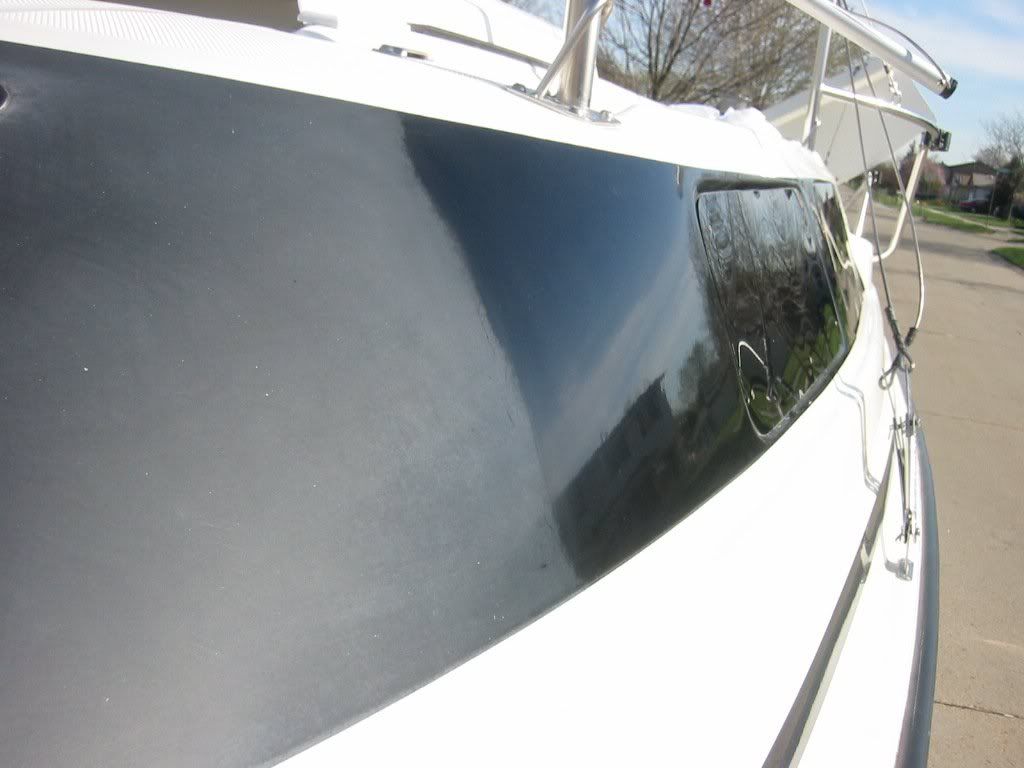
Ahhh.. I see.. yes..Carl Noble wrote:I was talking about the black gelcoat stripe where the windows are at on the deck not the rub rail.
Well with that, I'd use conventional automotive 'Polishing Compound' - get it in your local auto store - Dupont is a good brand. Mask off the windows to prevent scratching them, and then make a thick pad of soft cotton cloth... dampen it, rub it into the compound, and then use elbow power to rub a small area of black fiberglass at a time. Rub each area until completely dry, and buff it off with a clean cloth - then move to the next small area, continuing till done. Keep turning up a new surface on the rubbing pad with each new area.
Alternatively, you can use a power buffer, but *please* practice on a 'junk' piece of fiberglass unless you're very experienced with a power buffer, since it does take skill to keep the buffer from 'digging in' and causing 'burns' on the surface... and they're really hard to fix once the damage is done.
If polishing compound is too 'soft' and your level of surface decay is too deep to be polished clean with it, then I'd use 'Rubbing Compound' first - that's a more agressive polish - using the same method as above... then follow that up with the Polishing Compound, again, with the same method.
If neither of those does the job - or it's taking forever with the rubbing compound - then I'd back up to using 1000 grit wet-sanding paper first (you could use 800 if you can't find 1000, but the higher is much preferred) - going very carefully, wrapping the paper around a wet, square sponge and removing as little 'black' as possible - and then follow up with rubbing compound, then polishing compound, as above.
Once the surface is shiny again, then finish the job with whatever wax you want/like.