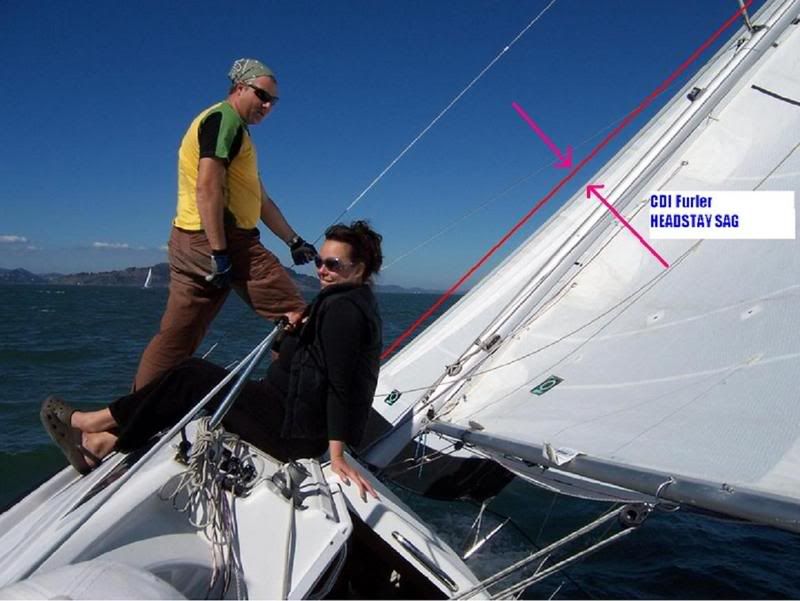
Nice Post Terry;
You’ve on coarse… Dump the marginal CDI-system Capt!
Everyone knows how primitive and poor performing the CDI system.
***If you must…go with a furling system, purchase one with a head swivel, allowing foresail changes and adjustable luff tension for conditions.
Another Choice… the Harken wire luff drum and swivel roller furling…(no reefing) like many new performance sail plans offered by today’s small boat manufacturers… for example the
‘Rocket22’
PS…BWY Sells CDI …. CDI is a ‘Marginal System’ at best.
~~~~~~~~~~~~
Delevi wrote:
Just for the record, I use the CDI as well. I don't have a problem with luff tension as many have noted to be the issue w/ CDI's internal halyard. You can create luff tension by tightening the tack. One can create a 3:1 purchase by looping a line from the jib tack and the schackle of the furler. It is static tension, so it doesn't ever get relieved unless the sail comes off the furler. Honestly, I don't think I would mess with it, even if I had a furler w/ external halyard. Luff tension should be tight but not too tight. Beyond that, you're at the mercy of the furling foil's shape. This would happen on any furler and the only way to control it is with running backstays. The SF700 sounds like an excellent unit but from looking at a piece of the luff at a boat show, my hunch is that it isn't quite as flexible as they make it out to be. Certainly less flexible than the CDI, which may present a problem for rigging/de-rigging. I'm also a bit concerned with some of Mike's comments about all the additional hardware and how parts can get lost in the drink. The one major disadvantage to the CDI, and therefore a huge advantage to SF700 is swapping sails. Major PITA on the CDI. I'm getting ready to pull the trigger on a pentex genoa from Kelly Hanson. One thing that will be important for me is the ability to change from genny to jib. I'll try to make a workaround solution on the CDI, perhaps implementing different shackles, and possibly a small block & tackle system w/ jam cleat at the tack. Also plan on spraying the luff w/ sailcoat. I'll post progress as things develop.
The marginal CDI system allows ‘only static luff tension’…”The Jib Halyard adjusts luff tension on respectable furling systems…..
The headsail luff tension ‘must’ be relieved at the end of the days sailing. Leaving luff tension applied is common mistake…don’t do it!
The Preload ‘Forestay Tension’ apprlied with the upper and lower shrouds on a powersailor…forstay tension can be increased with the adjustable backstay on the ‘X’ or ‘M’ with custom installed running backs A Furling system…with its windage and weight aloft ‘increases’ the unavoidable forestay sag, which adds to the unavoidable headsail deep draft, even more when reefed. Costly ‘flat-cut’ custom manufactured loft sails for roller furling can help. Deep draft/belly sails will not perform, increase the boats tendency to round up in a breeze, add to the powersailor’s marginal tacking problems….
The hanked on headsail will perform and point better sailing on the wind. The Genoa is a light air sail on a powersailor, and perform poorly when reefed. The wide chainplates, spreaders, and shrouds, ruin the sheeting angle for an overlapping genoa headsail, the boats ability to point and sail on the wind is compromised.
Stepping the mast on a trailer sailor is ‘immensely easy with a standard forestay’ (NO-Furling) Hanked on sails perform much better, enhanced by adjustable luff tension from a ‘jib halyard’.
Adjustable jib lead blocks from the cockpit are a worthy investment. Stick with the standard headstay, and only purchase a genoa for light air sailing. MacGregor factory sails are budget sails of generic design for light air sailing, failing quickly with regular use, blowing-out in heavy air.
Purchase some quality loft sails for the area and type of sailing you enjoy.
Those tiny ‘CDI’-shackles with tiny little pins…..cheap stuff….
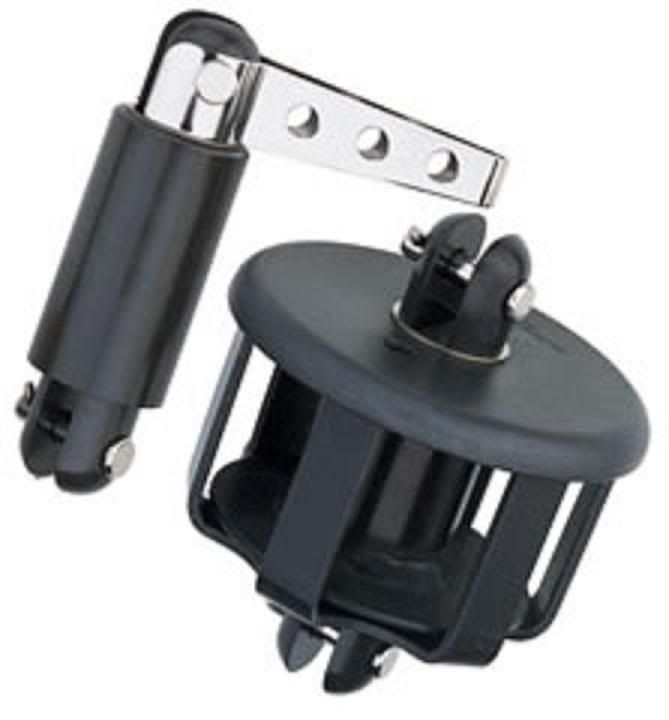 How It Works: To furl the jib, pull the furling line and the sail rolls up around its own luff.
To un-furl, uncleat the furling line and pull the jib sheet.