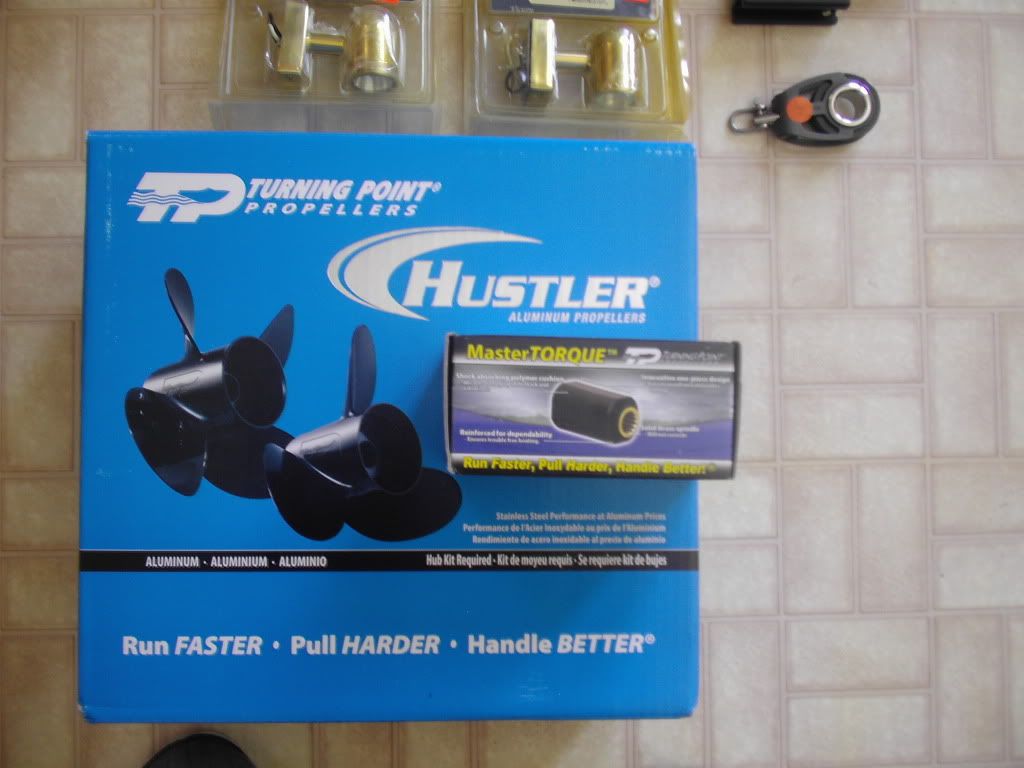
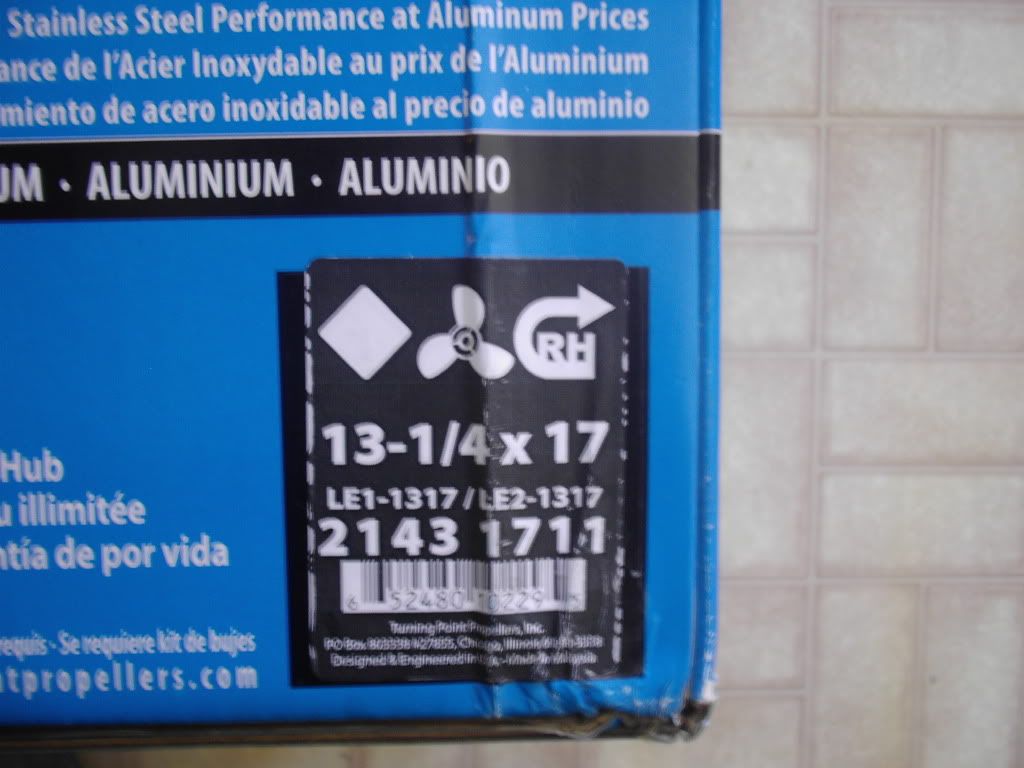
Highlander wrote: Yep We are not running the 1/4 Mile track

J

You’re not running your boat in a ¼ Mile here, what is wrong with you?

Did you know how much information you can get from a ¼ Mile time?
If you were really anal you could figure out the exact (real world) torque, HP, and power-band that would take into account wind speed and coefficient drag of your boat.

Hence the term real world which you will find is different and more accurate than a dyno-machine.

Unless your engine is sitting still the dyno-machine is not 100% accurate.
If you really wanted to be anal you could put your boat and yourself on a scale subtracting the weight of the trailer then measure a 1/4mile on the water marking it with buoys and then use a stopwatch, video camera aimed at your RPM gauge and your stopwatch at the same time, and a whole lot of math you could figure out your HP, Torque, and power-band at any given RPM.

Now you can eliminate a lot of the math and work by using one of these
http://www.driftbox.com/performance_meter.html.
I have an older one that doesn’t use GPS and has to stay level, and measure a level surface which simple would not work on the water.

Water doesn’t stay still like a road.

Now using the stop watch method is easier to do it with 2 people and requires a whole day or several days work sometimes because you also want the same air temperature and humidity each time to. Using the driftbox would be half a day because if you wanted to be an anal exact person like I used to be you still need to weigh your boat, self, and buddy.

To give a complete step by step instructions on using the former method I would have to write a small chapter here.
I am not going to do that.
Now another easier method of figuring out the best most efficient engine or even the best propeller for the engine you have is simple run a run your boat from zero to WOT in a quarter mile and whatever is the fastest time is the best most efficient motor/propeller for your boat.
Quarter mile is a good length because it throws out nonpower-band torque, say an engine that goes from 4500RPMs to 5500RPMs in days from now.
Now let’s talk definitions first one is operating RPMs. Operating RPMs on a car is simple where the engine stays running which is from idle to redline. This is definitely not the definition that Marine Outboard Manufactures use unless your engine idles at 5000 RPMs or there about. Which would make things real interesting at the Marina when you shifted into forward or reverse.
So here is where I maybe wrong, only because I just cannot confirm exactly what the Marine industry doesn’t tell you like the Auto or Aviation industry does. I believe using my mechanical logic as a mechanic that Marine Operating RPMs is where the engine generates the most HP and Torque for a given propeller. So if you’re operating RPMs is say 5000 to 6000 then if you use a larger diameter/pitch propeller that still allows the engine to run at 5000 RPMs then you would get about the same speed with a smaller diameter/pitch propeller that allows the engine to run at 6000 RPMs not counting any difference in internal friction of the engine. So that 600RPM spread versus the 1000RPM spread is simple the range you are allowed to play with to choose the most efficient propeller for you boat design. The best propeller within that range would be proven by doing what? The quarter mile time because it would give you the best torque curve or power-band from idle to the Marine operating RPM, the faster your time the more of a power-band you have a lower RPMs. That 600 or 1000 RPM range is not a torque curve. The torque curve is before it and the part before it the raises the quickest like say 2000 RPMs to 4500 RPMs would be the Power-Band.