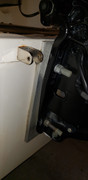
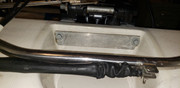
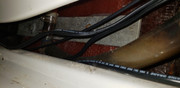
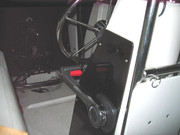
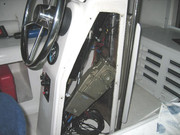
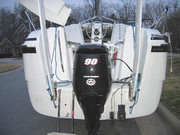
If it helps, this is the way I mounted my Suzuki DF 140 back in
2002. Mostly flat aluminum stock and transom wedges. You really need the wedges to maintain the correct attitude on the X.
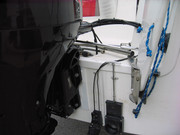
The 2 outside vertical pieces are 13.5 x 4 x .5 inches with the top machined out .25 x1.75 inches to allow for the overlap of the upper hull. Add the transom wedges here.
The upper horizontal piece inside the motor well is approximately 14 x 2.5 x 3/8 inches. This piece will need to be shaped to the contour of the well and the end edges all rounded to prevent pressure points. (I used a hammer and grinder to shape.) The idea of all of these parts is to evenly spread the load.
The lower horizontal bar is 14 x 2.5 x 3/8 inches.
This was probably all overkill but it made me feel good with this much hp. With over 600 hours on the clock this set-up has not yet failed. I've reversed at over 4000 rpms. The boat was swept over a reef and kick the engine up out of the water while under power. It's covered the Carolinas, Florida including the keys, and several trips to the Bahamas. I can find no signs of fatigue, cracks, or failure.
I do not endorse doing this, but I would do it all over again. If you choose this route be responsible and use common sense. To avoid increased shock loads to the rigging while planing, i run my extra halyards to the forward cleats or bow rail.
Measurements are all approximate. It was difficult to measure.
Any other questions?



 : Just how much horse power is actually required to pull an adult water skier….?