Page 1 of 1
Why Did MacGregor Weld The Brake Actuator To The Trailer Tongue?
Posted: Wed May 19, 2021 8:15 am
by Democritus
I'm in the process of replacing some bits in the Titan 60 brake actuator for my OEM 26X steel trailer and just wondering what was the purpose of welding that thing on instead of just bolting it on? If it was bolted on then I would just get a whole new unit but I don't want to deal with getting someone to cut it off and weld on a new one. Also, what brilliant engineer at Titan decided a plastic cap on the master cylinder would be a good idea? I'll be chiseling that thing off for sure. Hopefully I won't destroy the master cylinder at the same time.
Re: Why Did MacGregor Weld The Brake Actuator To The Trailer Tongue?
Posted: Wed May 19, 2021 9:04 am
by Tomfoolery
I cut mine off with a 4-1/2" angle grinder. Took a long time. I bolted the new one on. Just a guess, but I'm guessing it was cheaper to simply weld on the original (two fillet welds and plug welds in the holes) than to drill two large holes and install two long bolts. Photos below.
What I could have done would be strip out all the guts and transfer the guts from a new one to the old coupling body. The only wear item to speak of would be the inside of the cup that sits on the ball, and that looked fine to me. But I didn't think of that until I had the old one off.

The coupler had to be changed since I was switching from drum to disc brakes, and there is a check valve with low value cracking pressure spring to maintain minimum pressure in the drum brake cylinders that isn't present in disc brake master cylinders. The new one also has a solenoid valve for locking out the brakes when in reverse.
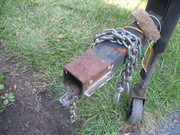
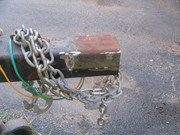
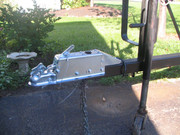
Re: Why Did MacGregor Weld The Brake Actuator To The Trailer Tongue?
Posted: Wed May 19, 2021 9:08 am
by mwylia
I don't know but if I had to guess, weld rod is cheaper than 3 grade 8 bolts. Welder was already working on the trailer so it was quicker than drilling. I just refurbished my trailer and replaced the actuator so I know it is a pain to remove with an angle grinder.
Mike
Re: Why Did MacGregor Weld The Brake Actuator To The Trailer Tongue?
Posted: Wed May 19, 2021 9:26 am
by Catigale
The TLDR version.
Why did Magregor .....( insert text)
He saved money
I admire how Roger squeezed every penny out of his build cost
Re: Why Did MacGregor Weld The Brake Actuator To The Trailer Tongue?
Posted: Wed May 19, 2021 10:33 am
by Democritus
Well it is good to know that, if it did have to come off, it wouldn't be that much trouble.
I don't know from welding so I was thinking, "Oh, maybe the weld makes it stronger than bolts!" or something along those lines but, yeah, of course, "because it was cheaper" would make a lot more sense.
As I was inspecting it, a neighbor walked up and started chatting me up and mentioned that it was a single weld vs a double weld so, even not knowing exactly what he meant, it lines up with "cheaper".

Re: Why Did MacGregor Weld The Brake Actuator To The Trailer Tongue?
Posted: Wed May 19, 2021 11:31 pm
by kurz
In these days I think for replacing the coupler it is MUCH easier with bolts.
As it is a safety thing, I guess a welder need to have some certificates to be allowed to do, so that you get a weld that is conform with this or that regulation.
If you drill a whole an put bolts - there you are - and you can commit all regulations.
Welding is far!!! faster the drilling wholes and mounting them. And SS-Bolts are far more expensive...
In EU I never saw a welded coupler so far... But as proofed both ways work...
Re: Why Did MacGregor Weld The Brake Actuator To The Trailer Tongue?
Posted: Mon Apr 04, 2022 2:35 pm
by OverEasy
There are advantages to both welding and bolting arrangements.
Welding: Positioning is one where production welding can provide a benefit in that one simply takes a measurement to make sure the piston can move appropriately and while holding it in place one simply welds the case to the toughest. No need for Jigs, fixtures, drills, oil, bits, nuts, bolts, washers, metal chips, or clean-up. Done right welding can provide a much more secure and resilient attachment than bolts with little or no periodic maintenance such as ensuring the nuts and bolts are properly torqued (such as at installation and at least annually every year there after. The removal is generally a simple grind or file or saw cut or chisel to remove. The new brake assembly is positioned marked on the tongue tube, drilled to fit the new unit on hand and bolted in place with the appropriate hardwar3 and tools… or the owner gets the new brake assembly welded on him/herself if they have the skills/tools or has it all done at a local weld shop for $50 if the new brake assembly is provided (while the owner sips a cup of complementary coffee) all in about 15 to 30 minutes.
Bolting: To bolt it on in a production environment would requiring positioning a drilling jig that matches to the particular brake assembly manufacturer’s dimensions and then allow for tolerance and positional variation aspects incurred during manufacture. If the particular brand, model or ‘vintage’ date of manufacture changes that can affect where the through holes on the brake show up assuming no variations in the trailer tonnage tubing. Then a drill and bit with a little oil is required for each hole drilled from each side. (Drilling all the way through from one side is normally discouraged as the drill can/does wander when attempting to penetrate the far side. The exception is maybe when using a drill press or an arbor drill assembly.) Then one needs to clean up/out the metal chips and degrease the oil so paint can adhere later. After that one positions the appropriate brake assembly, gather up the required bolts, nuts, washers, wrenches to assemble the brake Assyrian to the end of the trailer tongue. Now Insert all the bolts and washers and nuts and tighten. Oh…did you remember the lock washers on the nut side? Now that it’s together make sure the new owner is diligent in checking that the nuts haven’t backed off during the year of road trips and that he does it every year ensuring that everything remains properly torqued for the rest of its active life. The possible advantage is somewhere around 10, 20 maybe thirty years down the line an owner needs to or decides to replace the brake assembly (rather than use a rebuild kit if available) he/she gets wrenches out to remove the rusted nuts ( that maybe still have usable flats left after all the years of rusting) along with a hammer to pound out the bolts from the tongue. The owner then places the new unit on the tongue tube after gathering all the appropriate hardware and tools together only to possibly find the hole pattern isn’t lining up or isn’t even the same pattern at all. In those cases the owner now files oout the holes or drills new. So about an hour or two or more later (not counting appropriate hardware procurement) the job is done.
So was MacGergor being a cheapskate or was he smart and looked out for the future owners by having the brake assemblies welded on eliminating the annual inspections/tightenings for a decade or two or three…..

….while also saving them on unnecessary initial manufacturing costs?
To each their own abilities, resources and skills.
There is no right or wrong answers.
Best Regards
Over Easy


fudt
 ….while also saving them on unnecessary initial manufacturing costs?

