Hi DaveC426913!
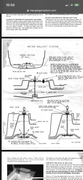
You can find what ballast tank location information there is in the “RESOURCES” section of the website the link is below:
https://macgregorsailors.com/resources/ ... l_1995.pdf
If for some reason that doesn’t work go to the ‘Main Site’ (at the top of this page) tap it and then tap ‘Resources’.
Look for not only the ‘manual’ but further down you will find ‘brochures’ and drawings that can help you.
There aren’t any dimensions per-se of the ballast tank but you can get a general idea of geometry.
Note1:The scaling from the drawings/images may me disappointing as what was published were only for general references and conceptualizations, not detail repair/modification work.
Note 2: The separation of the top deck and inner liner(s) is something of a real task that would be best accomplished with a shop and a crane or gantry hoist. To safely hoist the top deck you may find it beneficial to remove the side windows to slip your lifting straps through and keeping an eye on the balance.
Note 3: You May find that after all the work of Note 1 & 2 that the bottom inner liner is already blind fiberglassed to the outer hull in multiple locations and areas that are inaccessible.
Note 4: if you are up to it I believe that one would NOT need to separate the top deck and bottom line from the hull to make a fully appropriate repair to the hull and ballast tank structure. Repairs of this nature are accomplished regularly by professionals on much more complex vessels than MacGregors without needing access to both sides.
The process is to make and insert incremental splice shells that overlap on the interior surface of the hull for the damaged areas that are then wetted with fiberglass/resin then pulled gently into contact and allowed to cure. The pulling loops are removed and then the remaining void recess is gradually filled in with multiple fitted and resin wetted fiberglass pieces to get back to the original hull contours. Make sure that there is a generous (30:1 or more) feather edge on the external surface perimeter of the damage area to allow for proper bonding of the patch to the existing hull.
NONE OF THIS REQUIRES SEPARATING ANY DECKS OR LINERS TO ACCOMPLISH.
To make the fiberglass insert pieces one typically has a large sheet of THICK glass sufficient to layup the geometry of the required inserts.
Make oaktag or Manila (folder) cutouts of the various inserts then once you have something that works make fiberglass cloth cut outs of the flat shape and apply resin to it on the glass rolling it out flat. Let cure and gently remove. these are inserts, not whole repair sections generally. Repeat until you have what you need to provide the insert backers you need.
Where possible have an overlap of about 1 to 1-1/2 inches.
Clean and scuff the interior surface of the repair area and clean again to remove any traces of waxes or dirt or dust.
Clean and scuff the mating surfaces of the inserts exterior faces and contact areas and clean again to remove any traces of waxes or dirt or dust.
By this kind of a process you can reconstruct just about any damaged area without ever gaining general access to the interior surfaces of the hull.
MacGregors were made using polyester resin. Repairs generally are done using the same resins wherever possible.
While Epoxy resin will bond to Polyester resin the reverse doesn’t work.
Good luck!
Should be a good project to follow!
Best Regards,
Over Easy


 to play in if I pick this one up and begin working on it.