

Hi again all.
I am becoming a regular on this web site and thank all of you for reading and/or replying.
My latest dilemma, is trying to raise and lower the mast. To begin with, I should let you know, I am trying to raise the mast and lower it from the trailing position (bow cradle) on the water.
I tried it today and it took me over 2 hours up and 2 hours down with 2 people! My first problem is sliding the mast back to the mast foot position front the bow as there is so much that gets caught. The spreaders get caught on everything and the mast keeps falling off the stern cradle.
The next problem is when I have finally put the mast on the hinge at the mast base, I start lifting it with the mast raising system and the spreaders get caught on the side rails (not sure what you call them). Eventually, I get it through all the side rails etc and the mast up.
BY this stage I was exhausted and wasn't sure how to use a furling system so gave up and had the same drama's on the way down.
Has anyone ever encountered these problems or am I an idiot or perhaps missing something? Any comments would be appreciated.
Regards
Peter
Mast Rasing Probs
-
peterh0019
- Posts: 7
- Joined: Mon Dec 03, 2007 9:07 pm
- Location: Sydney, Australia
-
peterh0019
- Posts: 7
- Joined: Mon Dec 03, 2007 9:07 pm
- Location: Sydney, Australia
-
David Mellon

- Captain
- Posts: 507
- Joined: Tue Mar 14, 2006 12:16 pm
- Sailboat: MacGregor 26M
- Location: Anaheim, CA-Yamphibian, Yamaha 70, MACM1376C606
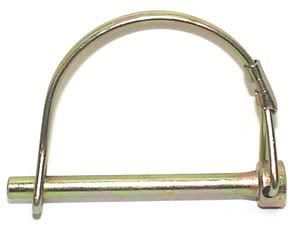
I had many of those problems at first. One major help is to remove the spreaders while trailering. I found this idea in the mods section. Remove the bolts that hold the spreaders in the stainless socket and replace with "Wire Lock Pins" in a 1/4" pin size. Practice helps with the rest of the lines, keep the topping lift and halyards tight against the mast. Be sure the stainless hardware at the top of the furler is all straight. Make sure the fuller lines are loose and will run free. When possible l use the trailers winch strap to pull it tight and stand on its ladder. I replaced the bolts for the boom the same way and my main halyard has hefty snap hooks for fast stowage below while trailering.
When it comes time to put the spreaders back in l like to raise the mast a couple feet so l can stand easily on the cockpit seats to do it. Same when removing.
Taking just a moment to really look at the lines and pausing for another look halfway through sliding the mast helps a lot.
Here is a pin.
When it comes time to put the spreaders back in l like to raise the mast a couple feet so l can stand easily on the cockpit seats to do it. Same when removing.
Taking just a moment to really look at the lines and pausing for another look halfway through sliding the mast helps a lot.
Here is a pin.
-
TAW02
- First Officer
- Posts: 325
- Joined: Sun Oct 07, 2007 7:39 am
- Location: Central Florida 2007 M #MACM1869F707 s/v 'Insagal'
It gets easier with time
Peter, I spent an entire weeks vacation trailoring my new M down to various lakeside boat ramps, just to pratice rigging, launching, retrieving and breaking-down. So I know what you are going through. It's pretty awkward and the whole process seems hardly worth the results. Simply put, you feel flat-out tired. To tired to enjoy the days sailing. On top of that, the whole time you are sailing, you dread the days end when you have to break-down and drive home.
Take heart. After all that practice, I studied how others on this board do it and the time-saving ideas they use. Some of them I adopted, others I discarded, until now I can rig and launch in less than an hour without making dumb mistakes.
Always remember to spend a few minutes checking over everything before you launch. This is especially important when preparing to depart for the trip over the road home. I actually left my companionway hatch cover laying atop the sliding hatch. Luckily some gentleman followed close behind getting my attention to pull-over and handed me my hatch cover!
It was banged up a bit but I was glad to see it as I have no idea what I would have to do to get it replaced. So this is the kind of problems you will face if you do not take the last few minutes to inspect everything before transporting the boat to the water or to the trip home.
Good luck
Big T
Take heart. After all that practice, I studied how others on this board do it and the time-saving ideas they use. Some of them I adopted, others I discarded, until now I can rig and launch in less than an hour without making dumb mistakes.
Always remember to spend a few minutes checking over everything before you launch. This is especially important when preparing to depart for the trip over the road home. I actually left my companionway hatch cover laying atop the sliding hatch. Luckily some gentleman followed close behind getting my attention to pull-over and handed me my hatch cover!
It was banged up a bit but I was glad to see it as I have no idea what I would have to do to get it replaced. So this is the kind of problems you will face if you do not take the last few minutes to inspect everything before transporting the boat to the water or to the trip home.
Good luck
Big T

-
K9Kampers
- Admiral
- Posts: 2441
- Joined: Thu Apr 13, 2006 7:32 am
- Sailboat: MacGregor 26X
- Location: NH, former 26X owner
I find the morning to be the best time to get my mast up. Usually by myself, but will accept assistance if the Admiral is willing! Same when launching the Mac too! 


Yeah, if you are trying to figure it out by yourself, this forum can give you some nice tips & tricks. Just don't get too frustrated with it, keep practicing!
I alway step by myself and after I had worked out a pretty good procedure, a couple of tips from here helped me trim the stepping time to just under 30 minutes...that is starting with untieing the rigging after launching to having the mainsail on (stepping after launch). I can knock off about 10 +/- minutes from that by skipping the mast raising kit and raising the mast by hand, but rarely do.
It's an evolutionary process, better to know that you did it right than to do it fast. Efficiency will come but speed isn't worth having an Oh $#!7 moment on the water.
Yeah, if you are trying to figure it out by yourself, this forum can give you some nice tips & tricks. Just don't get too frustrated with it, keep practicing!
I alway step by myself and after I had worked out a pretty good procedure, a couple of tips from here helped me trim the stepping time to just under 30 minutes...that is starting with untieing the rigging after launching to having the mainsail on (stepping after launch). I can knock off about 10 +/- minutes from that by skipping the mast raising kit and raising the mast by hand, but rarely do.
It's an evolutionary process, better to know that you did it right than to do it fast. Efficiency will come but speed isn't worth having an Oh $#!7 moment on the water.
-
bastonjock

- Admiral
- Posts: 1161
- Joined: Fri May 25, 2007 10:41 pm
- Location: Lincolnshire United Kingdom Mac 26X
Hi pete
welcome to the board,ive not had my 26x for a long time so the hassle is fresh in my mind.I found that by practicing in my back yard it made things a lot easier.try to chill out and not put any pressure on yourselve,i usually move my mast into place and then wiggle it from left to right so that the spreaders are above the rails,nect step is to bolt the mast at the hinge,fir the raising tool and check that you rigging(wire)is all loose,then gently crank up the mast using the winch,stopping to ensure that the rigging has not caught on anything,you will probably have to deal with the forestay wrestle unless you have the easy mod done,its a lot easier to rig on dry land than afloat.
welcome to the board,ive not had my 26x for a long time so the hassle is fresh in my mind.I found that by practicing in my back yard it made things a lot easier.try to chill out and not put any pressure on yourselve,i usually move my mast into place and then wiggle it from left to right so that the spreaders are above the rails,nect step is to bolt the mast at the hinge,fir the raising tool and check that you rigging(wire)is all loose,then gently crank up the mast using the winch,stopping to ensure that the rigging has not caught on anything,you will probably have to deal with the forestay wrestle unless you have the easy mod done,its a lot easier to rig on dry land than afloat.
-
NiceAft

- Admiral
- Posts: 6730
- Joined: Tue Feb 01, 2005 7:28 pm
- Sailboat: MacGregor 26M
- Location: Upper Dublin,PA, USA: 2005M 50hp.Honda4strk.,1979 Phantom Sport Sailboat, 9'Achilles 6HP Merc 4strk
Peter,
After three seasons of owning an , I do consider myself as an experienced person when it comes to rigging and derigging. I must tell you up front, that I can not do the rigging in under one and a half hours.
When we first got the boat, it took me up to two and a half hours to rig, and two and a half hours to reverse it. Today, three seasons later, I still can not do it faster than one and a half hours. Actually, I once did it in 75 minutes. I've come to accept this as reality.
At first, I would raise the mast by myself, without the mast raising system. I did it with much effort. I would read how easy those with an would do it, and I would scratch my head in wonderment. It turns out that the mast is much lighter than the mast. You really do need the mast raising system.
I don't remove the spreaders. Maybe I should, but I don't I don't find them as hampering the process all that much. Just make certain that after unbolting the mast from the bow pulpit, you have someone on the stern of your boat handling the other end of the mast in order to help you first move the mast to one side and lift a spreader over the life lines. Once one of the spreaders is over the lifelines, move the mast to the other side and maneuver the remaining spreader over the lifelines. I have done this by myself many times, but it is easier with someone to help you. You could also try what some do by removing the spreaders. What ever floats your boat
Now, when it comes to your furler, crank that mast system tight so you can attach your roller furler to the bow. This does take practice. No question about. A friend who owns an , (Rick Boucher [Bermuda Breeze]) can do this in less than a half hour. I am positive he could not do that on an .
I must tell you, I felt very inferior when realizing that I had such problems in doing all of that, quickly. It was so bad, that the Admiral and I stopped taking people out on the boat. Up to four hours of the day would be rigging and reversing it. We solved that problem by getting a slip in a marina on the Delaware River. Even if we were able to get the rigging down to fifteen minutes, it still does not compare to walking down a dock, stepping aboard your boat, turning the key, removing dock lines, and off you go
HAVE HEART IT WILL GET BETTER IT JUST TAKES PRACTICE
If you have problems, you always have this site to help you.
One last thing. Put some information about your location and your boat in your listing. I'm assuming you have an . That kind of information really helps
Ray
After three seasons of owning an
, I do consider myself as an experienced person when it comes to rigging and derigging. I must tell you up front, that I can not do the rigging in under one and a half hours. When we first got the boat, it took me up to two and a half hours to rig, and two and a half hours to reverse it. Today, three seasons later, I still can not do it faster than one and a half hours. Actually, I once did it in 75 minutes. I've come to accept this as reality.
At first, I would raise the mast by myself, without the mast raising system. I did it with much effort. I would read how easy those with an
would do it, and I would scratch my head in wonderment. It turns out that the mast is much lighter than the mast. You really do need the mast raising system.I don't remove the spreaders. Maybe I should, but I don't
I don't find them as hampering the process all that much. Just make certain that after unbolting the mast from the bow pulpit, you have someone on the stern of your boat handling the other end of the mast in order to help you first move the mast to one side and lift a spreader over the life lines. Once one of the spreaders is over the lifelines, move the mast to the other side and maneuver the remaining spreader over the lifelines. I have done this by myself many times, but it is easier with someone to help you. You could also try what some do by removing the spreaders. What ever floats your boat Now, when it comes to your furler, crank that mast system tight so you can attach your roller furler to the bow. This does take practice. No question about. A friend who owns an
, (Rick Boucher [Bermuda Breeze]) can do this in less than a half hour. I am positive he could not do that on an .I must tell you, I felt very inferior when realizing that I had such problems in doing all of that, quickly. It was so bad, that the Admiral and I stopped taking people out on the boat. Up to four hours of the day would be rigging and reversing it. We solved that problem by getting a slip in a marina on the Delaware River. Even if we were able to get the rigging down to fifteen minutes, it still does not compare to walking down a dock, stepping aboard your boat, turning the key, removing dock lines, and off you go
HAVE HEART
IT WILL GET BETTER IT JUST TAKES PRACTICE If you have problems, you always have this site to help you.
One last thing. Put some information about your location and your boat in your listing. I'm assuming you have an
. That kind of information really helps Ray
-
Richard O'Brien
- Captain
- Posts: 653
- Joined: Fri May 14, 2004 8:20 am
- Location: Lakewood, CO. Mercury 60hp bigfoot M0427B404
Hi Peter
More suggestions:
1. Find "mast up" on the trailer, storage at your favorite marina if possible. If that is not possible, try to rig in the parking lot, and not on the water.
2. Do the side-step dance that Nice-Aft suggested. have a partner do nothing else but grab lines, and rigging to keep them from snagging while you walk to the mast step.
3. Those posts are the safety stanchions, and you can unhook the lines from them easily at the cockpit. Look for the quick-release, pelican hooks. The only bolt remaining on my boat is the 4" x 3/8" SS bolt at the mast base. Everything else is a stainless quick release pin of some sort.
4. Order a pin from Blue Water Yachts for the forestay. The original is too small to handle, and too easy to lose. I like my rig tight so I tie my jib halyard to any sort of ratcheting load tightener from Home Depot, and back to the bow pulpit.
5. Keep you mainsail on the boom if you're as lazy as me. use a 1/4" quick release pin for the gooseneck.
6. Aim the open part of the furler towards the cockpit. Your dealer should have added some eyes called "fairleads" down the port side leading to the small furler cleat. If he didn't it's wise to add some eventually to keep from tripping on the foredeck. Eun the small line through them back to the cockpit. You should have a lot of spaghetti on the end because your foresail is furled. Uncleat it and pull on one of the jib/genoa sheets . It should roll up nicely on the furling drum. 'Pretty slick , huh? Make sure you've got an extra couple of winds when it's completely furled.
Like everything, it gets much easier with repetition.
More suggestions:
1. Find "mast up" on the trailer, storage at your favorite marina if possible. If that is not possible, try to rig in the parking lot, and not on the water.
2. Do the side-step dance that Nice-Aft suggested. have a partner do nothing else but grab lines, and rigging to keep them from snagging while you walk to the mast step.
3. Those posts are the safety stanchions, and you can unhook the lines from them easily at the cockpit. Look for the quick-release, pelican hooks. The only bolt remaining on my boat is the 4" x 3/8" SS bolt at the mast base. Everything else is a stainless quick release pin of some sort.
4. Order a pin from Blue Water Yachts for the forestay. The original is too small to handle, and too easy to lose. I like my rig tight so I tie my jib halyard to any sort of ratcheting load tightener from Home Depot, and back to the bow pulpit.
5. Keep you mainsail on the boom if you're as lazy as me. use a 1/4" quick release pin for the gooseneck.
6. Aim the open part of the furler towards the cockpit. Your dealer should have added some eyes called "fairleads" down the port side leading to the small furler cleat. If he didn't it's wise to add some eventually to keep from tripping on the foredeck. Eun the small line through them back to the cockpit. You should have a lot of spaghetti on the end because your foresail is furled. Uncleat it and pull on one of the jib/genoa sheets . It should roll up nicely on the furling drum. 'Pretty slick , huh? Make sure you've got an extra couple of winds when it's completely furled.
Like everything, it gets much easier with repetition.
-
Chip Hindes

- Admiral
- Posts: 2166
- Joined: Mon Jan 05, 2004 6:13 am
- Location: West Sand Lake, NY '01X, "Nextboat" 50HP Tohatsu
This has been discussed at length in literally hundreds of previous posts. Search and you shall find.
I have an X so I can't discuss specific solutions to specific problems. However, I do have a few suggestions.
As mentioned earlier, consider purchasing the Speedyrigger video. Without a doubt, the best bang for the buck of any "modification" I've done on my Mac. I don't believe it has been updated so it's based on the X rather than the M, but most of the principles ought to apply. It's also based on a standard non furling jib rather than one with furler, and without mast raising gear, but again many of the principles still apply and you can modify them to work for you.
Learn to rig and derig on the trailer. Doing it on the water is not that much more difficult once you learn how, but it adds an additional degree of difficulty that you don't need while learning.
I'm not even sure since you have an M rather than an X it's even an option, but even if it is, ignore the suggestion about removing the spreaders.
Don't get discouraged; the first couple of times it will seem like forever, but you'll get way better with just a little practice.
And finally (sorry guys) don't be encouraged in the other direction by those who say it can't be done in under an hour. Singlehanded, with the furler and using the mast raising gear, I can beat 40 minutes every time. My best ever is 25 minutes from pulling into the parking lot to leaving the dock.
I have an X so I can't discuss specific solutions to specific problems. However, I do have a few suggestions.
As mentioned earlier, consider purchasing the Speedyrigger video. Without a doubt, the best bang for the buck of any "modification" I've done on my Mac. I don't believe it has been updated so it's based on the X rather than the M, but most of the principles ought to apply. It's also based on a standard non furling jib rather than one with furler, and without mast raising gear, but again many of the principles still apply and you can modify them to work for you.
Learn to rig and derig on the trailer. Doing it on the water is not that much more difficult once you learn how, but it adds an additional degree of difficulty that you don't need while learning.
I'm not even sure since you have an M rather than an X it's even an option, but even if it is, ignore the suggestion about removing the spreaders.
Don't get discouraged; the first couple of times it will seem like forever, but you'll get way better with just a little practice.
And finally (sorry guys) don't be encouraged in the other direction by those who say it can't be done in under an hour. Singlehanded, with the furler and using the mast raising gear, I can beat 40 minutes every time. My best ever is 25 minutes from pulling into the parking lot to leaving the dock.
-
Bransher
- First Officer
- Posts: 217
- Joined: Fri Sep 22, 2006 2:07 pm
- Sailboat: MacGregor 26M
- Location: Central Florida - 07 26M w/50 hp Suzuki.
My first trip to the launch site with my new 26M was in the middle of summer in Florida. The temperature was in the 90’s with the accompanying high humidity. I had all of the same problems that you mentioned and it took me about four hours to get the boat rigged, loaded, and put into the water. By then it was dark and too late to go out. I was physically exhausted and spent the first night tied up to the floating dock at the launch site. Fortunately, I was not in anyone’s way.
I spent some time out on the water the next day, and then came back in early to allow me ample time to get the boat out of the water and ready for trailering home. Again in the blazing sun, it now took me five hours to get the mast down and everything put away. A good portion of that time was spent trying to get the boat back on the trailer in a crosswind. Another major portion of that time was used for rest breaks. Climbing around on the boat, and up and down from the boat to the ground in that heat really wore me out.
During the three and one half hour drive home, I made one stop for gas and knocked off one of the trailer’s lights pulling up to the gas pump. A Sheriff’s Deputy sitting at the other gas pump pointed out my blunder to me. He really made my day when he told me that the steel and concrete post that I had brushed up against was a standard feature at gas stations to protect the pumps from people like me. My first time out was a very humbling experience. You are definitely not alone my friend.
Since that time, I have spent time practicing at home, and installing some of the short cuts that you will find on this site. I know that I can speed up the process, but at the same time, I feel certain that I will never be mistaken for Speedy Rigger.
I spent some time out on the water the next day, and then came back in early to allow me ample time to get the boat out of the water and ready for trailering home. Again in the blazing sun, it now took me five hours to get the mast down and everything put away. A good portion of that time was spent trying to get the boat back on the trailer in a crosswind. Another major portion of that time was used for rest breaks. Climbing around on the boat, and up and down from the boat to the ground in that heat really wore me out.
During the three and one half hour drive home, I made one stop for gas and knocked off one of the trailer’s lights pulling up to the gas pump. A Sheriff’s Deputy sitting at the other gas pump pointed out my blunder to me. He really made my day when he told me that the steel and concrete post that I had brushed up against was a standard feature at gas stations to protect the pumps from people like me. My first time out was a very humbling experience. You are definitely not alone my friend.
Since that time, I have spent time practicing at home, and installing some of the short cuts that you will find on this site. I know that I can speed up the process, but at the same time, I feel certain that I will never be mistaken for Speedy Rigger.
-
johnnyonspot
- First Officer
- Posts: 441
- Joined: Thu Oct 06, 2005 9:19 pm
- Location: Elk River, MN.
I have a Mac 25 w/o furling, but it has to be similar to the I would think. I concur with Chip when he says do not bother removing the spreaders; just remember not to put the mast up without checking for rigging snags 2-3 times during raising process. If hardware gets kinked or caught and is not spotted it can get bent all to hull, which will compromise its integrity, possibly resulting in being dismasted. I also agree that having a slip, or at least mast-up storage is the way to go if at all possible. When you think about all the hours lost to rigging and de-rigging, i.e., hours that you could spend sailing, and put even a modest dollar amount on that time (both for the PITA of rigging/de-rigging and the "opportunity cost" of the lost sailing) the cost of a slip becomes less and less of a concern. There is nothing better than driving to the marina, giving the rigging a quick once-over inspection, and then sailing away. Not to mention that those who have a slip will inevitably end up using their boat a lot more than if they have to trailer to and fro and rig/de-rig every time. Makes your investment in the boat a lot more valuable IMHO.
I would think. I concur with Chip when he says do not bother removing the spreaders; just remember not to put the mast up without checking for rigging snags 2-3 times during raising process. If hardware gets kinked or caught and is not spotted it can get bent all to hull, which will compromise its integrity, possibly resulting in being dismasted. I also agree that having a slip, or at least mast-up storage is the way to go if at all possible. When you think about all the hours lost to rigging and de-rigging, i.e., hours that you could spend sailing, and put even a modest dollar amount on that time (both for the PITA of rigging/de-rigging and the "opportunity cost" of the lost sailing) the cost of a slip becomes less and less of a concern. There is nothing better than driving to the marina, giving the rigging a quick once-over inspection, and then sailing away. Not to mention that those who have a slip will inevitably end up using their boat a lot more than if they have to trailer to and fro and rig/de-rig every time. Makes your investment in the boat a lot more valuable IMHO.-
Catigale

- Site Admin
- Posts: 10421
- Joined: Fri Jun 11, 2004 5:59 pm
- Sailboat: MacGregor 26X
- Location: Admiral .............Catigale 2002X.......Lots of Harpoon Hobie 16 Skiffs....Island 17
- Contact:
Ill ditto Chips time report. With my and a 150 genny on a furler, with no mast raising system, I can always be done in an hour or less. I rig at a fairly deliberate pace but not in a rush to get this benchmark.
You save a lot of time eliminating the trips up and down from the decktop to the cockpit the more you rig.
and a 150 genny on a furler, with no mast raising system, I can always be done in an hour or less. I rig at a fairly deliberate pace but not in a rush to get this benchmark. You save a lot of time eliminating the trips up and down from the decktop to the cockpit the more you rig.
-
Boblee
- Admiral
- Posts: 1702
- Joined: Thu Aug 10, 2006 5:08 am
- Location: Berrigan, Riverina Australia boatless at present
For some reason have never really had a problem with rigging but did practice a couple of times at home to avoid embarrasment at the ramp and to set up initial tensions etc.
As for the spreaders it was just a little side step but have now raised the base mount and rear roller, so they sit above the safety lines anyway.
Have never actually timed myself but just to get the mast up takes very little time, the bulk is in rigging the boom, halyards and all the little bits and pieces depending on the trip.
Could not imagine raising the mast on the water except when absolutely necessary like trees or for negotiating bridges, just too many things to drop.
Having a bag for all rigging gear including raising kit helps and doing it without help also is a bonus sometimes as it is more relaxing.
The furler seems easy as all I do is over tension the mast raiser and clip the pin in easily, this could be hard on the water but simple on land as when I inevitably drop the pin it's easy to find, must admit this becomes easier to locate with practice.
I personally can see no reason to disconnect lines etc as it just creates more work.
As for the spreaders it was just a little side step but have now raised the base mount and rear roller, so they sit above the safety lines anyway.
Have never actually timed myself but just to get the mast up takes very little time, the bulk is in rigging the boom, halyards and all the little bits and pieces depending on the trip.
Could not imagine raising the mast on the water except when absolutely necessary like trees or for negotiating bridges, just too many things to drop.
Having a bag for all rigging gear including raising kit helps and doing it without help also is a bonus sometimes as it is more relaxing.
The furler seems easy as all I do is over tension the mast raiser and clip the pin in easily, this could be hard on the water but simple on land as when I inevitably drop the pin it's easy to find, must admit this becomes easier to locate with practice.
I personally can see no reason to disconnect lines etc as it just creates more work.
-
peterh0019
- Posts: 7
- Joined: Mon Dec 03, 2007 9:07 pm
- Location: Sydney, Australia
Thanks
Hi Guys
Thanks for the tips and encouragement. Sounds like I will just have to do it over and over. I laughed when I read some of the replies and didn't feel like such a failure. I live in Sydney, Australia and it is VERY hot here at the moment and the amount of sweat and tears that I am putting into rigging is too much to actually use it once the mast is raised.
Will keep you psted (pardon the pun!!).
Peter.
Thanks for the tips and encouragement. Sounds like I will just have to do it over and over. I laughed when I read some of the replies and didn't feel like such a failure. I live in Sydney, Australia and it is VERY hot here at the moment and the amount of sweat and tears that I am putting into rigging is too much to actually use it once the mast is raised.
Will keep you psted (pardon the pun!!).
Peter.