


Siting On Shore Power connector
-
Berber Boy

- First Officer
- Posts: 324
- Joined: Sat May 09, 2009 6:55 pm
- Sailboat: MacGregor 26M
- Location: Paynesville, VIC 3880 AUSTRALIA WindSong 2016 26M 75hp Etec
Siting On Shore Power connector
I have recently added onshore power using some of the advice from discussions on the site. I decided to place my AC 240 volt connector just under the skipper seat on the Starboard transom. It works very well thus far.
-
Divecoz

- Admiral
- Posts: 3803
- Joined: Sat Oct 16, 2004 2:54 pm
- Sailboat: MacGregor 26M
- Location: PORT CHARLOTTE FLORIDA 05 M Mercury 50 H.P. Big Foot Bill at Boats 4 Sail is my Hero
Re: Siting On Shore Power connector
Nice looking unit.... I have two on my M the one frward is typical Marina Twist Lock and the one mounted on the port companion way is a standard type 110v unit . I there by have two options and locations for easy hook up...
-
Berber Boy
- First Officer
- Posts: 324
- Joined: Sat May 09, 2009 6:55 pm
- Sailboat: MacGregor 26M
- Location: Paynesville, VIC 3880 AUSTRALIA WindSong 2016 26M 75hp Etec
Re: Siting On Shore Power connector
Thanks. Guess the Fwd unit is useful when you are nosed in on a jetty to be close to the power source. For the most part I need onshore when parked in my yard to keep my batteries ticking over. Is your 110v taken direct to battery charger and outlet socket or have you run it through a safety switch and grounded the earth? Interested to know how you did that?
-
Divecoz
- Admiral
- Posts: 3803
- Joined: Sat Oct 16, 2004 2:54 pm
- Sailboat: MacGregor 26M
- Location: PORT CHARLOTTE FLORIDA 05 M Mercury 50 H.P. Big Foot Bill at Boats 4 Sail is my Hero
Re: Siting On Shore Power connector
You'll be very disappointed to hear , how of all people, I.... wired mine. 
Though I now have a common grnd. between 12 and 120 volt systems. I have a 20 amp slow blow fuse in front of my first GFI receptacle in the V berth.
I run from there back to under the galley where I have another pair of outlets protected by that 20 amp fuse and my grnd fault and up to an outlet next to the original 12 volt panel. My charger a Pro 20 is plugged in under the galley .... Not fancy but its safe and needless to say it works fine.
Many here have far more elaborate systems and to each his own.
I have only ever plugged my boat in at My House , North Point Marina and my brothers home in Port Charlotte Florida. All have proper working supply systems as from what I read with my Fluke.
Forward mounted shore power outlets... or rear.
If you as I and many others have a dock that comes out from shore at 90 degrees perp.with power pedistals and water on docks on those docks center between slips. You most often then have piers /gang ways that form ( boxes of a sort ) slips , so you want that outlet on the end of the boat you intend to bring in first.
Though I now have a common grnd. between 12 and 120 volt systems. I have a 20 amp slow blow fuse in front of my first GFI receptacle in the V berth.
I run from there back to under the galley where I have another pair of outlets protected by that 20 amp fuse and my grnd fault and up to an outlet next to the original 12 volt panel. My charger a Pro 20 is plugged in under the galley .... Not fancy but its safe and needless to say it works fine.
Many here have far more elaborate systems and to each his own.
I have only ever plugged my boat in at My House , North Point Marina and my brothers home in Port Charlotte Florida. All have proper working supply systems as from what I read with my Fluke.
Forward mounted shore power outlets... or rear.
If you as I and many others have a dock that comes out from shore at 90 degrees perp.with power pedistals and water on docks on those docks center between slips. You most often then have piers /gang ways that form ( boxes of a sort ) slips , so you want that outlet on the end of the boat you intend to bring in first.
-
Kelly Hanson East
- Admiral
- Posts: 1786
- Joined: Sat Apr 19, 2008 2:35 pm
- Sailboat: MacGregor 26X
- Location: Kelly Hanson Marine........Mac 26M Dealer......Freedom Boat Works
Re: Siting On Shore Power connector
You should have a main disconnect as close to the 240 VAC as practical, with LED polarity indicator - this lets you quickly shut off the dock current in the case of fault.
-
Divecoz
- Admiral
- Posts: 3803
- Joined: Sat Oct 16, 2004 2:54 pm
- Sailboat: MacGregor 26M
- Location: PORT CHARLOTTE FLORIDA 05 M Mercury 50 H.P. Big Foot Bill at Boats 4 Sail is my Hero
Re: Siting On Shore Power connector
Cat few anywhere have 240 vac shore power... but as for 110 vacKelly Hanson East wrote:You should have a main disconnect as close to the 240 VAC as practical, with LED polarity indicator - this lets you quickly shut off the dock current in the case of fault.
 Think about it ....I have for $18 all you mentioned.......when that tell tale light isn't on , on my particular brand of GFI is hooked up wrong ........( not by me but from the shore pedestal ) if its hooked up wrong , just hit the test button and it disconnects the power system ...and all for $18!!!
  and I added a fuse ahead of my GFI fuses are so much better than breakers they comparatively .......never fail..... breakers do all the time . BUT true you can surely take this a lot farther than I did but that's true with almost everything.
I got my Hospital grade GFI's for free.... salesmen ya got to love those free samples they hand out so readily.
-
Hamin' X

- Site Admin
- Posts: 3466
- Joined: Sat Aug 27, 2005 6:02 pm
- Sailboat: MacGregor 26X
- Location: Hermiston, OR-----------2001 26X DF-50 Suz---------------(Now Sold)
- Contact:
Re: Siting On Shore Power connector
The OP lives in Australia and has 240V shore power, as do most that are outside of the Americas. Your's is certainly an elegant solution for your boat and location, though.
~Rich
~Rich
-
Kelly Hanson East
- Admiral
- Posts: 1786
- Joined: Sat Apr 19, 2008 2:35 pm
- Sailboat: MacGregor 26X
- Location: Kelly Hanson Marine........Mac 26M Dealer......Freedom Boat Works
Re: Siting On Shore Power connector
Just one clarification - the disconnect I refer to is not a breaker, but a double pole, Single throw switch that breaks both hot and neutral connections from shore power to the boat.
It could fail in theory, but if that happened I would say Neptune is out to claim your boat.
The purpose is, in the case of fire on board, with one switch, you remove shore power from your boat, which lets you fight fire with water of course.
It could fail in theory, but if that happened I would say Neptune is out to claim your boat.
The purpose is, in the case of fire on board, with one switch, you remove shore power from your boat, which lets you fight fire with water of course.
-
Divecoz
- Admiral
- Posts: 3803
- Joined: Sat Oct 16, 2004 2:54 pm
- Sailboat: MacGregor 26M
- Location: PORT CHARLOTTE FLORIDA 05 M Mercury 50 H.P. Big Foot Bill at Boats 4 Sail is my Hero
Re: Siting On Shore Power connector
[quote="Kelly Hanson East"]Just one clarification - the disconnect I refer to is not a breaker, but a double pole, Single throw switch that breaks both hot and neutral connections from shore power to the boat.
It could fail in theory, but if that happened I would say Neptune is out to claim your boat.e
The purpose is, in the case of fire on board, with one switch, you remove shore power from your boat, which lets you fight fire with water of course.[/quote]
Like I said you can take this and any system just as far as you like want need or can afford $$$.....However the DPST switch Most talk about using is a 2 pole breaker( long thread about this ) and running + and _ thru it.... But now we're adding in front of that ...another device? They only suggest the 2 pole breaker because the very said state of events at public Marina's .....Because its evidently common place ( in some parts of the country Yall,) for Maroons....or any other uneducated Jack of All Trades. to install electrical systems at Marinas ( you dont have to break the Neut at your house you shouldn't need to at the marina either)
Now Cat on a common sense basis, I would agree on the water and electric dont make good friends , however next time you in an electrical closet , be it 2'x5' or 50' x 200' Look up and tell me what you see .... Yep even though there may well be 4160 v.a.c. in that room, that room is Sprinkled! That room is covered heavier than, most likely any other part of the building and that's by Law.... NEC BOCA and no less than a dozen others .....
Now gentlemen what conducts electricity the best. Distilled water or dirty sewage water..? Yep the answer is dirtier the better and not much is dirtier than sprinkler water...
It could fail in theory, but if that happened I would say Neptune is out to claim your boat.e
The purpose is, in the case of fire on board, with one switch, you remove shore power from your boat, which lets you fight fire with water of course.[/quote]
Like I said you can take this and any system just as far as you like want need or can afford $$$.....However the DPST switch Most talk about using is a 2 pole breaker( long thread about this ) and running + and _ thru it.... But now we're adding in front of that ...another device? They only suggest the 2 pole breaker because the very said state of events at public Marina's .....Because its evidently common place ( in some parts of the country Yall,) for Maroons....or any other uneducated Jack of All Trades. to install electrical systems at Marinas
( you dont have to break the Neut at your house you shouldn't need to at the marina either)Now Cat on a common sense basis, I would agree on the water and electric dont make good friends , however next time you in an electrical closet , be it 2'x5' or 50' x 200' Look up and tell me what you see .... Yep even though there may well be 4160 v.a.c. in that room, that room is Sprinkled! That room is covered heavier than, most likely any other part of the building and that's by Law.... NEC BOCA and no less than a dozen others .....
Now gentlemen what conducts electricity the best. Distilled water or dirty sewage water..? Yep the answer is dirtier the better and not much is dirtier than sprinkler water...
Re: Siting On Shore Power connector
The ABYC required disconnect IS a double-pole circuit breaker, actually a ganged (interconnected) pair of breakers, one in the hot and one in the common line (AC lines aren't labeled + and -). It is required to be of the type that cannot be held "on" in a fault condition. It is required to be within 10 wire feet of the required waterproof, twist-lock power inlet. For 30 amp service this should be 10AWG, for 20 amp service 12AWG, for 15 amp service 14 AWG. As divecoz says, this ganged pair is because so many marinas (and campgrounds) have improper wiring, with "reversed polarity" (hot and neutral reversed) being a common mistake. For that reason, a red "reverse polarity" indicator is also required in addition to a green "power" indicator.
A typical example of this "main" (only) breaker/interconnect is Blue Sea Systems Part #159, which would be used with a sub panel for branch circuits. For a 30 amp input system with only one branch circuit, Part number 8029/3029 would be used with a 15 or 20 amp breaker, depending on whether the branch circuit was 12 or 14 AWG, and the outlets 15 or 20 amp rated. As did divecoz, the first device in the branch can be a GFCI breaker, protecting those devices downstream.
Another alternative for those who only want one branch circuit is to use a single, dual-pole master breaker, using the Blue Sea Systems PN 7234 (black) or 7235 (white) for 15 amperes, in their PN 8173 panel with PN 8034 (green) and PN 8066 (red) LED indicator lights.
Even if you choose to use the single 15 amp "alternative" circuit, you should probably use the required waterproof 30 amp twist-lock inlet (with 10AWG to the main breaker), along with the heavier 30 amp marine cords, if you don't want marinas refusing to let you plug in. I, and others, have used the non-waterproof, non-locking Marinco 150BBI battery charger inlet, which works with smaller, easier to carry standard outdoor extension cords. Obviously, the latter can come loose from the boat and result in the live end in the water unless the end is on a very short tether to the boat.
Another mentioned requirement is the bonding of the 120VAC ground line with the 12VDC negative bus (typically "grounded" to the water through the prop shaft or outboard, even tilted up), AT ONE AND ONLY ONE POINT. If you have a typical marine battery charger, this may already be done inside it. It's worth testing for continuity between the 120VAC ground and 12VDC negative leads from the battery charger, without it being connected to anything else.
Finally, the 120VAC neutral and 120VAC ground line SHOULD NOT BE BONDED anywhere on board a boat or RV (except on the output of an isolation transformer, which few small rigs have). Doing so puts your rig in the path for short circuit currents for the entire marina or campground.
Hope this helps.
A typical example of this "main" (only) breaker/interconnect is Blue Sea Systems Part #159, which would be used with a sub panel for branch circuits. For a 30 amp input system with only one branch circuit, Part number 8029/3029 would be used with a 15 or 20 amp breaker, depending on whether the branch circuit was 12 or 14 AWG, and the outlets 15 or 20 amp rated. As did divecoz, the first device in the branch can be a GFCI breaker, protecting those devices downstream.
Another alternative for those who only want one branch circuit is to use a single, dual-pole master breaker, using the Blue Sea Systems PN 7234 (black) or 7235 (white) for 15 amperes, in their PN 8173 panel with PN 8034 (green) and PN 8066 (red) LED indicator lights.
Even if you choose to use the single 15 amp "alternative" circuit, you should probably use the required waterproof 30 amp twist-lock inlet (with 10AWG to the main breaker), along with the heavier 30 amp marine cords, if you don't want marinas refusing to let you plug in. I, and others, have used the non-waterproof, non-locking Marinco 150BBI battery charger inlet, which works with smaller, easier to carry standard outdoor extension cords. Obviously, the latter can come loose from the boat and result in the live end in the water unless the end is on a very short tether to the boat.
Another mentioned requirement is the bonding of the 120VAC ground line with the 12VDC negative bus (typically "grounded" to the water through the prop shaft or outboard, even tilted up), AT ONE AND ONLY ONE POINT. If you have a typical marine battery charger, this may already be done inside it. It's worth testing for continuity between the 120VAC ground and 12VDC negative leads from the battery charger, without it being connected to anything else.
Finally, the 120VAC neutral and 120VAC ground line SHOULD NOT BE BONDED anywhere on board a boat or RV (except on the output of an isolation transformer, which few small rigs have). Doing so puts your rig in the path for short circuit currents for the entire marina or campground.
Hope this helps.
-
SkiDeep2001
- Captain
- Posts: 582
- Joined: Wed Feb 11, 2009 1:27 am
- Sailboat: MacGregor 26X
- Location: Redmond,WA USA 98X Nissan50 CATMAN DOUX
Re: Siting On Shore Power connector
It's also a good idea to use a GFCI to check your shore power supply before you plug in.  You can get these for a very reasonable price at any RV/Marine supply, Harbor Freight etc...
  Rob
Rob
You can get these for a very reasonable price at any RV/Marine supply, Harbor Freight etc... Rob-
Kelly Hanson East
- Admiral
- Posts: 1786
- Joined: Sat Apr 19, 2008 2:35 pm
- Sailboat: MacGregor 26X
- Location: Kelly Hanson Marine........Mac 26M Dealer......Freedom Boat Works
Re: Siting On Shore Power connector
Thanks Moe - Im not sure if my disconnect is a DPST or an actual breaker. I will look today and report. Ive never had a breaker trip on the boat, but Im pretty careful with AC stuff on board (and dont use much shore power on anchor)
If Moe is correct on the not bonding the neutral and ground (and I believe he is) then the circuit tester described above may not function correctly on a marine install - most home AC wiring bonds neutral and ground at the box - my guess is this tester uses this to figure out if you have everything right. I have one of these and can check this too.
If Moe is correct on the not bonding the neutral and ground (and I believe he is) then the circuit tester described above may not function correctly on a marine install - most home AC wiring bonds neutral and ground at the box - my guess is this tester uses this to figure out if you have everything right. I have one of these and can check this too.
Re: Siting On Shore Power connector
The circuit tester above will function just fine for checking 120VAC 15 or 20 amp outlets on docks. The neutrals and grounds on the dock outlets are all bonded at the on-shore breaker panel, just as in a residence. That tester offers no guarantee the 30 amp outlet is wired correctly.
Where you will see an indication of a problem on a proper marine installation is with use of some small, portable generators, such as the Honda EU series. With respect to ground, their hot and neutral are each 60 VAC (180º out of phase), and will cause a "reverse polarity" indicator to illuminate, typically at half brightness.
Where you will see an indication of a problem on a proper marine installation is with use of some small, portable generators, such as the Honda EU series. With respect to ground, their hot and neutral are each 60 VAC (180º out of phase), and will cause a "reverse polarity" indicator to illuminate, typically at half brightness.
-
Highlander

- Admiral
- Posts: 5998
- Joined: Wed Sep 21, 2005 8:25 pm
- Sailboat: MacGregor 26M
- Location: Maccutter26M 2008 75HP Merc. 4/S Victoria BC. Can. ' An Hileanto'ir III '
- Contact:
Re: Siting On Shore Power connector
Here's my set up
Inlet just below the bilge vent that I'm installing aft p/s stern
http://i235.photobucket.com/albums/ee20 ... 0007-3.jpg
http://i235.photobucket.com/albums/ee20 ... 010044.jpg
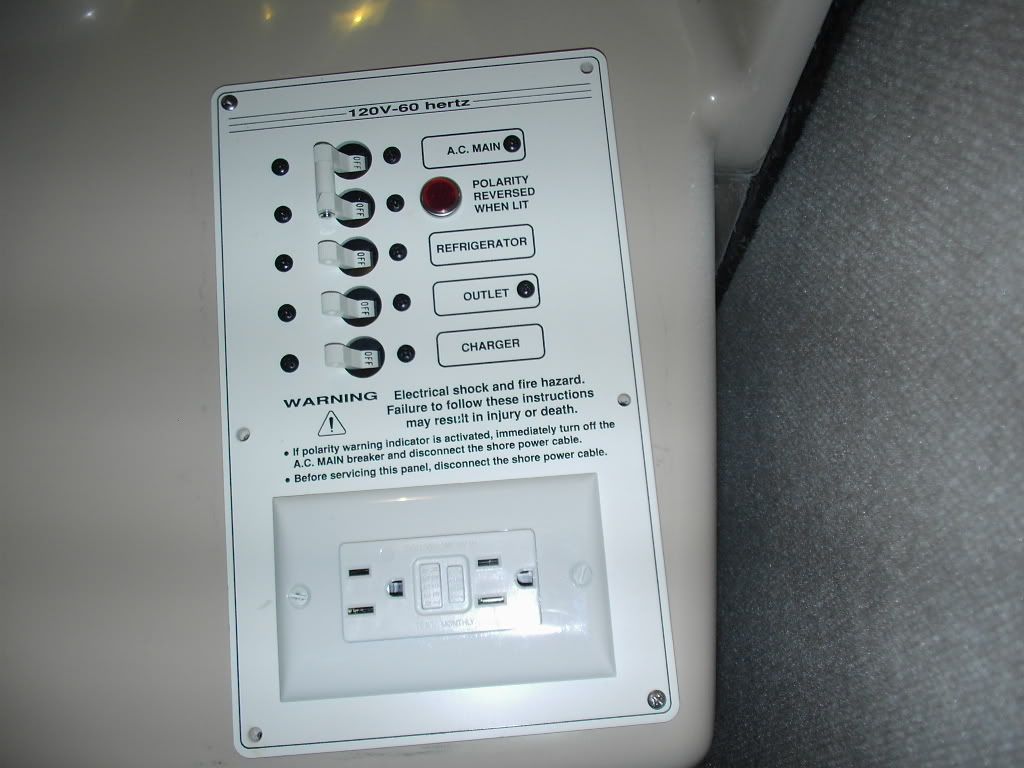
port side aft berth main board
http://i235.photobucket.com/albums/ee20 ... 010077.jpg
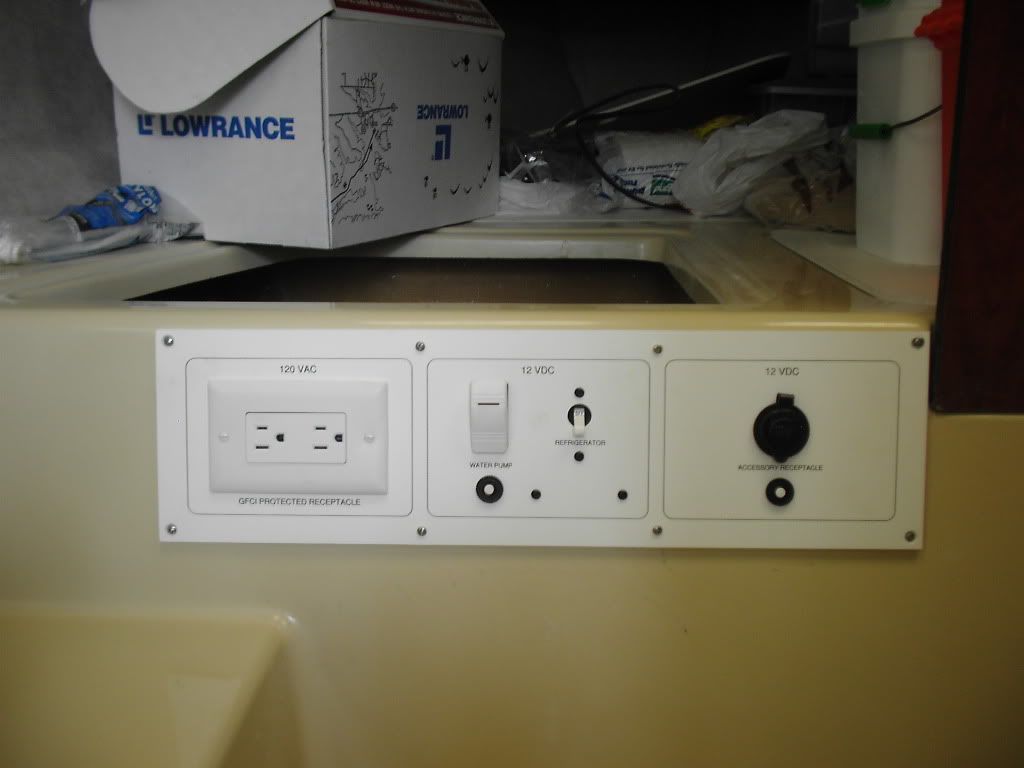
bottom of sliding galley base/seat outlets 120/12v
http://i235.photobucket.com/albums/ee20 ... 010080.jpg
v-berth entrance outlets 120/12v
http://i235.photobucket.com/albums/ee20 ... 010025.jpg
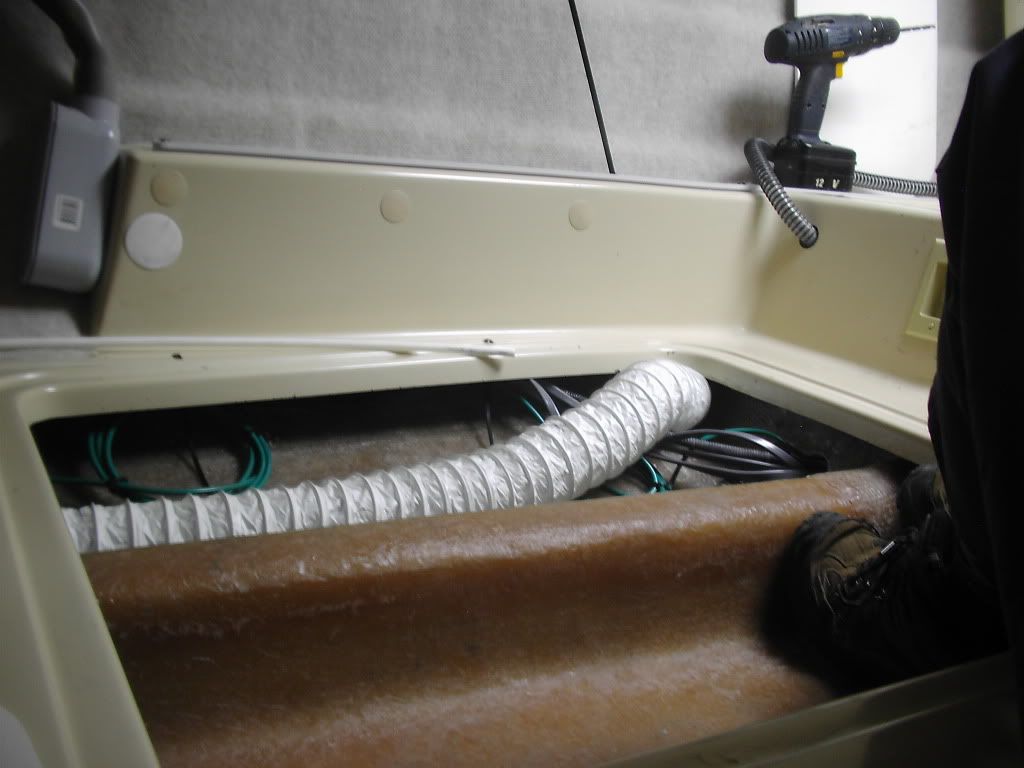
Here in the aft berth p/s you can just see my recessed fridge single outlet just behind my leg !
http://i235.photobucket.com/albums/ee20 ... 0021-1.jpg
J
Inlet just below the bilge vent that I'm installing aft p/s stern
http://i235.photobucket.com/albums/ee20 ... 0007-3.jpg
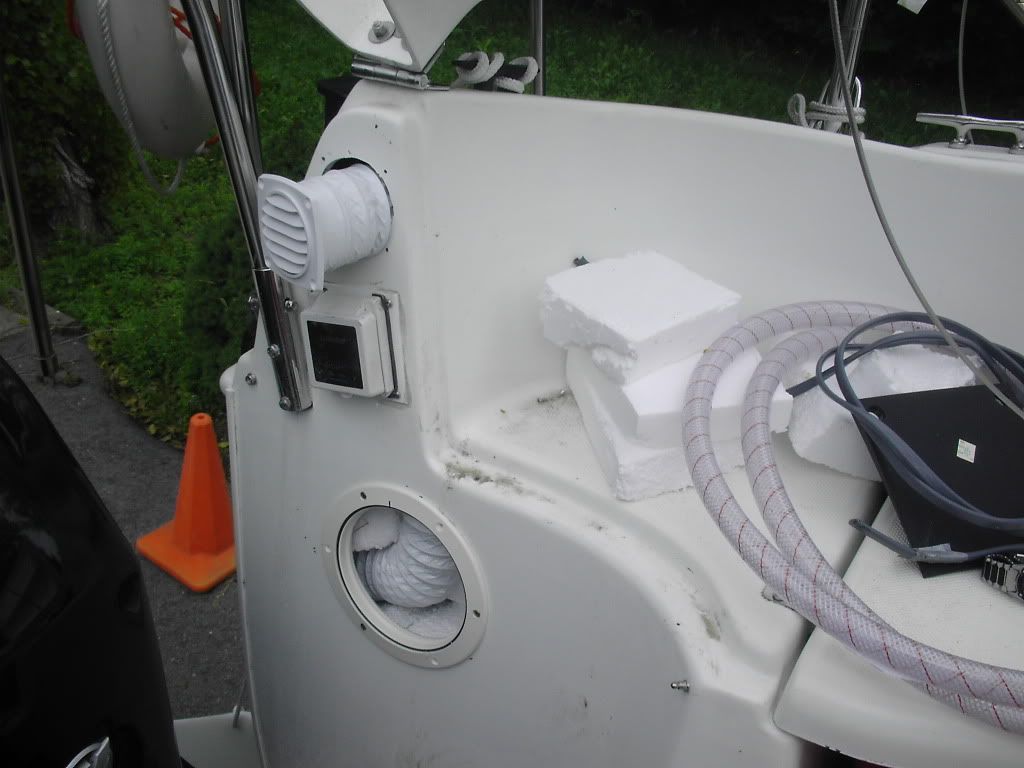
http://i235.photobucket.com/albums/ee20 ... 010044.jpg

port side aft berth main board
http://i235.photobucket.com/albums/ee20 ... 010077.jpg
bottom of sliding galley base/seat outlets 120/12v
http://i235.photobucket.com/albums/ee20 ... 010080.jpg

v-berth entrance outlets 120/12v
http://i235.photobucket.com/albums/ee20 ... 010025.jpg
Here in the aft berth p/s you can just see my recessed fridge single outlet just behind my leg !
http://i235.photobucket.com/albums/ee20 ... 0021-1.jpg
J
-
Kelly Hanson East
- Admiral
- Posts: 1786
- Joined: Sat Apr 19, 2008 2:35 pm
- Sailboat: MacGregor 26X
- Location: Kelly Hanson Marine........Mac 26M Dealer......Freedom Boat Works
Re: Siting On Shore Power connector
Enlightenment bursts upon me after reading your post, Obiwan.The circuit tester above will function just fine for checking 120VAC 15 or 20 amp outlets on docks. The neutrals and grounds on the dock outlets are all bonded at the on-shore breaker panel, just as in a residence. That tester offers no guarantee the 30 amp outlet is wired correctly.
Where you will see an indication of a problem on a proper marine installation is with use of some small, portable generators, such as the Honda EU series. With respect to ground, their hot and neutral are each 60 VAC (180º out of phase), and will cause a "reverse polarity" indicator to illuminate, typically at half brightness.
(Thanks Moe)