

Re-Lighting Mast
I need some LED wiring advice folks.
Our mast currently has:
- the standard two-pole deck connector that runs the steaming-light on the mast, and uses regular type bulb.
We want to:
- replace the single steaming-light with a combination: steaming-light / deck-light.
- add an anchor-light
This would be a total of three lights on the mast, and would like to use LED type bulbs. I understand if using LED bulbs, I can have two lights on one rocker-switch (change the polarity).
I would like the ability to run the deck-light underway at night while using the steaming-light.
So would like the:
- steaming-light and anchor-light to be on the one rocker-switch.
- deck-light: on a second regular switch.
I want to run all wires through one deck connector only. (no new holes). Can I have separate on/off for all three mast lights using the existing two-pole deck connector? Or do I have to use a three-pole or four pole deck connector?
How would you wire this light set-up?
Thanks!!
Darry
Re-Lighting Mast
-
Wind Chime

- Captain
- Posts: 866
- Joined: Sun Jan 21, 2007 4:30 pm
- Sailboat: MacGregor 26X
- Location: Vancouver, B.C. Canada. 2000-26X, Suzuki-50hp, 8' Walker-Bay tender (with sailkit)
- Contact:
-
Russ

- Admiral
- Posts: 8336
- Joined: Thu Oct 11, 2007 12:01 pm
- Sailboat: MacGregor 26M
- Location: Bozeman, Montana "Luna Azul" 2008 M 70hp Suzi
Re: Re-Lighting Mast
If you have two LED fixtures, you can use the reverse polarity trick and use the original 2 wires. That's what I did with the steaming light and anchor light. Same original two wires to the panel and I added a DPDT switch on the panel to reverse the polarity to select either anchor or steaming since both cannot be on at the same time.
The deck light adds more complexity. For what you want to do, it makes sense to run 2 extra wires through the deck to the panel for a total of 4. So you will need to replace the 2 wire deck fitting with a 4 wire fitting. Not a bad idea as the factory fitting is pretty junky anyway.
Then use 1 for a common ground and 1 for each light positive lead.
Going with LEDs will pay off in the long run. Last a long time and pull hardly no power. Perfect for anchor light.
--Russ
The deck light adds more complexity. For what you want to do, it makes sense to run 2 extra wires through the deck to the panel for a total of 4. So you will need to replace the 2 wire deck fitting with a 4 wire fitting. Not a bad idea as the factory fitting is pretty junky anyway.
Then use 1 for a common ground and 1 for each light positive lead.
Going with LEDs will pay off in the long run. Last a long time and pull hardly no power. Perfect for anchor light.
--Russ
-
Highlander

- Admiral
- Posts: 5998
- Joined: Wed Sep 21, 2005 8:25 pm
- Sailboat: MacGregor 26M
- Location: Maccutter26M 2008 75HP Merc. 4/S Victoria BC. Can. ' An Hileanto'ir III '
- Contact:
Re: Re-Lighting Mast
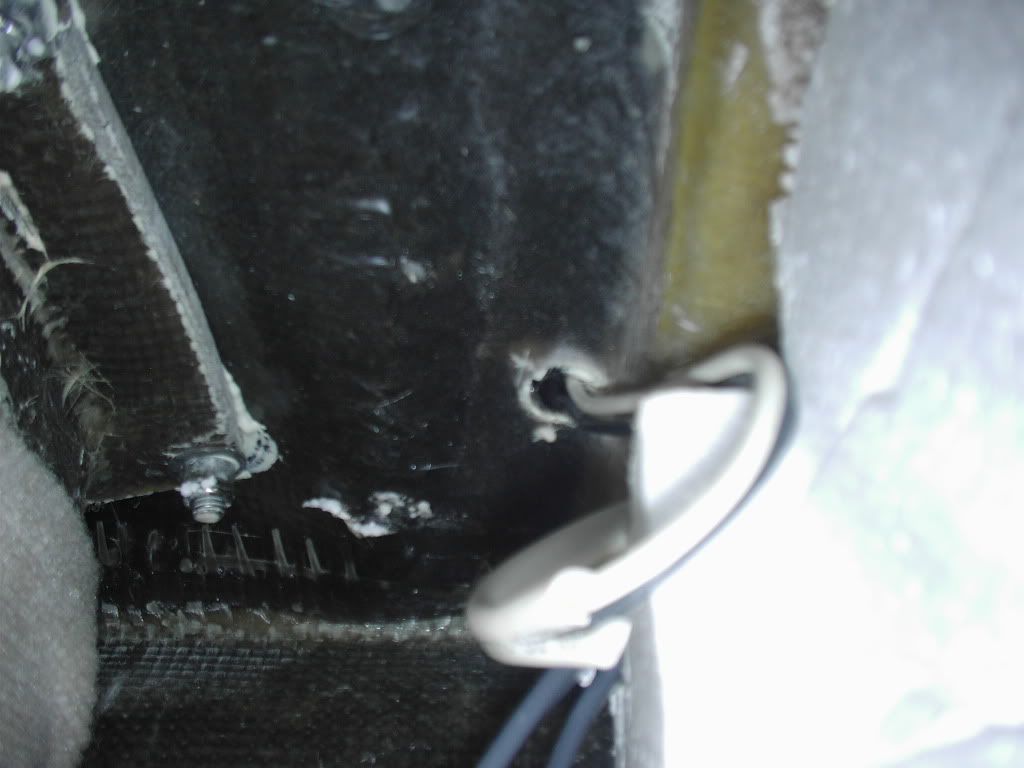
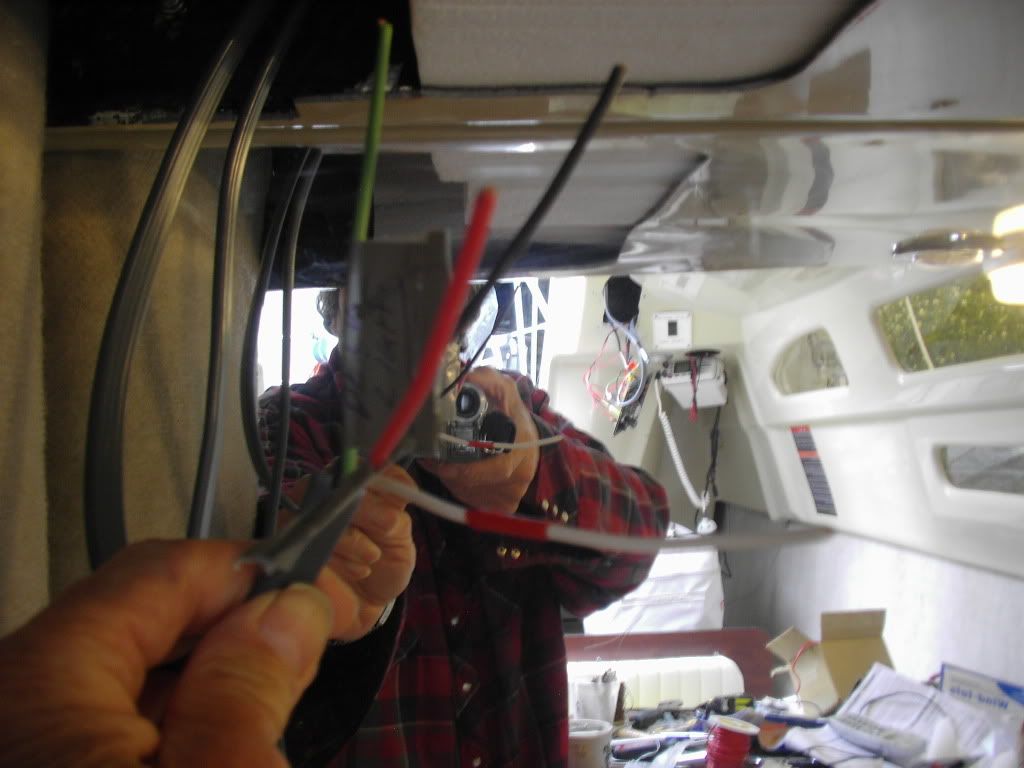
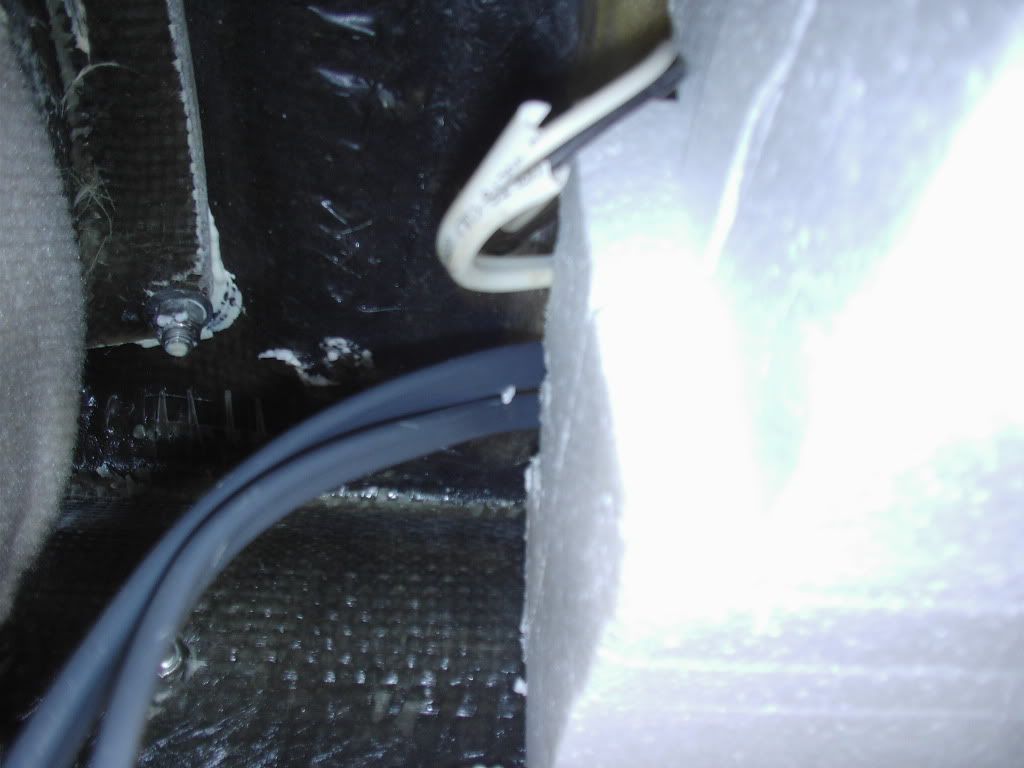
When I installed my mast steam / deck light I left the original mast light there as a spare also i can turn them both on in very thick fog , I also installed a 4 way plug on the deck for the mast steam / deck & my blue led spreader lights
http://i235.photobucket.com/albums/ee20 ... 0004-2.jpg
http://i235.photobucket.com/albums/ee20 ... 0006-2.jpg
http://i235.photobucket.com/albums/ee20 ... 0002-3.jpg
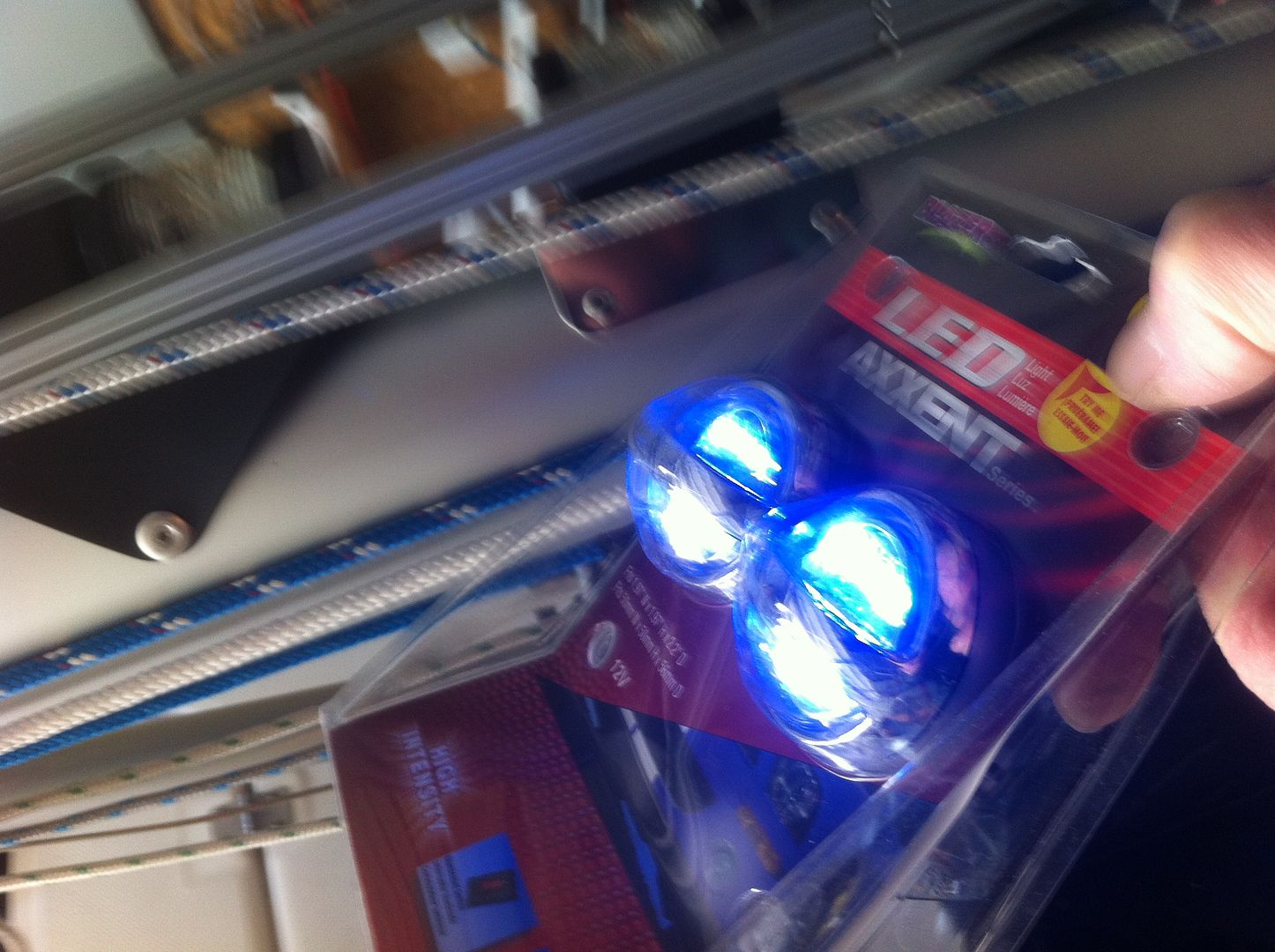
heres my blue led spreader lights yet to be installed
http://i844.photobucket.com/albums/ab1/ ... 7b3785.jpg
heres my two mast steaming lights & the 2 spreader lights will be mounted maybe onto the sides of the s/s mounting brkt for the original steam light
http://i844.photobucket.com/albums/ab1/ ... c13b3e.jpg
All my nav lights bulbs have been changed to L.E.D."s
the deck light LED's r avail in 24lums or 12 lums but the 24lums r hard to find I broke my 24lum one & could not find another so I bought the 12lums just not as bright if I'm not happy with it I'll try again to find the 24lums but I think they may no longer be avail
J
http://i235.photobucket.com/albums/ee20 ... 0004-2.jpg
http://i235.photobucket.com/albums/ee20 ... 0006-2.jpg
http://i235.photobucket.com/albums/ee20 ... 0002-3.jpg
heres my blue led spreader lights yet to be installed
http://i844.photobucket.com/albums/ab1/ ... 7b3785.jpg
heres my two mast steaming lights & the 2 spreader lights will be mounted maybe onto the sides of the s/s mounting brkt for the original steam light
http://i844.photobucket.com/albums/ab1/ ... c13b3e.jpg
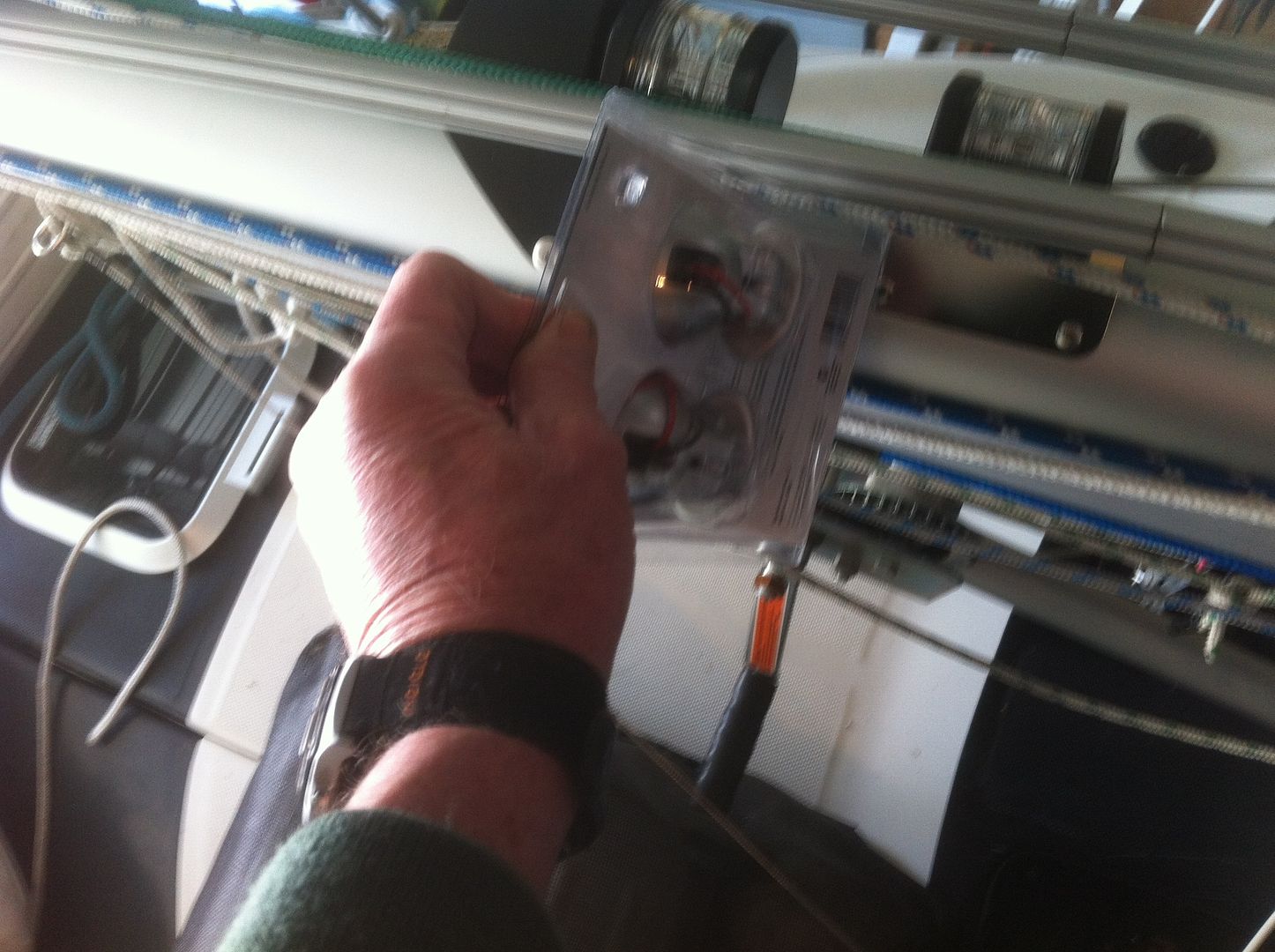
All my nav lights bulbs have been changed to L.E.D."s
the deck light LED's r avail in 24lums or 12 lums but the 24lums r hard to find I broke my 24lum one & could not find another so I bought the 12lums just not as bright if I'm not happy with it I'll try again to find the 24lums but I think they may no longer be avail
J
-
Russ
- Admiral
- Posts: 8336
- Joined: Thu Oct 11, 2007 12:01 pm
- Sailboat: MacGregor 26M
- Location: Bozeman, Montana "Luna Azul" 2008 M 70hp Suzi
Re: Re-Lighting Mast
I'm pretty sure having 2 steaming lights on at the same time is illegal. I would check the regs before using them both.Highlander wrote:When I installed my mast steam / deck light I left the original mast light there as a spare also i can turn them both on in very thick fog
-
Hardcrab
- Captain
- Posts: 868
- Joined: Tue Sep 19, 2006 8:25 pm
- Sailboat: MacGregor 26M
- Location: "Cease-fire", White 05 M, 90hp, Boggy Bayou, Niceville, FL
Re: Re-Lighting Mast
If one gets out of the box, you can see that in fact you have three conductors at the mast top from the factory.
Two are copper, and one is aluminum.
The mast itself.
It's a conductor simply disguised as a mast.
All it needs is an installed nut/bolt at the ends for the transition back to copper wires.
Without any deeper thought, make the mast and one of the copper wires as the "reverse polarity" circuit and the remaining copper wire as the positive wire to the other intended light. Of course, this reverse circuit will need to be engineered such that the when mast is negative, that's the designed interlock for the "two wrong lights on at the same time issue". If it's set to be positive, and the second light is switched on (by error) then switching together the two positive "conductors" will cause no ill effects at all.
The naysayers will have a ball with this unusual concept and will opine all kinds of reasons why the mast is not a conductor; but it is a conductor anyhow.
Good luck.
Two are copper, and one is aluminum.
The mast itself.
It's a conductor simply disguised as a mast.
All it needs is an installed nut/bolt at the ends for the transition back to copper wires.
Without any deeper thought, make the mast and one of the copper wires as the "reverse polarity" circuit and the remaining copper wire as the positive wire to the other intended light. Of course, this reverse circuit will need to be engineered such that the when mast is negative, that's the designed interlock for the "two wrong lights on at the same time issue". If it's set to be positive, and the second light is switched on (by error) then switching together the two positive "conductors" will cause no ill effects at all.
The naysayers will have a ball with this unusual concept and will opine all kinds of reasons why the mast is not a conductor; but it is a conductor anyhow.
Good luck.
-
Highlander
- Admiral
- Posts: 5998
- Joined: Wed Sep 21, 2005 8:25 pm
- Sailboat: MacGregor 26M
- Location: Maccutter26M 2008 75HP Merc. 4/S Victoria BC. Can. ' An Hileanto'ir III '
- Contact:
Re: Re-Lighting Mast
Yes it can be an open un-insulated conductor & I do not think thats such a good idea on a boat sitting on the water !!
Just my Scottish penny,s worth of opinion but each to their own , i just don,t see any good out of offering up the mast to electrosis decay
J
Just my Scottish penny,s worth of opinion but each to their own , i just don,t see any good out of offering up the mast to electrosis decay
J
-
Hardcrab
- Captain
- Posts: 868
- Joined: Tue Sep 19, 2006 8:25 pm
- Sailboat: MacGregor 26M
- Location: "Cease-fire", White 05 M, 90hp, Boggy Bayou, Niceville, FL
Re: Re-Lighting Mast
Highlander,
It's no more "open conductor" than the battery terminals in the bilge.
For the "decay" to occur, a complete electrical path needs to be in place.
With the battery in the bilge, and the mast mounted on a good insulator, such as the fiberglas it's on, no such return path is even remotely possible.
When the mast is switched to be the negative conductor or the positive conductor, no return to the battery either way, barring some short to the mast in the two copper wires.
It's much like birds sitting happily on 10,00 volt overhead wires.
No return path.
No hazard to anyone touching it on either polarity.
Just ask the birds.
What is more real world issue would be the SS bolts and attachments to the aluminum mast then through in some water.
Stand back and watch that "decay".
I'd think that's a much more real concern than using the conductive mast as alternate legs of a 12 volt DC circuit on occasion.
Of course, IMHO.
It's no more "open conductor" than the battery terminals in the bilge.
For the "decay" to occur, a complete electrical path needs to be in place.
With the battery in the bilge, and the mast mounted on a good insulator, such as the fiberglas it's on, no such return path is even remotely possible.
When the mast is switched to be the negative conductor or the positive conductor, no return to the battery either way, barring some short to the mast in the two copper wires.
It's much like birds sitting happily on 10,00 volt overhead wires.
No return path.
No hazard to anyone touching it on either polarity.
Just ask the birds.
What is more real world issue would be the SS bolts and attachments to the aluminum mast then through in some water.
Stand back and watch that "decay".
I'd think that's a much more real concern than using the conductive mast as alternate legs of a 12 volt DC circuit on occasion.
Of course, IMHO.
-
The-strikes
- Deckhand
- Posts: 41
- Joined: Fri Feb 24, 2012 8:43 pm
- Sailboat: MacGregor 26X
- Location: Lake George NY/Schenectady
Re: Re-Lighting Mast
I put an anchor light at the top of the mast and left the original steaming light. I got rid of the in-deck socket because the prongs on the male end were always breaking off. I bought a 4 wire flat trailer connection and ran the wires to that. The other end hangs out of the mast. They connect right up and never break. Each circuit runs to a separate switch on my breaker panel. I replaced the fuses a few years back. I'm only using two of the three connections in the 4-wire but there is a third for you. Running the new wires along the cabin roof is a bitch. Can't believe that wasn't designed a little better.
-
dcaldarona
- Just Enlisted
- Posts: 10
- Joined: Fri May 30, 2014 10:08 am
- Sailboat: MacGregor 25
Re: Re-Lighting Mast
Hey folks check out my blog about the restoration of my 85 Mac
Notalotayacht | Restoring a 1985 MacGregor 25
https://notalotayacht.wordpress.com
Notalotayacht | Restoring a 1985 MacGregor 25
https://notalotayacht.wordpress.com
-
NavySailor

- Engineer
- Posts: 160
- Joined: Wed May 14, 2014 5:55 pm
- Sailboat: MacGregor 25
- Location: Manassas, VA
Re: Re-Lighting Mast
Nice job and blog but it'd be a lot easier if you just posted your stuff here instead of bombing the forums with your linkdcaldarona wrote:Hey folks check out my blog about the restoration of my 85 Mac
Notalotayacht | Restoring a 1985 MacGregor 25
https://notalotayacht.wordpress.com
-
tek
- Chief Steward
- Posts: 84
- Joined: Mon Jun 28, 2010 1:08 pm
- Sailboat: MacGregor 26M
- Location: Prairie Village KS
- Contact:
Re: Re-Lighting Mast
Hardcrab wrote:If one gets out of the box, you can see that in fact you have three conductors at the mast top from the factory.
Two are copper, and one is aluminum.
The mast itself.
It's a conductor simply disguised as a mast.
All it needs is an installed nut/bolt at the ends for the transition back to copper wires.
Without any deeper thought, make the mast and one of the copper wires as the "reverse polarity" circuit and the remaining copper wire as the positive wire to the other intended light. Of course, this reverse circuit will need to be engineered such that the when mast is negative, that's the designed interlock for the "two wrong lights on at the same time issue". If it's set to be positive, and the second light is switched on (by error) then switching together the two positive "conductors" will cause no ill effects at all.
The naysayers will have a ball with this unusual concept and will opine all kinds of reasons why the mast is not a conductor; but it is a conductor anyhow.
Good luck.
Galvanic corrosion comes to mind.. connecting copper to aluminum will effectively create a battery. The mast will dissolve before your eyes in an incredibly short time.
You'll often see corrosion happen on an aluminum mast when someone uses stainless steel screws to attach things too. While commonly blamed on other things, the root cause is the mis-matched metals that are far apart on the galvanic scale.
-
mastreb

- Admiral
- Posts: 3927
- Joined: Wed Feb 09, 2011 9:00 am
- Sailboat: MacGregor 26M
- Location: Cardiff by the Sea, CA ETEC-60 "Luna Sea"
- Contact:
Re: Re-Lighting Mast
Time to naysay!Hardcrab wrote:If one gets out of the box, you can see that in fact you have three conductors at the mast top from the factory.
Two are copper, and one is aluminum.
The mast itself.
It's a conductor simply disguised as a mast.
All it needs is an installed nut/bolt at the ends for the transition back to copper wires.
Without any deeper thought, make the mast and one of the copper wires as the "reverse polarity" circuit and the remaining copper wire as the positive wire to the other intended light. Of course, this reverse circuit will need to be engineered such that the when mast is negative, that's the designed interlock for the "two wrong lights on at the same time issue". If it's set to be positive, and the second light is switched on (by error) then switching together the two positive "conductors" will cause no ill effects at all.
The naysayers will have a ball with this unusual concept and will opine all kinds of reasons why the mast is not a conductor; but it is a conductor anyhow.
Good luck.
Firstly, while the mast is an open conductor, it doesn't go through the hull so you'd have to change the thru-hull fitting anyway.
Secondly, while the mast is conductive, it has MUCH higher resistance than copper wires. The difference between 2 ohms of resistance you'd likely see in a wire vs. the 100 ohms you'd likely see in the mast to the foot is 50X the power loss to heat.
Thirdly, just because the mast CAN conduct, doesn't mean it should. Mast conduction will dramatically amplify bi-metal corrosion between the mast and any non-aluminum components in the circuit, such as the mast foot or whatever screw it is you use to tie to a conductive wire. Or the SS anchor light bracket. Anything. That white corrosion between the aluminum and SS occurs when stray electrical currents transit between the interface of the two metals. Those are just stray, near ground level currents that are a natural part of the world. Put any kind of real current in them and you'll eat that bi-metal interface like the zinc anode of a Jr. High potato clock experiment.
Fourth, you would be tying the mast to your battery ground if you do this, which means that when lightning strikes (or a powerline) you will with certainty explode your battery and destroy every electrical device on your boat.
Nay! Nay!
Now, all that said, I'm not clear on why I've never heard of anyone hooking the mast up as their VHF antenna with an impedance matching balun...
-
Russ
- Admiral
- Posts: 8336
- Joined: Thu Oct 11, 2007 12:01 pm
- Sailboat: MacGregor 26M
- Location: Bozeman, Montana "Luna Azul" 2008 M 70hp Suzi
Re: Re-Lighting Mast
The corrosion issue is big enough to not use it. In practice, I doubt with minimal use, it would really cause a problem, especially with low amp LEDs, but why test it. Interesting point about lightning traveling to the battery. In a real strike, I believe lightning will find it's way regardless. But again, why test it or make it easier.mastreb wrote: Now, all that said, I'm not clear on why I've never heard of anyone hooking the mast up as their VHF antenna with an impedance matching balun...
I'm no expert on antenna bandwidth, but I believe the reason a mast doesn't make a good antenna is the tuning of it's length. The stays would also adversely affect direction of the beam. I bet Rich knows more about this.
If a person wanted to use the mast as a common ground, they could connect a terminal under the deck on the mast step bolts.
-
mastreb
- Admiral
- Posts: 3927
- Joined: Wed Feb 09, 2011 9:00 am
- Sailboat: MacGregor 26M
- Location: Cardiff by the Sea, CA ETEC-60 "Luna Sea"
- Contact:
Re: Re-Lighting Mast
I know a little about antennas. Perfect antenna lengths are harmonics of the full wavelength: 1/8th wave, 1/4 wave, 1/2 wave, and full wave. The worst antennas are the interstitial lengths between the harmonics.RussMT wrote:I'm no expert on antenna bandwidth, but I believe the reason a mast doesn't make a good antenna is the tuning of it's length. The stays would also adversely affect direction of the beam. I bet Rich knows more about this.
Anything longer than full wave is a good antenna. For example, people who use over-the-air HD television signals have found that simply connecting the antenna to the ground-wire of an outlet makes a far better antenna for those VHF signals than even the best dedicated antennas because an over-full-wave length antenna beats the performance of any fractional length.
VHF waves are in the 1 to 10 meter length, which means that most any sailboat mast should be absolutely ideal for the entire range.
I'll test it out with my cheapy handheld VHF next time I'm on the water.