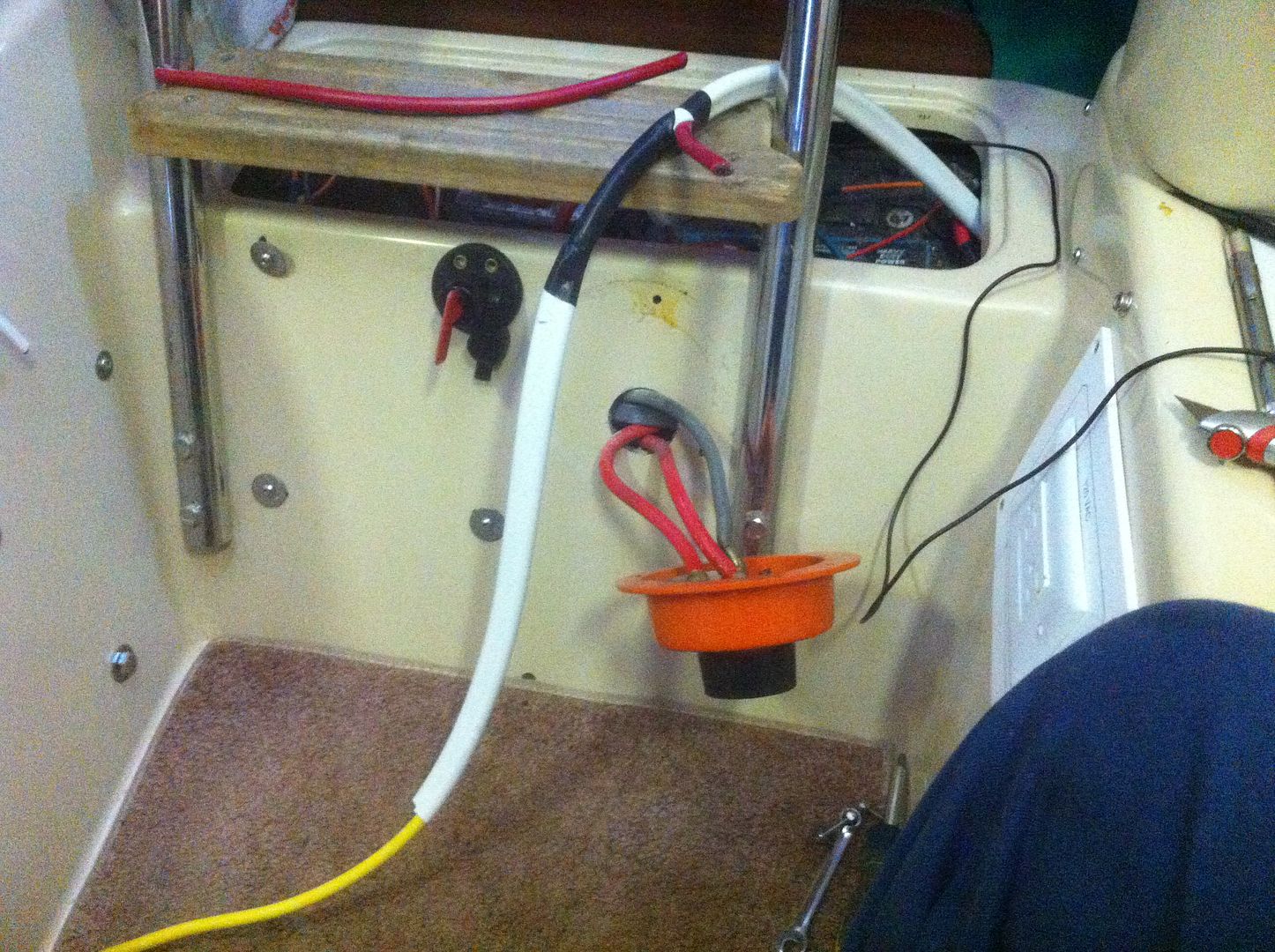
vizwhiz wrote:Hey John (Interim), you might want to update your profile with location. It isn't uncommon for local members to happily make house calls for a small gift of...oh, i dunno...pizza, beer, or rum!
I,m now on the west coast u r on the east coast , but if u r ever out my way u r more than welcome to buy the pizza, hot chicken wings , beer & a wee dram of Scotch later on lol
I have recently been conversing with Chinook about a similar topic. Here is an excerpt of what he was telling me on this very subject. He has a dedicated ignition battery, and two 6 volt golf cart batteries for the house power.
Ray
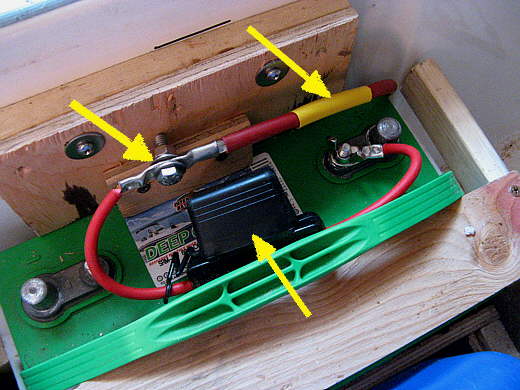
I don't have a manual switch for my batteries, such as the Perko switch. Instead, I have a device called a battery combiner, which acts as an automatic battery isolator switch. It's a small device, about 3 inches long and maybe half an inch thick and 1 inch wide. It's wired to both the ignition and house batteries. When the engine is running, this switch puts an initial charge into the ignition battery, which quickly comes up to 14 + volts when the whole system is functioning properly. Once this is achieved, the combiner switches charging over to the house batteries until it brings them up to full charge, and then it alternates back and forth between them. When the engine is turned off, the combiner isolates the ignition battery, so that it's impossible to draw down the charge in it, through use of cabin lights, etc.
Last edited by NiceAft on Fri Nov 25, 2016 6:52 am, edited 2 times in total.
It can also work both ways. If the house battery is charging (solar panel, A/C charger) it will combine with the starter battery to charge both.
The starter battery is always kept isolated unless it's being charged.
NiceAft wrote:I have recently been conversing with Chinook about a similar topic. Here is an excerpt of he was telling me about on this very subject. He has a dedicated ignition battery, and two 6 volt golf cart batteries for the house power.
Ray
I don't have a manual switch for my batteries, such as the Perko switch. Instead, I have a device called a battery combiner, which acts as an automatic battery isolator switch. It's a small device, about 3 inches long and maybe half an inch thick and 1 inch wide. It's wired to both the ignition and house batteries. When the engine is running, this switch puts an initial charge into the ignition battery, which quickly comes up to 14 + volts when the whole system is functioning properly. Once this is achieved, the combiner switches charging over to the house batteries until it brings them up to full charge, and then it alternates back and forth between them. When the engine is turned off, the combiner isolates the ignition battery, so that it's impossible to draw down the charge in it, through use of cabin lights, etc.
I used those post fuses on the batteries for the trolling motor/2nd house bank batteries for the Mac and on the Endeavour batteries. I get them and most of my wiring from...
When I rewired the boat and wasn't aware of them I ....
.... made up fuse links like above but the post ones are easier and just as cheap and meet the requirements of having the battery main fuse within 6 inches of the battery.
Those are nice! They eliminate the 6 inches of unprotected wire from the battery to the limiter. Plus in an emergency once you fixed your wire issue you could bypass it easily if you did not have another limiter with you.
It can also work both ways. If the house battery is charging (solar panel, A/C charger) it will combine with the starter battery to charge both.
The starter battery is always kept isolated unless it's being charged.
NiceAft wrote:I have recently been conversing with Chinook about a similar topic. Here is an excerpt of he was telling me about on this very subject. He has a dedicated ignition battery, and two 6 volt golf cart batteries for the house power.
Ray
I don't have a manual switch for my batteries, such as the Perko switch. Instead, I have a device called a battery combiner, which acts as an automatic battery isolator switch. It's a small device, about 3 inches long and maybe half an inch thick and 1 inch wide. It's wired to both the ignition and house batteries. When the engine is running, this switch puts an initial charge into the ignition battery, which quickly comes up to 14 + volts when the whole system is functioning properly. Once this is achieved, the combiner switches charging over to the house batteries until it brings them up to full charge, and then it alternates back and forth between them. When the engine is turned off, the combiner isolates the ignition battery, so that it's impossible to draw down the charge in it, through use of cabin lights, etc.
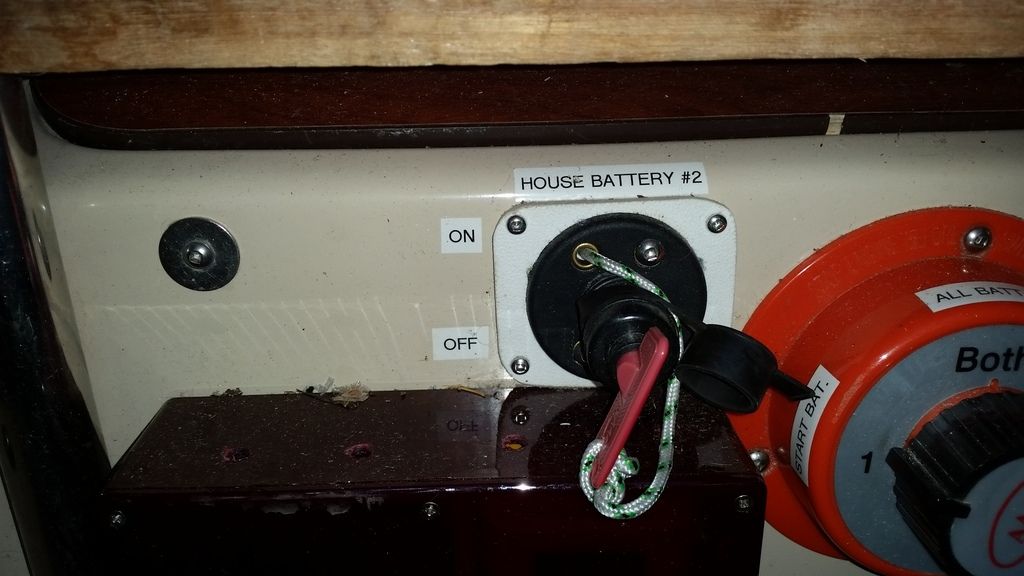
I agree on the combiner. Prior to installation if I wanted to cross charge I would have to switch the battery switch to combine, then remember to switch back when I was done. Now it does it all by itself.
Rays discreption of operation is not correct for what I have. I think Summer has the same one I do also. I do not know of any combiner that is that high tech? That discription would be a verry sophisticated battery isolator.
grady wrote:Rays discreption of operation is not correct for what I have. I think Summer has the same one I do also. I do not know of any combiner that is that high tech? That discription would be a verry sophisticated battery isolator.
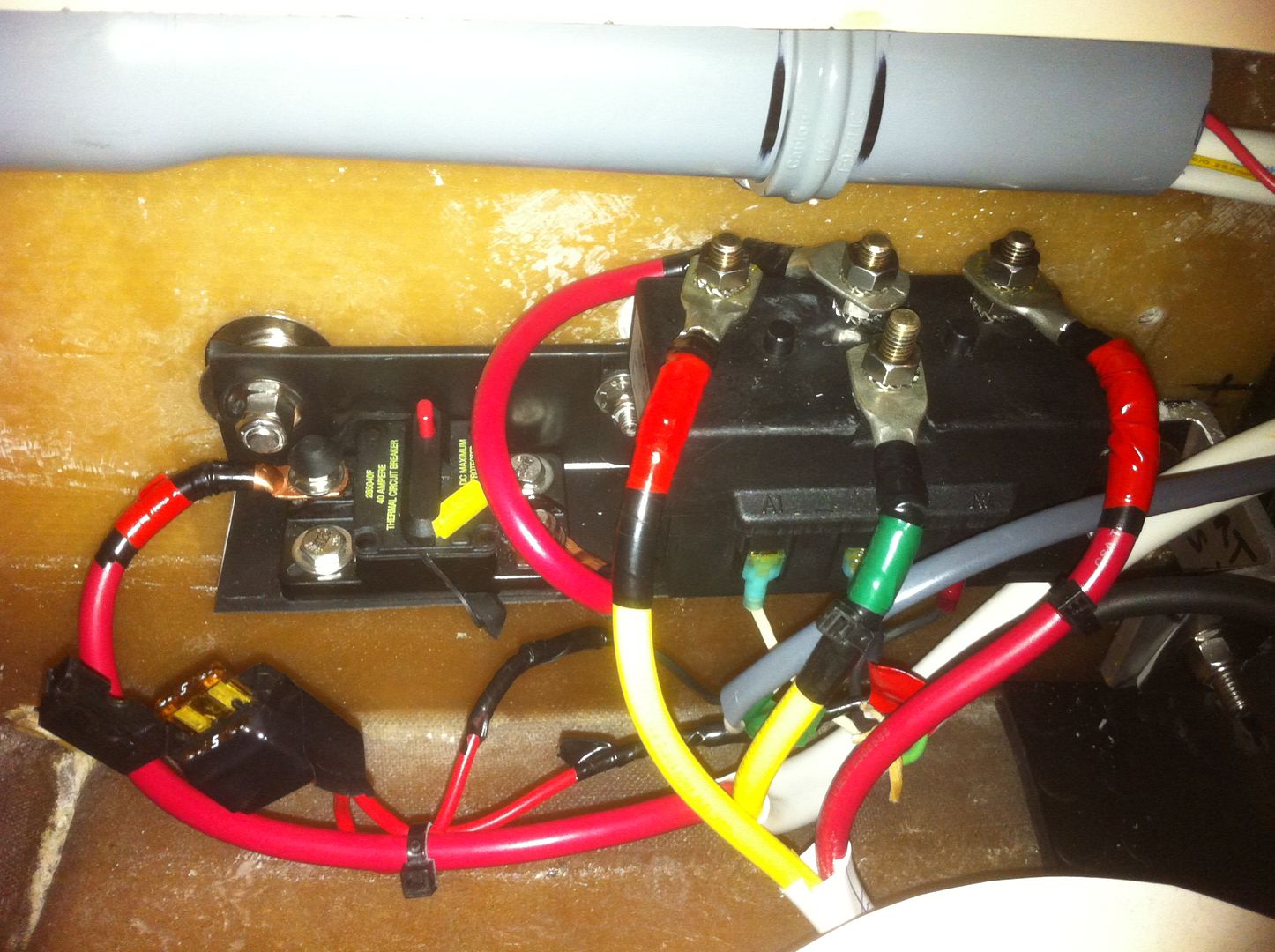
Blue Sea Systems ACR's (Auto Combining Relays). Several available. Most single units do 2 battery banks (one starter and one house bank for most Macs) but can be linked for larger applications. Their newer M series also isolate banks during starting to avoid damaging your electronics.
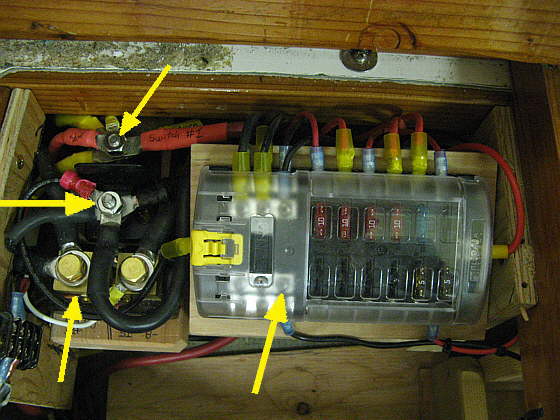
Also to add to Russ's terminal fuse box check out the Blade fuse boxes, these can be used in place of in-line fuses (in most applications) and make identifying blown fuses easier while cleaning up the rats nest.
I don't use a combiner on the Mac as I have two 6 volt batteries in series for starting and the house bank. I do have a second bank of two 12 volt batteries that can be switched from a serial configuraation (24 volts for the trolling motor) to parallel for a second 12 volt house bank. They charge from their own solar panels. I can't run a combiner between them and the 6 volt house bank since they might be in the 24 volt mode.
I do have a Blue Seas combiner for the Endeavour as it has a 12 volt start battery for the diesel and four 6 volt batteries in series and parallel for a house bank.
I'm also using the Blue Seas blade fuse blocks in both boats (Mac above) and really like them,
Sumner wrote:I don't use a combiner on the Mac as I have two 6 volt batteries in series for starting and the house bank. I do have a second bank of two 12 volt batteries that can be switched from a serial configuraation (24 volts for the trolling motor) to parallel for a second 12 volt house bank. They charge from their own solar panels. I can't run a combiner between them and the 6 volt house bank since they might be in the 24 volt mode.
I do have a Blue Seas combiner for the Endeavour as it has a 12 volt start battery for the diesel and four 6 volt batteries in series and parallel for a house bank.
I'm also using the Blue Seas blade fuse blocks in both boats (Mac above) and really like them,
Although looking at the installation diagrams from both they do the exact same thing. Just tie the batteries together when the voltage reaches charging levels. Around 12.9v. The blue sea does have an option for automatic cut out for starting. Not a big worry for me starting a small engine. The other difference I saw was the Blue Sea the have an option for a switch for storage. Not sure if that one has a parasitic draw when open. The Yandina is automatically 0A draw when it opens up.
Although looking at the installation diagrams from both they do the exact same thing. Just tie the batteries together when the voltage reaches charging levels. Around 12.9v. The blue sea does have an option for automatic cut out for starting. Not a big worry for me starting a small engine. The other difference I saw was the Blue Sea the have an option for a switch for storage. Not sure if that one has a parasitic draw when open. The Yandina is automatically 0A draw when it opens up.
You might of thought that I had one because I posted about them before and do have one of these...
I'm still of the opinion that for our needs it is just best to tie the batteries together and carry a small jumper battery if you are worried about drawing your batteries down to the point they won't start the outboard and you can't pull start it (I can with the 9.8 HP). One's batteries will last longer and charge more efficiently,
So I have been seriously thinkin about installing two buss connectors to poss. & neg of the other two batts under the cabin steps here , but have to decide which one,s to buy http://i844.photobucket.com/albums/ab1/ ... b57ceb.jpg
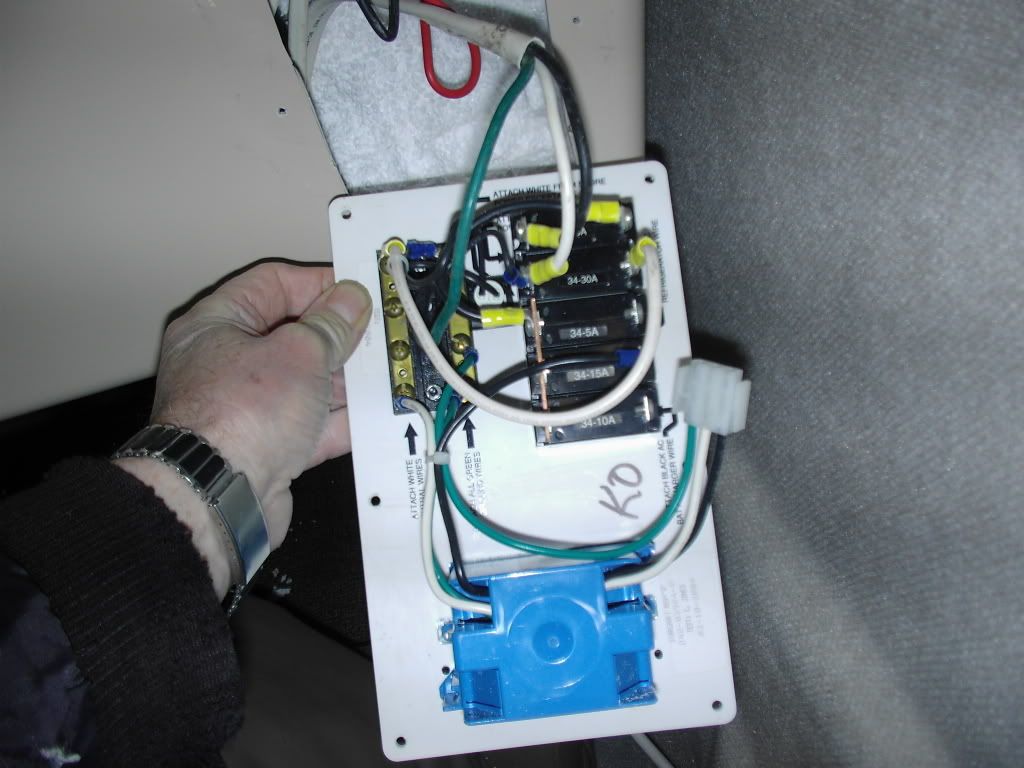
I also have bought an electrical box to install on my main 120v hydro switch panel so as to enclose all the wiring behind in a fire proof elect. box never was to comfortable with all the styro foam back there http://i235.photobucket.com/albums/ee20 ... 010073.jpg
vizwhiz wrote:Hey John (Interim), you might want to update your profile with location. It isn't uncommon for local members to happily make house calls for a small gift of...oh, i dunno...pizza, beer, or rum!
I,m now on the west coast u r on the east coast , but if u r ever out my way u r more than welcome to buy the pizza, hot chicken wings , beer & a wee dram of Scotch later on lol
That,s if I,m the John u r referring too !!
J
Lol! Noooooo.....
The OP "Interim" signed his post "john".
You mentioned you motor about 10 minutes out and 10 back every week. I caution that this alone may not be enough to keep your batteries charged. Practical Sailor covered this a few years ago. If you do not fully charge your batteries, then they will gradually diminish in capacity. I posted wiring diagrams a while back for both my AC and DC circuits. You do not seem to need all that I installed but you can use parts of them - this setup is my second attempt and seems to work very well. I use a ProMariner charger that keeps all three batteries charged and I have not lost a battery since installing this. http://www.macgregorsailors.com/forum/v ... am#p290925
RobertB wrote:You mentioned you motor about 10 minutes out and 10 back every week. I caution that this alone may not be enough to keep your batteries charged. Practical Sailor covered this a few years ago. If you do not fully charge your batteries, then they will gradually diminish in capacity. I posted wiring diagrams a while back for both my AC and DC circuits. You do not seem to need all that I installed but you can use parts of them - this setup is my second attempt and seems to work very well. I use a ProMariner charger that keeps all three batteries charged and I have not lost a battery since installing this. http://www.macgregorsailors.com/forum/v ... am#p290925
This also isn't ideal for your engine even with a proper warm up and cool down each way.