Sumner wrote:I would think that 3 batteries @92 could accept more current than a single one,
Sumner
Sorry Sumner I must not be conveying what I mean clearly, I am always criticised by my family and friends for being too technical

Batteries enter absorb state with a smart charger between 80-90% SOC as this is the percentage of SOC where the resistance begins to spike and the battery will not accept higher amperage. It does not matter if the battery is a single battery or multiple batteries. As the percentage is on the whole sum of the total. So whether it is a single 12v 125AH battery or 2 12v batteries in parallel or 2 6v batteries in series it is the SOC that leads
to internal resistance of the total that is the trigger for Bulk, Absorb or Float.
This is one reason in multiple battery banks it is recommended to re-charge each battery individually from time to time to equalise the SOC across the whole bank as if they get out of sync a single battery in the bank may reach full charge before the others, this will cause it's resistance to spike creating a false state and the charger will switch to absorb or float before the rest of the bank is up to charge.
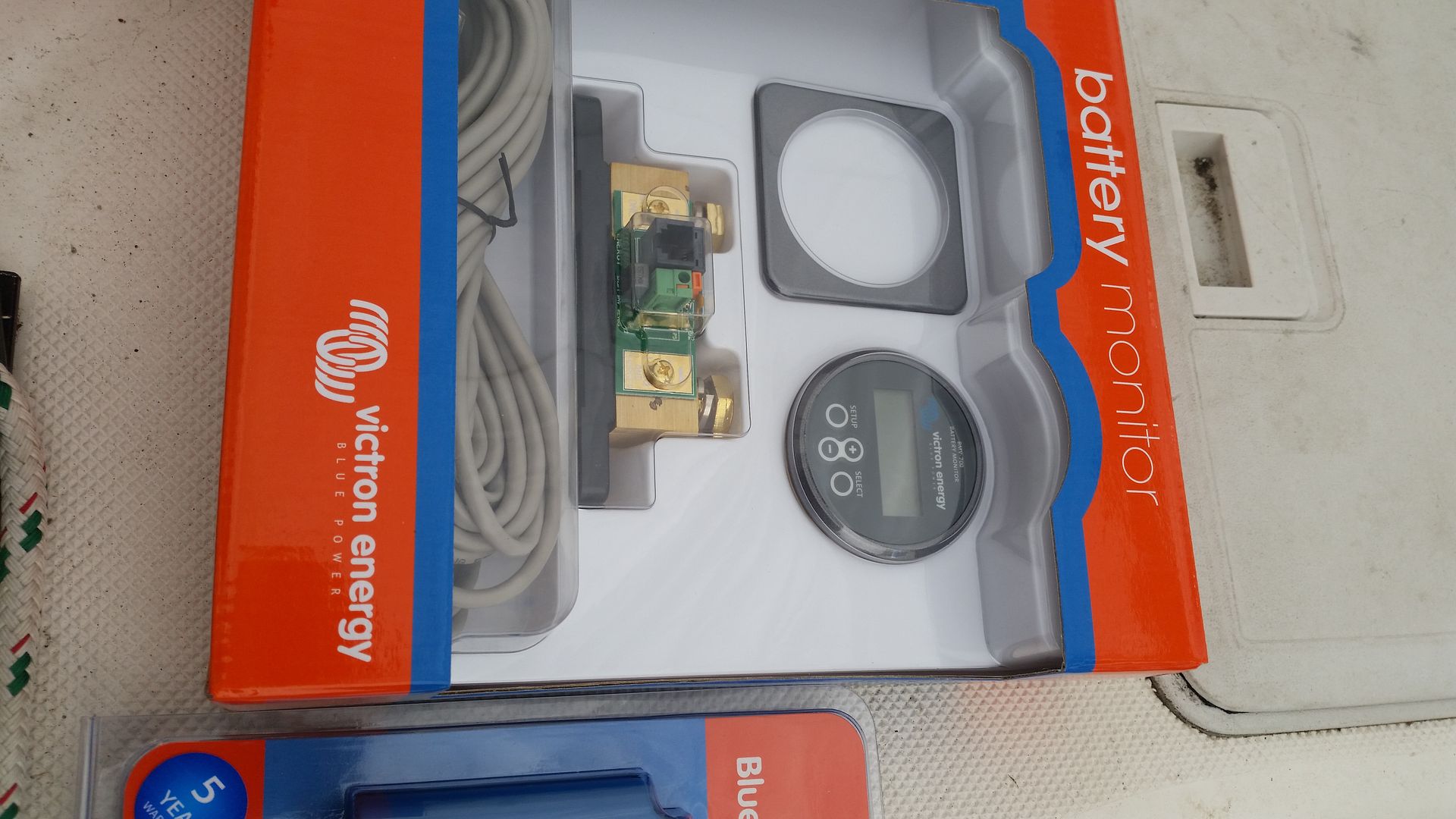
And even though the Blue Sea does a good job of of calculating Volts AMPS and AH used and or returned there are so many other factors that determine the true SOC like resistance, temperature, health of the batteries, efficiency of the charging and type of loads applied that ultimately the SOC is still just an estimation and cannot be fully relied on. It is a better estimation than just taking a volt reading while the battery is under load or charge like most $20 battery fuel gauges do but it is no more reliable that an at rest voltage reading or doing your own calculation with a couple of $15 watt meters measuring charge and load.
And for the price of a Blue Sea M2 I would rather have a DC to DC MPPT solar charger for load balancing and maintenance of my house battery, but that is a whole other story I will try and document after I get my new motor fitted.