Lithium (LiFePO4) Battery Build

A forum for discussing boat or trailer repairs or modifications that you have made or are considering.
User avatar
Inquisitor
Captain
Posts: 926
Joined: Mon Apr 23, 2007 5:24 pm
Sailboat: MacGregor 26M
Location: North Carolina Mountains

Lithium (LiFePO4) Battery Build

Post by Inquisitor »

As part of my electrical upgrades viewtopic.php?f=8&t=28020 I wanted to explore using Lithium batteries. After the huge sticker shock, I started looking into DIY alternatives. I joined another forum https://diysolarforum.com/. It was created by a YouTuber https://www.youtube.com/channel/UCoj6Rx ... Jme-5dnN0Q. I have been studying his videos and the forum extensively. In general, my questions have been answered constructively and thoroughly. They seem to have a large spectrum of users from PhD's to electrical engineers and technicians to long term, off-grid users of the various technologies. It is very active and I usually get responses in hours (if not minutes). It is a hugely active forum. There is someone on that forum who has volunteered to handle group buys of cells directly from China. He is well respected and I took the plunge and ordered with him.

Here is another site that has been invaluable. It is specifically about using lithium on boats and gets highly technical. He has also been doing it for a long time - http://nordkyndesign.com/category/marin ... y-systems/

I plan on going over the pros and cons of Lithium batteries and welcome any questions or other's experience. I feel I have a solid basis of understanding on their properties, but it is all via research and not first-hand experience (yet). This thread will hinge on my building a LiFePO4 battery from these cells. Here are three main things that pushed me into action. There are many more positive and a few negative which I'll go through in subsequent posts.
  1. 272 Usable Amp-hours
  2. $600 - This is expected to be the price of the finished battery. Unfortunately, this number can't be directly compared to a lead-acid battery. I'll go into detail later.
  3. 55 pounds
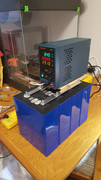
Cells - I have received the cells and they are on their first-time charge. More on this later.
Image

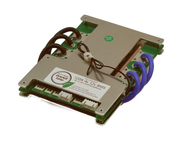
BMS - This is the other major expenditure (but not only) for the assembled battery. It becomes part of the battery, that makes it somewhat equivalent to a lead-acid battery. It adds much more features and safety... some that lead-acid don't need and others that you'd like on a lead-acid. More on this later.
Image
Last edited by Inquisitor on Fri Feb 12, 2021 11:18 am, edited 2 times in total.
Odysseus, expert on the Siren's call
User avatar
Inquisitor
Captain
Posts: 926
Joined: Mon Apr 23, 2007 5:24 pm
Sailboat: MacGregor 26M
Location: North Carolina Mountains

CONS - Part 1

Post by Inquisitor »

Let's get some of the negatives out of the way. That way, when I start gushing over the positives, I won't be accused of wearing rose-colored glasses.
  • Up front cost - $600 is a LOT of money to me. Especially since I went to Walmart and can get a hundred amp-hour marine battery for less than $100. We'll see in the positives, this is really not so bad... considering what you get.
  • Dealing with China - The risks of purchasing from China direct.
    1. Even if they say there is life-time warranty, it'll be contingent on you sending it back. That alone will cost more than just buying another cell.
    2. Getting it here - These cannot be flown. They have to come over on a ship. They have to go through customs. I seem to have hit the worst time - Ever. In the news, there has been a world-wide shortage of shipping containers. Just finding one coming to the US to put your batteries on is a problem. People who purchased in mid October, got theirs in mid November. I purchased November 30th and received it February 11th (73 days) If you want to do it this way, you'll need to plan ahead.
  • It requires some work - If you just want to buy a lead-acid battery, slap on a charger and walk away. DIY'ing it is not for you. I'll be going through the testing that must be done and some that I want to do that is extra. Buying from Walmart, you can skip all that. If you're still interested in Lithium, you can buy a BattleBorn. They come highly recommended https://www.youtube.com/watch?v=G5E30u-66VI. They also cost a lot more than this DIY method - 100 Amp-hour = $950.
  • You absolutely can not treat it like a lead-acid battery and expect long life. I'll go into detail later, but the primary thing - You can NEVER trickle charge a Lithium battery!
  • If you screw up, you have a very expensive pile of useless junk... if you're lucky. This carries a LOT of amps. You can weld with a plain car battery. This will easily push several thousand amps. I've read shorting with a crescent wrench will almost instantly melt it and spew molten metal. Gloves, face protection, plastic coated tools and LOTS of focused attention to what you're doing is REQUIRED!
Odysseus, expert on the Siren's call
User avatar
Starscream
Admiral
Posts: 1561
Joined: Tue Nov 03, 2009 10:08 am
Sailboat: MacGregor 26X
Location: Montreal, Quebec. 2002 26X - Suzi DF90A

Re: Lithium (LiFePO4) Battery Build

Post by Starscream »

Fascinating, and impressive. Makes my mods look like baby-stuff.

Did I mention that I can sew a cushion?
User avatar
Inquisitor
Captain
Posts: 926
Joined: Mon Apr 23, 2007 5:24 pm
Sailboat: MacGregor 26M
Location: North Carolina Mountains

Re: Lithium (LiFePO4) Battery Build

Post by Inquisitor »

Starscream wrote: Fri Feb 12, 2021 9:10 am Fascinating, and impressive. Makes my mods look like baby-stuff.

Did I mention that I can sew a cushion?
:D Don't sell yourself short. I'm afraid of that sewing machine... I just know its going to stab me! I'm also concerned my cushions will be a several hundred dollar flop that I'll be embarrassed to sit on myself... much less let anyone else see them. I'd then have to go to a real seam-person and pay several thousand to have them done.

For this battery build, I hope to make this thread cook-book for someone interested in tackling it themselves. I also want to give a launch point for those that want to know the why's and how-to's. If I don't know the answer to anyone's question, I'll be just as interested in knowing the answer, and I'll get it.
Odysseus, expert on the Siren's call
User avatar
Inquisitor
Captain
Posts: 926
Joined: Mon Apr 23, 2007 5:24 pm
Sailboat: MacGregor 26M
Location: North Carolina Mountains

Top Balancing the Cells

Post by Inquisitor »

Battery Storage Differences
Whereas lead-acid batteries like to be kept topped-off and trickle charging is the way to go for long term storage, Lithium prefer a lower state of charge and no trickle charging. They have almost zero self-discharging properties.

Balancing Cells
All batteries (including lead-acid) have multiple cells. The battery works best if all the cells output the same as their siblings. For Lithium batteries, the common way to do this is to fully charge all cells in parallel (before putting them together in series). This is called Top Balancing. This is only necessary once when building the battery. A BattleBorn has already done this procedure for you. This way all cells start discharging from a known high-point. When they discharge, there will be some variation in their discharge rate and one will reach the shut-off value first. However, once recharged again, they will all come back to this top-balance point. The one that discharged the quickest will also charge the quickest. This is not exactly true, but pretty close for tens or hundreds of cycles. I'll go into the BMS later that handles any slight divergence from this norm.

Charging
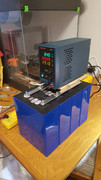
The cells come from China relatively discharged (around 25% of capacity). Charging this much battery (of any chemistry) takes lots of time with small chargers. My charger is a small bench top charger. It can charge up to 30 volts and up to 10 amps. It is quadruple'ee hard for this first Top Balance since we need to place the four cells in parallel (all positives connected together and separately connecting all negative posts together) we will temporarily have a nominal 3.3 volt battery of 1080 Amp-hour capacity. The beautiful thing about charging them this way, this bench-top charger can be configured to push a maximum voltage and as the battery comes up to this voltage, the current will drop to zero. At that point, they will be exactly at at that same set voltage in each cell. That's how we'll know they're "charged". The value necessary is 3.65 volts. Please watch the first referenced video below for the step-by-step procedures.

Image

Charge Time
If I could get the cells to take the full ten amp rate of my charger to bring it up from 25% to 100%, it will take 1080 Ahr * 75% / 10 amps = 81 hours! Considering some of charging will not be at the full ten amps, it'll probably take most of a week. This is no fault of the lithium chemistry, it's just because it's such a big battery and I'm using a small charger. The cells are rated to handle 1C charging. If I had a charger, that could push 1080 amps, I could charge these in one hour. :)

References:
Odysseus, expert on the Siren's call
User avatar
Inquisitor
Captain
Posts: 926
Joined: Mon Apr 23, 2007 5:24 pm
Sailboat: MacGregor 26M
Location: North Carolina Mountains

Top Balancing the Cells (Continued)

Post by Inquisitor »

My cells are still assembled in parallel and are getting near the top. The voltage is set to 3.65 volts on the bench power supply and the current has fallen below 0.4 amps. For those that might use this thread as a check list for their own build, I am following this video https://www.youtube.com/watch?v=x5ABvbbics8 and some other references. I've re-watched it a couple of times while performing my Top Balance and wanted to elaborate on a couple of items.
  • The cells Will used in the video have massive posts. In some of his videos he actually used an electric impact torque wrench. DON'T DO THAT! The cells I'm using are threaded holes in Aluminum for M6 bolts. There are not that many threads and torqueing too deep into the hole can bust through into the cell. On the DIY forum, several people have stripped them out because they over torqued it or didn't use enough threads and others has busted into the cell. NOT Good! Most forum people have said 25 to 40 inch-pounds of torque is enough. Studs came with mine, which is considered the best method. I simply finger tight the stud into the hole and backed it off a 1/4 turn. Then added the bus bars and nut with minimal pressure on the wrench.
  • If you're buying one of the bench power supplies like I did, get one that is configurable to 2 decimal places on voltage so you can set 3.65 volts. Many are only one decimal place like Will's in the video. I didn't really see any price jump for that extra digit.
  • Some recommend not driving the "Chinese" power supplies at full capacity. I set mine to a maximum of 8 amps for a while, but the fan rarely cycled and heat never seemed an issue. I cranked it back up to 10 amps. Considering I'm only running it at 3.65 volts (thus 36.5 watts) I'm not near the rated wattage capacity of the device. I've had no trouble and it never got even warm. YMMV.
  • In Will's video he suggests putting them in series and using a car charger on it to speed things up. I also did this. WARNING: Yes you can as long as you're monitoring it. I monitored each cell voltage during this phase to make sure none got over 3.5 volts. Two cells reached this number before the others. At which point, I re-arranged them back in parallel and placed them back on the bench charger. If you want to go unattended, I'd keep them on the bench charger. They won't get over charged.
Odysseus, expert on the Siren's call
User avatar
Inquisitor
Captain
Posts: 926
Joined: Mon Apr 23, 2007 5:24 pm
Sailboat: MacGregor 26M
Location: North Carolina Mountains

PROS - Part 1 Capacity, Weight and Longevity

Post by Inquisitor »

Anyway you roll it, capacity is just phenomenal with Lithium batteries. If you only day-sail or even camping for a weekend and use only the stock lighting (better yet... LED replacements) you don't need Lithium. Maybe you want lots of toys... marine electronics, sonar, radar, chart plotters, autopilots, more lights... or even the big items... windlass, refrigeration, maybe even a microwave. Then being without shore power for days, weeks, you'd really should consider Lithium.

Hour rate vs C-rating - It seems the lead-acid community uses an hour rate to describe how they are tested. The most common is at a 20 hour rate. This means they discharge it such that it will last 20 hours. For example, for a 100 Ah battery, they'll discharge it at 5 amps, thus 100 ah / 5 amps = 20 hours. The lithium world seem to call their C-rating. It really is the same thing. It too is a fraction. The equilivent C-rate to a 20 hour rate is 0.05C. Multiply the Ah rating of the battery by the 0.05C rate and you get 5 amps as the discharge rate. Easy peasy! The major difference, the Lithium people don't want to waste 20 hours of time... the standard by which Lithium batteries are advertised is a 0.2C discharge rate or a 5 hour rate in the other vernacular.

Time for some numbers. For, the lead-acid side, I'll use the Trojan battery brand. I've read these are the best money can buy. If you disagree, I'll take your word for it. I reference them as they have great datasheets https://www.trojanbattery.com/literature/#datasheets and seem more concerned about their reputation instead of inflating numbers for marketing reasons.

I think several on this forum go with the two of the 6 volt T-105's for a house battery. This battery is rated at a 20 hour rate for 225 Ah. Unfortunately, this is not the usable amp-hours. If you wish your investment to last any length of time, you can only discharge it to the 50% DOD. If you honor this, you can get a very respectable (for lead-acid batteries) 1200 cycles. But, you only can use 113 Ah. This is if you discharge them at a 20 hour (0.05C) rate. Thus you can only draw them at 225 / 20 = 11 amps. It gets worse at the typical lithium rate. At the 5 (0.2C) rate, you can only get 185 Ah (93 Ah usable). This house battery weight will be 124 pounds. The Amazon price for two is $830.
Reference excerpt: Image

For a non-DIY Lithium equivalent, I'll use a BattleBorn. They seem to be one of the most respected Lithium sellers. This battery is rated and verified independently at 100 Ah. Lithium (LiFePO4 specifically) are rated at this with complete 100% DOD usage and for 3000 to 5000 cycles. This house battery weight will be 32 lbs. The Amazon price is $949.
Summary: Image
Odysseus, expert on the Siren's call
User avatar
Inquisitor
Captain
Posts: 926
Joined: Mon Apr 23, 2007 5:24 pm
Sailboat: MacGregor 26M
Location: North Carolina Mountains

Battery Management System

Post by Inquisitor »

Its about time to talk about the BMS. There is no equivalent in the lead-acid world. Lithium cells are more finicky than lead-acid and no one wants to deal with that manually. So... in the lithium world, they have come up with a computer solution. These devices are usually built-in to a non-DIY battery like a BattleBorn. There are many different brands, with different features. I'll just talk about the one I'll be using. Most premium BMS's will have these features. There main purpose, they protect the battery from careless use. Think of it mainly as being multiple, self-resetting circuit breakers.
  1. Cell over voltage - BMS will disconnect the incoming charge circuit. Lets you continue to discharge. Resets once cell can accept more charge.
  2. Cell under voltage - BMS will disconnect the outgoing load. Lets you continue to charge. Resets once cell has enough charge.
  3. Battery over voltage - Like 1 at the battery level
  4. Battery under voltage - Like 2 at the battery level
  5. Charge over current - BMS will disconnect the incoming charger and won't let you shove too much current into it. This and Discharge over current are really not about protecting the cells. They can take a lot more load. This is about protecting the BMS itself. The electronics are sized for these rating. In my case, the BMS will only charge/discharge at 130 amps before these protections are triggered. The battery can charge as high as 270 amps and discharge at 540 amps safely!
  6. Discharge over current - BMS will disconnect the outgoing load if you try to draw too much from it.
  7. Charge over temperature - Like 1 if the battery gets too hot.
  8. Discharge over temperature - Like 2 if the battery gets too hot.
  9. Charge under temperature - Like 1 if the battery gets too cold. This is one of the CONs of Lithium batteries. They can be damaged if charged when below 32F (0C). Typically, batteries in cold climates actually have warming pads if they need to be charged when freezing.
  10. Discharge under temperature
In addition to protections, the one I'm using (Overkill Solar https://overkillsolar.com/product/bms-120a-4s-lifepo4/) has some other nice features. It include a BlueTooth connection to see state of charge and drill down for diagnosing problems. It also is configurable and can be interfaced with external computers or microprocessors to add features. 8) Way cool!
Odysseus, expert on the Siren's call
User avatar
Inquisitor
Captain
Posts: 926
Joined: Mon Apr 23, 2007 5:24 pm
Sailboat: MacGregor 26M
Location: North Carolina Mountains

BMS (Continued)

Post by Inquisitor »

I forgot to add another major aspect of a BMS. They also maintain balance between cells. Obviously from above, the cells are being monitored by small gauge wires to each cell. These same wires will also supplement charging of low cells so that they all keep balanced. For well matched cells that have been Top Balanced, this is rarely needed. It is available with a BMS and it does help in the longevity and capacity.
Last edited by Inquisitor on Fri Apr 23, 2021 4:03 am, edited 1 time in total.
Odysseus, expert on the Siren's call
User avatar
Inquisitor
Captain
Posts: 926
Joined: Mon Apr 23, 2007 5:24 pm
Sailboat: MacGregor 26M
Location: North Carolina Mountains

Capacity Test

Post by Inquisitor »

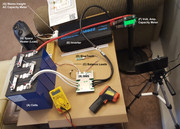
If you are following along with the intent of building your own DIY LiFePO4 battery, this step is purely optional (unlike the Top-Balance step). I'm doing it to QC the cells as China doesn't do this. It would add way too much to the price of the cells. A BattleBorn lithium battery company will typically do this. Some companies will do it on every battery and some will do it on samples taken out of a production runs. Prices vary, YMMV.

In the following image, the parts A-D will be built into the case once this project is complete. The rest is to perform the test. Testing in this way is very strait forward the BMS shuts off when a low voltage is reached and since LiFePO4 batteries are more tolerant of 100% DOD, its safe to run them till is shuts down. As discussed above, Lithium battery capacity are rated at a higher discharge rate than lead-acid. For my 272 Ah hour cells, I need to discharge it at 0.2C * 272 Ah = 54.4 amps.

The results are:
275.2 amp-hours
3513.4 watt-hours
5:06:18 of time


Can't get much closer than that!

Image
Odysseus, expert on the Siren's call
User avatar
Be Free
Admiral
Posts: 1895
Joined: Fri Nov 23, 2012 6:08 pm
Sailboat: MacGregor 26X
Location: Steinhatchee, FL

Re: Lithium (LiFePO4) Battery Build

Post by Be Free »

"I think several on this forum go with the two of the 6 volt T-105's for a house battery. This battery is rated at a 20 hour rate for 225 Ah. Unfortunately, this is not the usable amp-hours. If you wish your investment to last any length of time, you can only discharge it to the 50% DOD. If you honor this, you can get a very respectable (for lead-acid batteries) 1200 cycles. But, you only can use 113 Ah. This is if you discharge them at a 20 hour (0.05C) rate. Thus you can only draw them at 225 / 20 = 11 amps. It gets worse at the typical lithium rate. At the 5 (0.2C) rate, you can only get 185 Ah (93 Ah usable). This house battery weight will be 124 pounds. The Amazon price for two is $830."

Kudos on the battery build. I looks like you are doing everything by the book.

Just a couple of minor lead acid points: The local price for T105's are under $150 each. I think I'm fairly typical and I have 4 of them so double the weight you quoted but still under $600. That also gives me a usable 225AH. I think I'm a little above average for energy requirements, but I still can't pull more than 7A with everything on. That's well below .05C. I know you are designing for a very energy hungry setup that I have and lithium is definitely the way to go for that. Keep up the posting. I can't wait to see how it works on the water.
Bill
2001 26X Simple Interest
Honda BF40D
"If I were in a hurry I would not have bought a sailboat." Me
User avatar
Inquisitor
Captain
Posts: 926
Joined: Mon Apr 23, 2007 5:24 pm
Sailboat: MacGregor 26M
Location: North Carolina Mountains

Re: Lithium (LiFePO4) Battery Build

Post by Inquisitor »

Be Free wrote: Tue Feb 16, 2021 8:06 am ...
Kudos on the battery build. I looks like you are doing everything by the book.

Just a couple of minor lead acid points: The local price for T105's are under $150 each. I think I'm fairly typical and I have 4 of them so double the weight you quoted but still under $600. That also gives me a usable 225AH. I think I'm a little above average for energy requirements, but I still can't pull more than 7A with everything on. That's well below .05C. I know you are designing for a very energy hungry setup that I have and lithium is definitely the way to go for that. Keep up the posting. I can't wait to see how it works on the water.
by the book - :D Only way I can is on the top of the shoulders of giants. Having no experience with even lead-acid except to totally ruin a pair. At the moment, on the other forum I am getting a massive core-dump on fuses. Who knew... a 150 amp fuse/circuit breaker will open at 160 amps, but might not at 20,000 amps!!?? I'll be adding a post on that one in this thread once I've exhausted my questions on the other forum.

I'm glad to hear about the T105's. That's good information for those wishing to stick with the tried and true. I couldn't imagine paying the Amazon price for batteries, but living in the sticks, it would be my only choice for those Trojans or... for that big a savings, driving to Atlanta.
Odysseus, expert on the Siren's call
User avatar
Inquisitor
Captain
Posts: 926
Joined: Mon Apr 23, 2007 5:24 pm
Sailboat: MacGregor 26M
Location: North Carolina Mountains

PROS - Part 2 Energy Efficiency

Post by Inquisitor »

Battery Energy Efficiency is another aspect where Lithium batteries shine. This is percentage of electric energy you get out of a battery versus the amount you put into the battery. The importance of this is how wasteful the chemical to/from energy conversion is. This is your hard won energy generation... solar, wind, water turbine... maybe you pedal'd it. :D You don't want to waste it!

These are numbers off the Internet... YMMV!
Standard wet battery: 80%
Gel and AGM: 85% to 90%
Lithium: 97%

For lead-acid these are a base-line. As many people are trickle charging their batteries, this only uses more energy that is never returned. That just makes those percentages go down. And have I mentioned, :) Never trickle charge lithium based batteries.

I just recharged this set of batteries and used 3600.6 watt-hours... calculating a 97.6% energy efficiency.
Odysseus, expert on the Siren's call
User avatar
Inquisitor
Captain
Posts: 926
Joined: Mon Apr 23, 2007 5:24 pm
Sailboat: MacGregor 26M
Location: North Carolina Mountains

Battery Monitor and Configuration

Post by Inquisitor »

An added benefit of the Battery Management System (BMS) is its ability to monitor and configure optimizations of the battery. This is included in the $600 estimate whereas the lead-acid would require some kind of external monitoring system. I tried an Internet search to get an idea of the cost, but lead-acid versions seem to vary from tens of dollars to as much as several hundreds of dollars. Didn't really look into their benefits or capabilities.

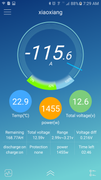
As far as what's built-in to this BMS, I have not fully explored everything yet. The main things, I've started using is the dashboard that show current amp and wattage being used or charging, projected capacity and temperature data.
Image
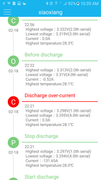
Event history, telling when and what has happened for charging and discharging cycles. It also shows error conditions, like when I tried to draw more than 1700 watts as in this screen shot.
Image
I've only scratched the surface as their are six or seven other screens of data, graphs and configurations... like this one that has 52 configurable parameters (with defaults for LiFePO4 already configured). I'll be exploring their optimizations as I go.
Image
Odysseus, expert on the Siren's call
User avatar
Inquisitor
Captain
Posts: 926
Joined: Mon Apr 23, 2007 5:24 pm
Sailboat: MacGregor 26M
Location: North Carolina Mountains

PROS - Part 3 Longevity

Post by Inquisitor »

Longevity has been hard to get a handle on in the industry. The formulation of LiFePO4 came about in the mid 2000's due to a European standard for safety. The spec required driving a nail through the cells and it not causing harm. Early companies looking to jump on the bandwagon, sold them as drop-in replacements. Because of this bad P.R., companies went out of business for deceiving the public and cells got a bad reputation for short life. This is because they were treated like lead-acid batteries. Have I mentioned... never trickle charge a lithium battery! :)

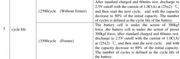
Now the industry has done an about face and actively educates users, so longevity is going way up... not because the batteries have changed, but because, they are being used properly and now have sophisticated BMS units to enforce properly using the battery. The next problem becomes trying to project longevity from data available. These batteries have been around for only 15 years... and those used properly are still in service. Rapid testing artificially shortens their lives (just as in lead-acid testing). And new things are being learned. For example, this chart...
Image
... let me decipher this in the context of my battery build.

If I just lay the four cells on the desk as the picture above. Charge them at a rate of 272 amps for 1 hour till full, rest 1 hour, and then discharge them at 272 amps till they are at 0% of rated SOC. After 2500 cycles, they will have 80% of capacity! Can ANY lead-acid battery even do 100 of these cycles. Three hours per cycle... This test takes almost a year to finish!

The second part of that chart says that simply clamping the batteries to keep them from expanding, will add 40% more life! When I say expanding, I've measured these cells, and we're talking about less the 1 mm expansion.

I'm studying from the other forum and white papers on these batteries. Simply using at lower rates (like only 100 amps) greatly increases longevity. Also... using a subset of the full SOC, (lead-acid wants you to only use between 50 and 100% SOC) Lithium batteries benefit from a reduced set, say... 10% to 90% or 20% to 80% SOC. In some documentation, they're talking about 100k cycles... Tesla is claiming a million mile battery.

If this is anywhere near true, my great-great-great grand children will still be using THIS battery.

YMMV
Odysseus, expert on the Siren's call
Post Reply