

As far as a bilge pump, I don't have one. The first boat I've owned that didn't have one. That seemed strange at first. But I don't get any water in there. There are no thru hulls, so the only water comes from topsides. I agree with your idea of removing those drain plugs.
Since the Mac has no proper bilge, instead many compartments, if I was to add a bilge pump, I'd make it portable. One that I could move to compartment to compartment as needed.
New 26X owner, going to need a lot of help!
-
SlowSL
- Chief Steward
- Posts: 61
- Joined: Tue Nov 17, 2020 6:17 am
- Sailboat: MacGregor 26X
- Location: Northern Indiana
Re: New 26X owner, going to need a lot of help!
That's a good idea, but the problem becomes the length of discharge hose, wiring, etc. with it hooked up and ready to go fitted to a discharge port. Otherwise, it would just have to be a loose hose coiled up and run out of the cockpit or hatch in an emergency. I can see that as being more of a pain in the long run. I think time would be better spent getting to shore in a hurry and letting the pump do its thing automatically. I'd like to have it plugged in and ready if something were to happen. I don't mind if a deck fitting or something leaks without noticing for a while or any other small leak which can be sealed up. Cleanup with a vac or sponge is no problem. My biggest concern would be a significant hull breach. It's going to be warm enough here this week, I think enough to melt the ice. My initial thought was to see where the lowest area is that is collecting the most amount of water, but that wouldn't make much sense. Assuming the pump is being used in an emergency, I'll be motoring to shore quickly, changing the attitude of the boat, the water will be forced to the stern anyway, so might be best to keep it mounted in the stern somewhere. I don't know, I've only set foot inside the boat a few times. Once I get a chance to better look at all of the areas and where the water is able to flow, I can get a better idea.Russ wrote: ↑Fri Feb 26, 2021 6:19 am As far as a bilge pump, I don't have one. The first boat I've owned that didn't have one. That seemed strange at first. But I don't get any water in there. There are no thru hulls, so the only water comes from topsides. I agree with your idea of removing those drain plugs.
Since the Mac has no proper bilge, instead many compartments, if I was to add a bilge pump, I'd make it portable. One that I could move to compartment to compartment as needed.
-
Russ

- Admiral
- Posts: 8301
- Joined: Thu Oct 11, 2007 12:01 pm
- Sailboat: MacGregor 26M
- Location: Bozeman, Montana "Luna Azul" 2008 M 70hp Suzi
Re: New 26X owner, going to need a lot of help!
I hate to tell you, but if you have a significant hull breach, an electric bilge pump won't save you. A bucket might.
I remember when I pulled the knot meter transducer from my Hunter, a hole about an inch and a half, the water gushed in like a fire hose. It was quite terrifying to think if I couldn't get the plug back in I'd be in a world of hurt. I was amazed at how much water came in for the few seconds as I swapped the transducer for the plug.
Now your idea of having an automatic pump does have merit and many have installed them. However, our boats have no thru-hulls to leak which is a huge benefit. With my Hunter, I once hit a floating log. It bounced under the boat and hit the rudder skeg and bent it. Well, actually, it pulled the skeg back away from the hull and the thru hull bolts holding it in began to leak. So I was grateful to have that automatic pump keeping up with the leak.
This forum has 15+ years of history. I don't recall a single incident of a hull breach. There was one incident of a modified Mac that had a porthole installed below the gunwale and left open. When the boat healed, water gushed in. I don't recall if the captain was able to empty it with a bilge pump. I think he bailed much of it out.
Just remember when installing the pump to make sure the outlet rises well above. I would prefer the transom so when healing the outlet is not submerged.
--Russ
-
Starscream

- Admiral
- Posts: 1561
- Joined: Tue Nov 03, 2009 10:08 am
- Sailboat: MacGregor 26X
- Location: Montreal, Quebec. 2002 26X - Suzi DF90A
Re: New 26X owner, going to need a lot of help!
On the subject of bilge pumps and the 26X, I have one under the galley leading up to a thru hull I mounted as high as possible. The space under the galley allows access to the highest point to drill a hole thru the hull.
I planned to add a second pump in the small compartment aft of the aft berth, where the motor well drain passes through, and run the discharge hose up through the transom to almost the height of the captain's seat, but accessibility problems make that unlikely. Now the plan is to just put the second pump under the aft berth and run the hose back to the galley area. A second thru hull right beside the first might look odd, but it's the best option on the X.
My constant fear is the flimsy hose draining the motor well, since the drain exit is mostly submerged. The sink drains can also be submerged with any kind of waves or heeling. The bilge pumps should be able to keep up with that kind of leak.
I planned to add a second pump in the small compartment aft of the aft berth, where the motor well drain passes through, and run the discharge hose up through the transom to almost the height of the captain's seat, but accessibility problems make that unlikely. Now the plan is to just put the second pump under the aft berth and run the hose back to the galley area. A second thru hull right beside the first might look odd, but it's the best option on the X.
My constant fear is the flimsy hose draining the motor well, since the drain exit is mostly submerged. The sink drains can also be submerged with any kind of waves or heeling. The bilge pumps should be able to keep up with that kind of leak.
-
ris

- Captain
- Posts: 705
- Joined: Sat Feb 28, 2015 4:27 pm
- Sailboat: MacGregor 26X
- Location: Frostproof Florida
Re: New 26X owner, going to need a lot of help!
When we first launched our boat a few times we would find water in the boat after launching. We would clean it out of the aft bilges and we would have no more water until we would launch the boat. We eventually found out that on steep ramps sometimes water would come in through the bilge pump discharge lines. We removed the pump ran new drain lines and have no problems. We also change the motor well drain lines every two years and put basement water alarms that are battery operated in three places in the bilge. Those things are loud and both times one has gone off it was a water line that had leaked about a pint of water. Our standard operating procedure for big hole in boat is beach the boat. We also carry a couple of large hole plugging items just in case. Unless we are doing a crossing of one of the great lakes, gulf crossings or something like that we pull our dingy so we have another vessel if the boat fills with water. We just really never think much about it.
Richard
Richard
-
kurz

- Admiral
- Posts: 1304
- Joined: Mon Dec 06, 2010 9:07 am
- Sailboat: MacGregor 26M
- Location: Zürich, Switzerland, Europe
Re: New 26X owner, going to need a lot of help!
Just to say: My 26m from 2011 has the through hull under the waterline. So if it will fail, the Mac will sit 1 meter lower in the water...
-
Jimmyt
- Admiral
- Posts: 3402
- Joined: Sat Jul 18, 2015 9:52 am
- Sailboat: MacGregor 26M
- Location: Mobile AL 2013 26M, 60 Etec
Re: New 26X owner, going to need a lot of help!
As Kurz says, the boat just sits lower in the water - it won't sink completely unless you've removed all of your flotation. So, a bilge pump is really a personal choice, allowing you to POSSIBLY self-rescue rather than call the coast guard or tow boat US.Russ wrote: ↑Sat Feb 27, 2021 6:14 amI hate to tell you, but if you have a significant hull breach, an electric bilge pump won't save you. A bucket might.
Just remember when installing the pump to make sure the outlet rises well above. I would prefer the transom so when healing the outlet is not submerged.
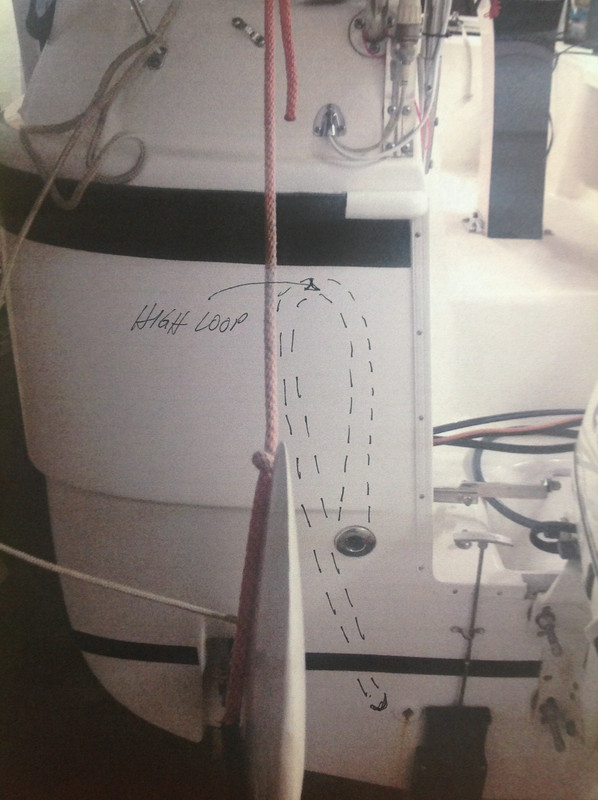
Absolutely agree with the outlet well above the pump. I put mine as far up; and as close to center of the transom as I could get. I looped the discharge pipe about a foot over the thru-hull, for further insurance against backwash in following seas. Also, the discharge hose should rise continuously to the discharge, or loop (if you install a loop like I did); without dips and traps. They are starting to correct pump designs to prevent airlock, but its safest to route your discharge hose properly. Also, I recommend testing your pump through several cycles to make sure it works properly.
My test rig - to prevent having to fill the bilge to test the pump...
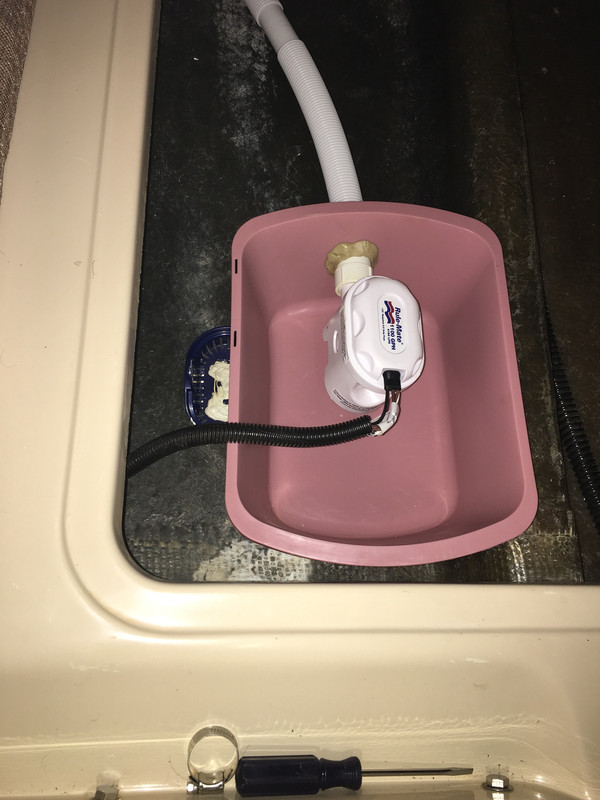
I have a Rule 1100gph pump. I have tested in place and it would come close to keeping up with a 1-1/2" hole - until the battery gave up. I haven't run the numbers, but the pump surprised me. The idea is to keep the boat up long enough, and the level low enough, to find and cram something in the hole. A bigger hole, well you have to find it quicker and get it slowed down. It's like a seat belt. If you get hit head-on by a semi going 70 mph, the seatbelt won't save you. That doesn't mean I won't bother to wear them - for the numerous other types of mishaps when it could save me.
By the time the cabin sole has enough water to efficiently bail with a bucket, you have a lot of water on board. Plus, you're bailing into the cockpit. If your thru-hull for the sink/motor well is the issue, you're basically bailing in a circle. In my opinion, an automatic bilge pump with direct overboard discharge is better than a bucket for the most likely leak - that stupid plastic thru-hull with no sea cock... Plus, if you are alone, you'd have to bail and manage the boat at the same time. I'm not that talented.

Last edited by Jimmyt on Sun Feb 28, 2021 8:29 am, edited 1 time in total.
Jimmyt
P-Cub-Boo
2013 26M, Etec 60, roller Genoa, roller main
Cruising Waters: Mobile Bay, Western Shore, Fowl River
P-Cub-Boo
2013 26M, Etec 60, roller Genoa, roller main
Cruising Waters: Mobile Bay, Western Shore, Fowl River
-
Russ
- Admiral
- Posts: 8301
- Joined: Thu Oct 11, 2007 12:01 pm
- Sailboat: MacGregor 26M
- Location: Bozeman, Montana "Luna Azul" 2008 M 70hp Suzi
Re: New 26X owner, going to need a lot of help!
I keep forgetting about this. With ballast IN, that sucker sits underwater
 .
. Roger also put no seacock on that flimsy thing. It's always a worry point for me.
--Russ
-
kurz
- Admiral
- Posts: 1304
- Joined: Mon Dec 06, 2010 9:07 am
- Sailboat: MacGregor 26M
- Location: Zürich, Switzerland, Europe
Re: New 26X owner, going to need a lot of help!
Well in my 26m the through hull is below water also with empty ballast.
-
OverEasy
- Admiral
- Posts: 2873
- Joined: Mon Sep 28, 2020 11:16 am
- Sailboat: MacGregor 26X
- Location: NH & SC
Re: New 26X owner, going to need a lot of help!
Big Project and the people here have really come out in support of your project!
No surprise there as this forum has some really great people.
There are several YouTube channels on fiberglass boat repairs (like Boatworks etc...) to help give you techniques and suggestions for boat repairs and process and supplies. Never hurts to learn new things to adapt to your specific needs.
From a engineering perspective the ice has done whatever damage it has done already when it froze.
Getting it out will help avoid more problems with "growth" and permeation into exposed fiberglass which can wick moisture into the material dependent upon fabric saturation and delamination issues. It takes forever it seems to get moisture out once it has found its way in. Hot sunshine and lots of ventilation in large quantities helps. you don't want to seal in moisture into the fiberglass repairs you will be making.
The support and trailer capabilities will determine if you can fill your ballast tank and see if there are any interior or exterior leakages. It is a LOT of weight so be careful. Check your tire ages as dry rot and internal delimitation of the tires comes with time irrespective of how they may look. tire blacking can give a false sense of security that has caused problems for people thinking their tires were ok as they "looked" good. checking out the trailer welds and supports on any trailer is prudent especially if there are warning flags of neglect like missing bunks (etc...).
As many have already said, bilge pumps are a matter of personal preference. Some of that decision making involves how far from shore you plan to be and what kind of shore awaits you.... Soft shallow sandy beaches (preferably with prearranged lodge chairs and bar service for me) or steep craggy broken chunky sharp granite and pounding surf (my own personal nightmare) or something in-between. There is no way I'm gonna be bailing and sailing (or motoring) at the same time. When deciding on a bilge pumps realize there are 3 primary 'bilge' compartments and 2 secondary ones. The primary ones are across amidship. the 3 primaries are Port & Starboard sides outboard of the ballast transfer tubes and centrally under the aft dinette bench and galley. The two secondary bilge locations are under the aft berth either side of center (there are two isolated recesses which can be their own ponds due to the way the ballast tank and structure has been fabricated on the Mac 26X. Be aware that bilge pumps typically have low head (pressure ) capabilities so height of discharge, discharge hose type and length all negatively impact their ability to get rid of water. Baseline estimates indicate a 50% decrease in actual pump discharge capability with as little as a cumulative 3 foot rise to discharge. this would include any top loops. Smooth interior surface tubing that will not kink or collapse are recommended over clear vinyl. clear vinyl collapses when bent and become brittle with age. The last thing one wants is to have a bilge system that doesn't work when needed or one that has to be periodically repaired for hose issues. Bilge pumps require the impeller to be submerged so there will always be some water left behind. One of the better ways I have found to get rid of the remaining water is a manual piston type bilge pump, a kids draw piston super soaker and a wet/dry vacuum. rigging up a below floor 12 VDC ventilation fan helps circulate air and to dry things out. Each bilge pump should have it's own control that allows it to be turned on and allows it to be tested. Most times an automatic bilge pump or incorporated water level switch is highly recommended.
(On a similar note, the lack of seacocks on all 4 of the existing overboard drains on the Mac 26X bothers me as at least 3 of them are under water when the ballast tank is full and the boat loaded. I have a habit of repeatedly checking these fittings and hoses. I am also giving serious consideration to eliminating the sink drains for the galley and the head. Most locales now have regulations prohibiting overboard domestic water overload dumping nowadays anyways. not much I can do about the aft motor well and chain locker drains though other than adding seacocks to them as close to the through ports as I can.)
Something I have seen done for vessels with hull impact damage and unknown history is to fill the interior hull with water to the floatation line to determine if there are any leaks while it is on dry land. I'd be cautious with this as with filling the water ballast due to the weight and support issues.
As far as making/replacing the bunks, I personally have a mindset that it doesn't hurt to add additional support blocking preemptively before getting under anything bigger than I am. Using a pair of HEAVY DUTY scissor jacks secured to footing boards and a temporary bunk can make the job a lot easier. Been there-Done that-Got the Teeshirt.
On the personal safety aspect please use plenty of ventilation, a bio-mask filter and bleach water when going inside or when you start to clean-up the interior as it looks like mold and mildew have already settled in the interior. you really don't want that in your lungs or sinuses. (especially after we all have been surviving the past year to be able to talk about it).
You may want to check your electrical systems onboard give there is water damage. The old original wire insulation doesn't hold up well in water nor does it age gracefully. The wires may have also chafed over time. Copper wires also work harden when subjected to repeated movement over time. Corrosion is another issue, especially in salt water environments.
So I hope this might be of some help and encouragement.
I think that you have a really neat project ahead of you!
Best Regards and I really do wish you the absolute best as you work your way through.
Over Easy
No surprise there as this forum has some really great people.
There are several YouTube channels on fiberglass boat repairs (like Boatworks etc...) to help give you techniques and suggestions for boat repairs and process and supplies. Never hurts to learn new things to adapt to your specific needs.
From a engineering perspective the ice has done whatever damage it has done already when it froze.
Getting it out will help avoid more problems with "growth" and permeation into exposed fiberglass which can wick moisture into the material dependent upon fabric saturation and delamination issues. It takes forever it seems to get moisture out once it has found its way in. Hot sunshine and lots of ventilation in large quantities helps. you don't want to seal in moisture into the fiberglass repairs you will be making.
The support and trailer capabilities will determine if you can fill your ballast tank and see if there are any interior or exterior leakages. It is a LOT of weight so be careful. Check your tire ages as dry rot and internal delimitation of the tires comes with time irrespective of how they may look. tire blacking can give a false sense of security that has caused problems for people thinking their tires were ok as they "looked" good. checking out the trailer welds and supports on any trailer is prudent especially if there are warning flags of neglect like missing bunks (etc...).
As many have already said, bilge pumps are a matter of personal preference. Some of that decision making involves how far from shore you plan to be and what kind of shore awaits you.... Soft shallow sandy beaches (preferably with prearranged lodge chairs and bar service for me) or steep craggy broken chunky sharp granite and pounding surf (my own personal nightmare) or something in-between. There is no way I'm gonna be bailing and sailing (or motoring) at the same time. When deciding on a bilge pumps realize there are 3 primary 'bilge' compartments and 2 secondary ones. The primary ones are across amidship. the 3 primaries are Port & Starboard sides outboard of the ballast transfer tubes and centrally under the aft dinette bench and galley. The two secondary bilge locations are under the aft berth either side of center (there are two isolated recesses which can be their own ponds due to the way the ballast tank and structure has been fabricated on the Mac 26X. Be aware that bilge pumps typically have low head (pressure ) capabilities so height of discharge, discharge hose type and length all negatively impact their ability to get rid of water. Baseline estimates indicate a 50% decrease in actual pump discharge capability with as little as a cumulative 3 foot rise to discharge. this would include any top loops. Smooth interior surface tubing that will not kink or collapse are recommended over clear vinyl. clear vinyl collapses when bent and become brittle with age. The last thing one wants is to have a bilge system that doesn't work when needed or one that has to be periodically repaired for hose issues. Bilge pumps require the impeller to be submerged so there will always be some water left behind. One of the better ways I have found to get rid of the remaining water is a manual piston type bilge pump, a kids draw piston super soaker and a wet/dry vacuum. rigging up a below floor 12 VDC ventilation fan helps circulate air and to dry things out. Each bilge pump should have it's own control that allows it to be turned on and allows it to be tested. Most times an automatic bilge pump or incorporated water level switch is highly recommended.
(On a similar note, the lack of seacocks on all 4 of the existing overboard drains on the Mac 26X bothers me as at least 3 of them are under water when the ballast tank is full and the boat loaded. I have a habit of repeatedly checking these fittings and hoses. I am also giving serious consideration to eliminating the sink drains for the galley and the head. Most locales now have regulations prohibiting overboard domestic water overload dumping nowadays anyways. not much I can do about the aft motor well and chain locker drains though other than adding seacocks to them as close to the through ports as I can.)
Something I have seen done for vessels with hull impact damage and unknown history is to fill the interior hull with water to the floatation line to determine if there are any leaks while it is on dry land. I'd be cautious with this as with filling the water ballast due to the weight and support issues.
As far as making/replacing the bunks, I personally have a mindset that it doesn't hurt to add additional support blocking preemptively before getting under anything bigger than I am. Using a pair of HEAVY DUTY scissor jacks secured to footing boards and a temporary bunk can make the job a lot easier. Been there-Done that-Got the Teeshirt.
On the personal safety aspect please use plenty of ventilation, a bio-mask filter and bleach water when going inside or when you start to clean-up the interior as it looks like mold and mildew have already settled in the interior. you really don't want that in your lungs or sinuses. (especially after we all have been surviving the past year to be able to talk about it).
You may want to check your electrical systems onboard give there is water damage. The old original wire insulation doesn't hold up well in water nor does it age gracefully. The wires may have also chafed over time. Copper wires also work harden when subjected to repeated movement over time. Corrosion is another issue, especially in salt water environments.
So I hope this might be of some help and encouragement.
I think that you have a really neat project ahead of you!
Best Regards and I really do wish you the absolute best as you work your way through.
Over Easy
-
Jimmyt
- Admiral
- Posts: 3402
- Joined: Sat Jul 18, 2015 9:52 am
- Sailboat: MacGregor 26M
- Location: Mobile AL 2013 26M, 60 Etec
Re: New 26X owner, going to need a lot of help!
Looks like a ragged 1-1/2" diameter hole will flow about 24 gallons per minute if it's about 1 foot below the water line. My Rule 1100 will only do 18.3 gpm (free flow - actual flow is lower)Russ wrote: ↑Sat Feb 27, 2021 6:14 am I hate to tell you, but if you have a significant hull breach, an electric bilge pump won't save you. A bucket might.
I remember when I pulled the knot meter transducer from my Hunter, a hole about an inch and a half, the water gushed in like a fire hose. It was quite terrifying to think if I couldn't get the plug back in I'd be in a world of hurt. I was amazed at how much water came in for the few seconds as I swapped the transducer for the plug.
 . So, even though I have a good pump, if I get a hole 1-1/2" dia or bigger, I better work quickly...
Jimmyt
P-Cub-Boo
2013 26M, Etec 60, roller Genoa, roller main
Cruising Waters: Mobile Bay, Western Shore, Fowl River
P-Cub-Boo
2013 26M, Etec 60, roller Genoa, roller main
Cruising Waters: Mobile Bay, Western Shore, Fowl River
-
OverEasy
- Admiral
- Posts: 2873
- Joined: Mon Sep 28, 2020 11:16 am
- Sailboat: MacGregor 26X
- Location: NH & SC
Re: New 26X owner, going to need a lot of help!
Just a quick calculation that may be of interest to some regarding water ingress to a Mac 26X.
The ROUGH interior volume of a Mac 26X is about 200 Cubic Feet or Approximately 1496 Gallons up to the companionway threshold.
The water pressure at 1 foot depth (the nominal depth of a Mac 26X as best as I am able to estimate) is .433 PSIG for fresh water at 60 degree F.
The Water Flow Rate through a sharp edged round orifice:
Diameter: GPM Flow Rate. (GPH Flow Rate) Est Time for MAC 26X to have Cockpit Floor awash
=========. =============. ============. ==================
1/2 Inch 3.43 GPM (205.83 GPH) 436 Minutes
3/4 Inch 7.72 GPM (436.12 GPH) 193 Minutes
1 Inch 13.72 GPM (823.33 GPH) 109 Minutes
1-1/2 Inch 30.88 GPM (1,852.49 GPH) 49 Minutes
2 Inch 54.89 GPM (3,293.31 GPH) 27 Minutes
2-1/2 Inch 85.76 GPM (5,145 80 GPH) 17 Minutes
3 Inch 123.50 GPM (7,409.95 GPH). 12 Minutes
While many bilge pumps may not effectively keep up with a larger puncture, they can buy time to seek out the cause, call Boat US or Tow Boat, apply a plug of some sort or find sone kind alternative accommodations (such as that nice beach over on the Port Side with the lounge chairs and Tiki Bar).
Regards All!
The ROUGH interior volume of a Mac 26X is about 200 Cubic Feet or Approximately 1496 Gallons up to the companionway threshold.
The water pressure at 1 foot depth (the nominal depth of a Mac 26X as best as I am able to estimate) is .433 PSIG for fresh water at 60 degree F.
The Water Flow Rate through a sharp edged round orifice:
Diameter: GPM Flow Rate. (GPH Flow Rate) Est Time for MAC 26X to have Cockpit Floor awash
=========. =============. ============. ==================
1/2 Inch 3.43 GPM (205.83 GPH) 436 Minutes
3/4 Inch 7.72 GPM (436.12 GPH) 193 Minutes
1 Inch 13.72 GPM (823.33 GPH) 109 Minutes
1-1/2 Inch 30.88 GPM (1,852.49 GPH) 49 Minutes
2 Inch 54.89 GPM (3,293.31 GPH) 27 Minutes
2-1/2 Inch 85.76 GPM (5,145 80 GPH) 17 Minutes
3 Inch 123.50 GPM (7,409.95 GPH). 12 Minutes
While many bilge pumps may not effectively keep up with a larger puncture, they can buy time to seek out the cause, call Boat US or Tow Boat, apply a plug of some sort or find sone kind alternative accommodations (such as that nice beach over on the Port Side with the lounge chairs and Tiki Bar).
Regards All!
-
OverEasy
- Admiral
- Posts: 2873
- Joined: Mon Sep 28, 2020 11:16 am
- Sailboat: MacGregor 26X
- Location: NH & SC
Re: New 26X owner, going to need a lot of help!
Re-did Table format:
Diameter------ GPM Flow Rate------ (GPH Flow Rate)------ Est Time for MAC 26X to have Cockpit Floor awash
=========___==============_____=============_____==================
1/2 Inch_______ 3.43 GPM__________(205.83 GPH)_______436 Minutes
3/4 Inch________7.72 GPM__________(436.12 GPH)_______193 Minutes
1 Inch_________13.72 GPM__________(823.33 GPH)_______109 Minutes
1-1/2 Inch_____30.88 GPM_________(1,852.49 GPH)________49 Minutes
2 Inch_________54.89 GPM_________(3,293.31 GPH)________27 Minutes
2-1/2 Inch______85.76 GPM________(5,145 80 GPH)________17 Minutes
3 Inch_________123.50 GPM________(7,409.95 GPH)________12 Minutes
Diameter------ GPM Flow Rate------ (GPH Flow Rate)------ Est Time for MAC 26X to have Cockpit Floor awash
=========___==============_____=============_____==================
1/2 Inch_______ 3.43 GPM__________(205.83 GPH)_______436 Minutes
3/4 Inch________7.72 GPM__________(436.12 GPH)_______193 Minutes
1 Inch_________13.72 GPM__________(823.33 GPH)_______109 Minutes
1-1/2 Inch_____30.88 GPM_________(1,852.49 GPH)________49 Minutes
2 Inch_________54.89 GPM_________(3,293.31 GPH)________27 Minutes
2-1/2 Inch______85.76 GPM________(5,145 80 GPH)________17 Minutes
3 Inch_________123.50 GPM________(7,409.95 GPH)________12 Minutes
-
svscott
- First Officer
- Posts: 269
- Joined: Fri Aug 12, 2016 8:35 pm
- Sailboat: MacGregor 26D
- Location: Erie PA
Re: New 26X owner, going to need a lot of help!
I trust you're right so I won't try to argue with the math here.... but the actual time your bilge pump will remain effective is not until when the water fills the cabin enough to reach the companionway floor, but is actually when the water rises above the batteries and shorts them out... maybe 24" lower than the cockpit floor.
1987 26D - Three Hour Tour; 1998 26X - to be named
-
Jimmyt
- Admiral
- Posts: 3402
- Joined: Sat Jul 18, 2015 9:52 am
- Sailboat: MacGregor 26M
- Location: Mobile AL 2013 26M, 60 Etec
Re: New 26X owner, going to need a lot of help!
Overeasy's flowrate figures are fairly close to what I get (spot checked a few), and certainly not worth bickering over the difference for this exercise. Anyway, how many things are you going to stab through your hull that will produce a perfectly round, sharp edged hole? I think the point is, depending on the damage, you can be dealing with a lot of flow. Your bilge pump, even I f it's large like mine, won't buy you much time if the hole is 3" or bigger. If you can reduce the hole to 3/4" or 1/2", a good bilge pump can probably keep up.svscott wrote: ↑Mon Mar 01, 2021 5:17 pm I trust you're right so I won't try to argue with the math here.... but the actual time your bilge pump will remain effective is not until when the water fills the cabin enough to reach the companionway floor, but is actually when the water rises above the batteries and shorts them out... maybe 24" lower than the cockpit floor.
You are absolutely right, though. As soon as your power source goes, its game over for the bilge pump. Heavy items floating or washing around in the bilge may disable the pump, also, when the water level gets up - possibly before the lights go out. Takeaway is the bilge pump, by itself, is no panacea...
That range of flowrates gives you an idea of the amount of water you're likely to get with various puncture sizes. You can adjust the times down using his flowrates and top of battery depth for volume. If you want to use a bilge pump, this is useful information that can be utilized to mull over additional measures to implement in conjunction with the pump.
Not sure about his terminology regarding cockpit awash, companionway threshold, etc. 200 cubic feet of water in a 26 M would be about 1'-8" deep in the bare hull - a bit deeper considering the ballast tank takes up quite a bit of volume below the cabin liner. But again, this should all be taken as general info to consider if you want to develop a plan to self rescue in the event of a hull puncture.
If you want 3 decimal place accuracy on his leak calcs, the price will probably go up!

Jimmyt
P-Cub-Boo
2013 26M, Etec 60, roller Genoa, roller main
Cruising Waters: Mobile Bay, Western Shore, Fowl River
P-Cub-Boo
2013 26M, Etec 60, roller Genoa, roller main
Cruising Waters: Mobile Bay, Western Shore, Fowl River