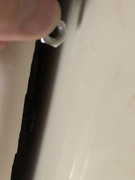
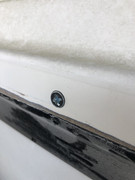
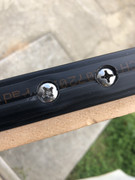
Nooooo, not both
 or all thogethre


Alternatives to each other.
Nylock nuts are nice for dry assemblies but don’t work well with Teflon thread lube (to avoid galling).
Regular plain nuts and lock washes will work with Teflon thread lube as there is a mechanical bite by the split-lock washer into the nut and washer to resist Self loosening.
Regular nuts with Locktite Blue 242 will resist self-loosening and seems to help resist thread galling at assembly & disassembly based on my experiences.
For just a suggestion, what I’ve done is have the Locktite bottle with a piece of tubing with ID slightly larger than thread size to slip over end of thread to place the compound on the thread ( mind you I typically don’t run down 2 inches of thread to tighten things up in which case I’d add more compound over a longer length of thread to ensure there is some by the time the nut places the thread in tension).
After scoring the residual exposed thread with a pince plier a piece of slightly larger ID diameter thick wall tubing that can fit over the exposed thread might help with working the thread back and forth to snap off the excess portion.
If you can leave them in place then that is what I’d do. Why bother if it doesn’t matter.
If it’s a visual thing the maybe slip a bit of trim on to hide them?
Just a possible handy hint:
In tight spaces where it can work I’ve seen a piece of soft tubing used as a ‘carrier’ to put lock washers and nuts on exposed threads.
Insert the nut then insert the lock washer then slip the tube over the exposed thread to get things started and run down finger tight.
Then pull the tubing off and tighten the nut with appropriate socket.
Best Regards
Over Easy