

Hey there,
tldr: Is there a way to separate the liners / molds from each other, the reverse of how it was assembled at the factory? the deck from the head liner, from the hull liner, from the hull?
Been browsing here for a year and just bought my second sailboat: a 26s that needs some work. Guy pulled it out of his grandads field to sell it. There are a lot of issues, leaks, soft spots, cracks. I have cleaned and bleached the boat. More cracks found.
My main concern is cracks around the headliner. There are deep cracks betwen 3 and 5 inches long in the U channel supports that go across the boat above the galley and across the boat in front of the pooper, both in the middle and at the sides where the U channels meet the side of the boat liner.
I have searched for a couple evenings and havne't found much. I did see a couple guys who cut into the deck like on a tradititionally-cored boat. But I have not been able to find anyone who has, or information on the process?
I am aware the boat is likley a lost cause and Ill enjoy it until it falls apart, but if you have some specific MacGregor resources, that would be great.
-james
Separation of the liners / molds: deck, head line, hull liner, hull
-
JamesToBoot
- Engineer
- Posts: 150
- Joined: Thu Aug 14, 2025 11:59 am
- Sailboat: MacGregor 26S
- Location: SC
Separation of the liners / molds: deck, head line, hull liner, hull
-james
Novice Sailor
'91 26S, fixer-upper, 55lb w 280ah lithium, need stern rail
Cruising Grounds: Lake Murray, youtube
Novice Sailor
'91 26S, fixer-upper, 55lb w 280ah lithium, need stern rail
Cruising Grounds: Lake Murray, youtube
-
rsvpasap

- First Officer
- Posts: 241
- Joined: Fri Dec 13, 2013 2:05 pm
- Sailboat: MacGregor 26X
- Location: Seattle, WA
Re: Separation of the liners / molds: deck, head line, hull liner, hull
If you remove the rub rail on a 26x, you will see that the top mold and bottom mold are bolted together. Probably many of the other Macgregor boats are constructed in the same way..
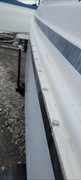

-
JamesToBoot
- Engineer
- Posts: 150
- Joined: Thu Aug 14, 2025 11:59 am
- Sailboat: MacGregor 26S
- Location: SC
Re: Separation of the liners / molds: deck, head line, hull liner, hull
The 26s has as seem as well, but a different type of deck to hull joint.
This is for sure where we should start. Question is, has this been dine before and does anyone have it documented? Seem like this may be easier and cleaner than cutting in from above like a traditionally-cored deck.
This is for sure where we should start. Question is, has this been dine before and does anyone have it documented? Seem like this may be easier and cleaner than cutting in from above like a traditionally-cored deck.
-james
Novice Sailor
'91 26S, fixer-upper, 55lb w 280ah lithium, need stern rail
Cruising Grounds: Lake Murray, youtube
Novice Sailor
'91 26S, fixer-upper, 55lb w 280ah lithium, need stern rail
Cruising Grounds: Lake Murray, youtube
-
JamesToBoot
- Engineer
- Posts: 150
- Joined: Thu Aug 14, 2025 11:59 am
- Sailboat: MacGregor 26S
- Location: SC
Re: Separation of the liners / molds: deck, head line, hull liner, hull
Here are some pics of the cracks (of course you cannot feel the soft spots or flex on deck:
As soon as you come down the hatch:
-middle:
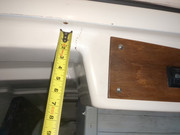
To the right:
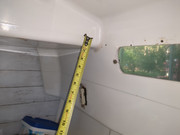
To the left:
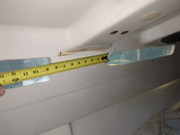
Pic taken from the left looking at the middle crack again:
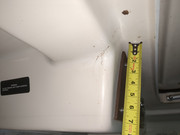
From the bow looking at the bathroom wall:
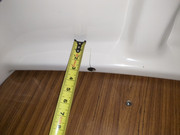
From the bow looking to the left of the bathroom where the bathroom wall meets the side if the boat:
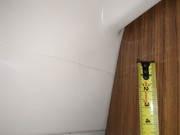
Obviously there seems to have been some serious strain... Or is this typical? Was the rigging severely over tightened at one time?
Anywho, I'm hoping taking the deck off instead of cutting into it will be better for strengthening these from inside and allow the deck backing... coring.... To be stripped off and redone...
Your thoughts and suggestions (aside from sailing it like you stole it and chunk it when it gives)
As soon as you come down the hatch:
-middle:
To the right:
To the left:
Pic taken from the left looking at the middle crack again:
From the bow looking at the bathroom wall:
From the bow looking to the left of the bathroom where the bathroom wall meets the side if the boat:
Obviously there seems to have been some serious strain... Or is this typical? Was the rigging severely over tightened at one time?
Anywho, I'm hoping taking the deck off instead of cutting into it will be better for strengthening these from inside and allow the deck backing... coring.... To be stripped off and redone...
Your thoughts and suggestions (aside from sailing it like you stole it and chunk it when it gives)
-james
Novice Sailor
'91 26S, fixer-upper, 55lb w 280ah lithium, need stern rail
Cruising Grounds: Lake Murray, youtube
Novice Sailor
'91 26S, fixer-upper, 55lb w 280ah lithium, need stern rail
Cruising Grounds: Lake Murray, youtube
-
JamesToBoot
- Engineer
- Posts: 150
- Joined: Thu Aug 14, 2025 11:59 am
- Sailboat: MacGregor 26S
- Location: SC
Re: Separation of the liners / molds: deck, head line, hull liner, hull
Questions besides "has anyone done this before and is it documented...."
-was there any kind of glue or process used to attach these together (besides the hull / deck joint?
-there doesn't appear to be a seem around the hatch or bow hatch or windows... Instead almost like a chalky substance, maybe thicken gelcoat, that has wear and use cracks going along the joint?
-did MacGregor 5200 any of this together?
Redoing this would make me feel better too because I could redo the styrofoam floatation foam with closed cell foam.
-was there any kind of glue or process used to attach these together (besides the hull / deck joint?
-there doesn't appear to be a seem around the hatch or bow hatch or windows... Instead almost like a chalky substance, maybe thicken gelcoat, that has wear and use cracks going along the joint?
-did MacGregor 5200 any of this together?
Redoing this would make me feel better too because I could redo the styrofoam floatation foam with closed cell foam.
-james
Novice Sailor
'91 26S, fixer-upper, 55lb w 280ah lithium, need stern rail
Cruising Grounds: Lake Murray, youtube
Novice Sailor
'91 26S, fixer-upper, 55lb w 280ah lithium, need stern rail
Cruising Grounds: Lake Murray, youtube
-
OverEasy
- Admiral
- Posts: 2873
- Joined: Mon Sep 28, 2020 11:16 am
- Sailboat: MacGregor 26X
- Location: NH & SC
Re: Separation of the liners / molds: deck, head line, hull liner, hull
Hi JamesToBoot!
Boy are you ambitious…. Taking apart a boat to fix a couple of cracks tan the support channels….
It’s just my own perspective but that’s a really ambitious undertaking for something you could fix in a lot less time and effort by dealing with it insitu. What I mean is this is fiberglass. Basically you can cut open the damaged areas from the interior or exterior sufficient to expose &/or remove the damaged areas then clean up the surrounding interior/exterior surfaces surrounding the areas in question and apply new fiberglass, filler and gelcoat/paint to make it as good as new. There really isn’t the need to strip it all apart like you are asking about. I think you maybe overthinking this. Taking a few steps back and define what you are actually trying to do…. “Restore” the structural integrity of a 20+ year old fiberglass boat.
For each of the areas you highlighted there really isn’t a need to split the top deck and headliner shells apart. Doing so is gonna be a huge undertaking as the sections are fiberglass tabbed together.. that means when the top deck and headliner were originally mated together there were big wads of fiberglass put down in various locations and the shells were then pressed together. Separating them will be a PITA for little to no real benefit.
This is just a suggestion of how I might approach this… you need to become familiar with fiberglassing and blending in splices on your own.
Whatever you choose to do is what you choose to do.
Start with the most likely candidate area.
Grind the gelcoat off for several (3-to-4) inches in every direction to the bare fiberglass of the headliner.
Re-examine the crack.
Now let’s say the crack goes all the way through to the center void of the channel.
Grind away so you have about a 1-to-2 inch gap or so centered where the crack had been.
Now try to get the hollow interior of the channel cleaned up…. There will probably be a waxy layer that you need to get cleaned/sanded/ground off for 1-to-2 inches on either side of the opening. (Think of a right angle grinder and wheel sort of attachment to a drill or dremel or similar tool) Resin and fiberglass will not bond to wax.
Clean everything up good with acetone or other suitable solvent.
Wet the exposed original fiberglass with resin then apply long strand glass fiber filler to the interior surfaces working back to the opening working the fill onto the interior void surfaces ( with something like an Allen wrench or bent hard clean stiff wire) then fill the void to the surface. Now wet the clean exposed fiberglass cabin interior surfaces with resin and apply several layers of resin wetted 718 biaxial fiberglass cloth to tan a thickness of about 1/8-to-1/4 thick wetting it out to about 2-to3 inches surrounding where the crack had been. Smooth things out to resemble the original contours of that area of the headliner.
Let cure and then sand/grind carefully to shape without cutting into your new fiberglass if you can. Use some filler material to fill in the low spots so the surface is smooth.
Clean and Re-gelcoat.
Yes ther will be a bump of sorts but you should be getting back the structural integrity of that area at a fraction of the time and effort.
Repeat the process where applicable.
Now regarding your soft deck issue.
I believe (I could be mistaken) the S model used balsa core.
This has probably become water saturated and rotted.
I’d Try to mark out where the soft spots are on the top deck.
I’d drill small exploratory test holes through the top deck to verify that the core is rotted. These can be patched up later.
Then I’d Make a general square or rectangle shape encompassing the adjacent soft areas.I’d cut out the rectangle from the top deck with a router just deep enough to cut the top deck surface only and try to save the section I’d be removing for future reuse.
Gently pry off this section anticipating those spots where tabbed together (as mentioned earlier).
Once the top piece is removed clean out all the rotten balsa and clean off the cavity surfaces (from the cut section removed too).
Then structural foam core would be fitted to replace the now exposed areas. Contour them to fit allowing for reinstall of the cut panels.
Apply resin to the cleaned interior surfaces and the structural foam then press them together. A couple heavy sand bags wrapped in plastic generally does help at this point.
After the resin has cured one would then grind back the deck gelcoat to bare fiberglass about 1-to-3 inches on both sides of where the router cut and around the exploratory test holes.
Wet the surfaces with resin and apply a couple layers of resin wetted 718 cloth.
Let cure, sand smooth, Re-texture as appropriate then apply gelcoat.
For other surface cracks take a dremel and grind out the cracks about 1/8 to 1/4 inch wide sort of like a shallow V.
Clean back from the V about 1 inch to either side.
Fill the V with structural epoxy and possibly fine chopped strand fiberglass filler.
Sand smooth, re-texture where appropriate and re-gelcoat.
That should cover most of what your looking at without splitting the boat apart at a fraction of the time and effort and risk.
This breaks down the work into manageable doable projects without all the complications of attempting the splitting apart of the deck and headliner.
Just my opinion… it’s your boat so it’s your rules and your project.
Good luck however you decide to proceed or not.
Keep us posted!
Best Regards,
Over Easy

Boy are you ambitious…. Taking apart a boat to fix a couple of cracks tan the support channels….
It’s just my own perspective but that’s a really ambitious undertaking for something you could fix in a lot less time and effort by dealing with it insitu. What I mean is this is fiberglass. Basically you can cut open the damaged areas from the interior or exterior sufficient to expose &/or remove the damaged areas then clean up the surrounding interior/exterior surfaces surrounding the areas in question and apply new fiberglass, filler and gelcoat/paint to make it as good as new. There really isn’t the need to strip it all apart like you are asking about. I think you maybe overthinking this. Taking a few steps back and define what you are actually trying to do…. “Restore” the structural integrity of a 20+ year old fiberglass boat.
For each of the areas you highlighted there really isn’t a need to split the top deck and headliner shells apart. Doing so is gonna be a huge undertaking as the sections are fiberglass tabbed together.. that means when the top deck and headliner were originally mated together there were big wads of fiberglass put down in various locations and the shells were then pressed together. Separating them will be a PITA for little to no real benefit.
This is just a suggestion of how I might approach this… you need to become familiar with fiberglassing and blending in splices on your own.
Whatever you choose to do is what you choose to do.
Start with the most likely candidate area.
Grind the gelcoat off for several (3-to-4) inches in every direction to the bare fiberglass of the headliner.
Re-examine the crack.
Now let’s say the crack goes all the way through to the center void of the channel.
Grind away so you have about a 1-to-2 inch gap or so centered where the crack had been.
Now try to get the hollow interior of the channel cleaned up…. There will probably be a waxy layer that you need to get cleaned/sanded/ground off for 1-to-2 inches on either side of the opening. (Think of a right angle grinder and wheel sort of attachment to a drill or dremel or similar tool) Resin and fiberglass will not bond to wax.
Clean everything up good with acetone or other suitable solvent.
Wet the exposed original fiberglass with resin then apply long strand glass fiber filler to the interior surfaces working back to the opening working the fill onto the interior void surfaces ( with something like an Allen wrench or bent hard clean stiff wire) then fill the void to the surface. Now wet the clean exposed fiberglass cabin interior surfaces with resin and apply several layers of resin wetted 718 biaxial fiberglass cloth to tan a thickness of about 1/8-to-1/4 thick wetting it out to about 2-to3 inches surrounding where the crack had been. Smooth things out to resemble the original contours of that area of the headliner.
Let cure and then sand/grind carefully to shape without cutting into your new fiberglass if you can. Use some filler material to fill in the low spots so the surface is smooth.
Clean and Re-gelcoat.
Yes ther will be a bump of sorts but you should be getting back the structural integrity of that area at a fraction of the time and effort.
Repeat the process where applicable.
Now regarding your soft deck issue.
I believe (I could be mistaken) the S model used balsa core.
This has probably become water saturated and rotted.
I’d Try to mark out where the soft spots are on the top deck.
I’d drill small exploratory test holes through the top deck to verify that the core is rotted. These can be patched up later.
Then I’d Make a general square or rectangle shape encompassing the adjacent soft areas.I’d cut out the rectangle from the top deck with a router just deep enough to cut the top deck surface only and try to save the section I’d be removing for future reuse.
Gently pry off this section anticipating those spots where tabbed together (as mentioned earlier).
Once the top piece is removed clean out all the rotten balsa and clean off the cavity surfaces (from the cut section removed too).
Then structural foam core would be fitted to replace the now exposed areas. Contour them to fit allowing for reinstall of the cut panels.
Apply resin to the cleaned interior surfaces and the structural foam then press them together. A couple heavy sand bags wrapped in plastic generally does help at this point.
After the resin has cured one would then grind back the deck gelcoat to bare fiberglass about 1-to-3 inches on both sides of where the router cut and around the exploratory test holes.
Wet the surfaces with resin and apply a couple layers of resin wetted 718 cloth.
Let cure, sand smooth, Re-texture as appropriate then apply gelcoat.
For other surface cracks take a dremel and grind out the cracks about 1/8 to 1/4 inch wide sort of like a shallow V.
Clean back from the V about 1 inch to either side.
Fill the V with structural epoxy and possibly fine chopped strand fiberglass filler.
Sand smooth, re-texture where appropriate and re-gelcoat.
That should cover most of what your looking at without splitting the boat apart at a fraction of the time and effort and risk.
This breaks down the work into manageable doable projects without all the complications of attempting the splitting apart of the deck and headliner.
Just my opinion… it’s your boat so it’s your rules and your project.
Good luck however you decide to proceed or not.
Keep us posted!
Best Regards,
Over Easy
Last edited by OverEasy on Sun Aug 17, 2025 12:16 pm, edited 1 time in total.
-
Dougiestyle

- Engineer
- Posts: 163
- Joined: Wed Oct 18, 2017 7:18 pm
- Sailboat: MacGregor 26X
- Location: Rockport TX
Re: Separation of the liners / molds: deck, head line, hull liner, hull
Hi welcome to the forum.
Thes boats were built with polester resin, so USE the polyester type. When working with several layers of resin I would use the LAMINATING POLYESTER. The reasons are: better working time, and a LOT less sanding! Look up videos on youtube for the laminating type. Use acetone to thin your resin to a desired consistancy.
Good luck
Thes boats were built with polester resin, so USE the polyester type. When working with several layers of resin I would use the LAMINATING POLYESTER. The reasons are: better working time, and a LOT less sanding! Look up videos on youtube for the laminating type. Use acetone to thin your resin to a desired consistancy.
Good luck
Dougiestyle
1998 26X , Nissan 50D, "Water Buffalo"
1998 26X , Nissan 50D, "Water Buffalo"
-
JamesToBoot
- Engineer
- Posts: 150
- Joined: Thu Aug 14, 2025 11:59 am
- Sailboat: MacGregor 26S
- Location: SC
Re: Separation of the liners / molds: deck, head line, hull liner, hull
Thanks @overeasy
That is a lot of great info about the boat. She has surely seen some use in her lifetime.
Your method is much more feasible and def better to do in chunks. Ambitious I am not.
I wish MacGregor would have continued producing the 26c, fixing things as they go. The boat is surely a novel idea. What a smart guy.
Thank you for your advise. Sounds like the issue is not as bad as I thought. Out of curiosity, any idea what may have caused this damage...? Mostly so I don't do it myself?
That is a lot of great info about the boat. She has surely seen some use in her lifetime.
Your method is much more feasible and def better to do in chunks. Ambitious I am not.
I wish MacGregor would have continued producing the 26c, fixing things as they go. The boat is surely a novel idea. What a smart guy.
Thank you for your advise. Sounds like the issue is not as bad as I thought. Out of curiosity, any idea what may have caused this damage...? Mostly so I don't do it myself?
-james
Novice Sailor
'91 26S, fixer-upper, 55lb w 280ah lithium, need stern rail
Cruising Grounds: Lake Murray, youtube
Novice Sailor
'91 26S, fixer-upper, 55lb w 280ah lithium, need stern rail
Cruising Grounds: Lake Murray, youtube
-
JamesToBoot
- Engineer
- Posts: 150
- Joined: Thu Aug 14, 2025 11:59 am
- Sailboat: MacGregor 26S
- Location: SC
Re: Separation of the liners / molds: deck, head line, hull liner, hull
@overeasy
Separating the molds sounded like it would have been a much easier route, if they weren't epoxy glued together as you've said. That is certainly some info that is good to know before naïvely attempting to separate them.
The idea was to
1) undo 250+ bolts around the seam and deck hardware and use a lift to hold the deck mold up while you drive the trailer and rest of the most out. Then work from above (instead of on the ceiling) to reinforce the strained areas...
2) Then while the deck is off, flip it and replace the coring (again working from above) without having to tear up the pretty outside finish.
I'm a decent wrench turner and I can grind & slap on some fiberglass... Finish work however, I am not great at and have little patience for.
But I do believe your method is def more feasible, and more likely not to make me give up to leave another perdy little plastic boat to rot away in a field.
Separating the molds sounded like it would have been a much easier route, if they weren't epoxy glued together as you've said. That is certainly some info that is good to know before naïvely attempting to separate them.
The idea was to
1) undo 250+ bolts around the seam and deck hardware and use a lift to hold the deck mold up while you drive the trailer and rest of the most out. Then work from above (instead of on the ceiling) to reinforce the strained areas...
2) Then while the deck is off, flip it and replace the coring (again working from above) without having to tear up the pretty outside finish.
I'm a decent wrench turner and I can grind & slap on some fiberglass... Finish work however, I am not great at and have little patience for.
But I do believe your method is def more feasible, and more likely not to make me give up to leave another perdy little plastic boat to rot away in a field.
-james
Novice Sailor
'91 26S, fixer-upper, 55lb w 280ah lithium, need stern rail
Cruising Grounds: Lake Murray, youtube
Novice Sailor
'91 26S, fixer-upper, 55lb w 280ah lithium, need stern rail
Cruising Grounds: Lake Murray, youtube
-
JamesToBoot
- Engineer
- Posts: 150
- Joined: Thu Aug 14, 2025 11:59 am
- Sailboat: MacGregor 26S
- Location: SC
Re: Separation of the liners / molds: deck, head line, hull liner, hull
Thanks @ dougiestyle
I was contemplating vinyl ester resin. Best of both worlds... Better mechanical than poly, and cheaper than epoxy resin... and it comes in a laminating form without the wax... Win win!
I do worry about the mechanical strength of poly... But I do love that price. So who knows. Will probably be poly or vinyl.
I was contemplating vinyl ester resin. Best of both worlds... Better mechanical than poly, and cheaper than epoxy resin... and it comes in a laminating form without the wax... Win win!
I do worry about the mechanical strength of poly... But I do love that price. So who knows. Will probably be poly or vinyl.
-james
Novice Sailor
'91 26S, fixer-upper, 55lb w 280ah lithium, need stern rail
Cruising Grounds: Lake Murray, youtube
Novice Sailor
'91 26S, fixer-upper, 55lb w 280ah lithium, need stern rail
Cruising Grounds: Lake Murray, youtube
-
JamesToBoot
- Engineer
- Posts: 150
- Joined: Thu Aug 14, 2025 11:59 am
- Sailboat: MacGregor 26S
- Location: SC
Re: Separation of the liners / molds: deck, head line, hull liner, hull
@dougiestyle
I do love not having to sand / grind as much. What crappy work that is. It will surely be a laminating resin.
I do love not having to sand / grind as much. What crappy work that is. It will surely be a laminating resin.
-james
Novice Sailor
'91 26S, fixer-upper, 55lb w 280ah lithium, need stern rail
Cruising Grounds: Lake Murray, youtube
Novice Sailor
'91 26S, fixer-upper, 55lb w 280ah lithium, need stern rail
Cruising Grounds: Lake Murray, youtube
-
JamesToBoot
- Engineer
- Posts: 150
- Joined: Thu Aug 14, 2025 11:59 am
- Sailboat: MacGregor 26S
- Location: SC
Re: Separation of the liners / molds: deck, head line, hull liner, hull
@dougiestyle
Acetone for thinning resin... I have head of that before... Its what I've used to thin out lots of other stuff that dissolves in acetone. When reading up a bit to refresh my memory, it seems that using acetone is taboo now? Now they want you to use an even more expensive product? (I think fish bump mentioned it in one of his vids from a year ago)
Is it acetone is only used for poly and not vinyl? Or is it just old school and people like to blow more money these days?
Acetone for thinning resin... I have head of that before... Its what I've used to thin out lots of other stuff that dissolves in acetone. When reading up a bit to refresh my memory, it seems that using acetone is taboo now? Now they want you to use an even more expensive product? (I think fish bump mentioned it in one of his vids from a year ago)
Is it acetone is only used for poly and not vinyl? Or is it just old school and people like to blow more money these days?
-james
Novice Sailor
'91 26S, fixer-upper, 55lb w 280ah lithium, need stern rail
Cruising Grounds: Lake Murray, youtube
Novice Sailor
'91 26S, fixer-upper, 55lb w 280ah lithium, need stern rail
Cruising Grounds: Lake Murray, youtube
-
JamesToBoot
- Engineer
- Posts: 150
- Joined: Thu Aug 14, 2025 11:59 am
- Sailboat: MacGregor 26S
- Location: SC
Re: Separation of the liners / molds: deck, head line, hull liner, hull
@overeasy
Where did you come by this knowledge about how the molds were attached? I would like to do more reading on the manufacturing processes.
Where did you come by this knowledge about how the molds were attached? I would like to do more reading on the manufacturing processes.
-james
Novice Sailor
'91 26S, fixer-upper, 55lb w 280ah lithium, need stern rail
Cruising Grounds: Lake Murray, youtube
Novice Sailor
'91 26S, fixer-upper, 55lb w 280ah lithium, need stern rail
Cruising Grounds: Lake Murray, youtube
-
OverEasy
- Admiral
- Posts: 2873
- Joined: Mon Sep 28, 2020 11:16 am
- Sailboat: MacGregor 26X
- Location: NH & SC
Re: Separation of the liners / molds: deck, head line, hull liner, hull
Hi JamesToBoot!
There are also various old videos available online regarding the MacGregor factory manufacture & assembly processes.
There are also standard industry practices that are applicable.
Then there is old fashioned poking around and reading up on other people’s experiences and endeavors.
The top deck gains it’s strength by being a laminate structure … an upper skin and a lower skin with a rigid bonded filler in between.
While in an ideal world (which doesn’t exist) that filler is 100% between the skins in reality that isn’t practical or necessary.
So it’s done where a uniform thickness fill material can fit. That material can be made from balsa or foam or other materials.
In the days when your boat was made balsa was the GoTo sheet stock material. To get compound curves it was knife sliced into a grid that was glued to a very thin backer film or mesh to hold it together on one side. The sheet is then placed on on skin with resin then the other side skin is placed on with resin. In places where the fill sheet thickness doesn’t fit between the sheets (like tapered or thinner areas) that still need to be supported between the skins in is practice to apply blobs of resin with chopped fiber or scrap fabric at assembly to make a bond between the skins as this will conform to the void space. These blobs are effectively bonding the skins to each other giving the completed structure it’s rigidity and strength.
Why not make the whole structure a solid fiberglass resin structure?
Weight and cost along with the fact that it just isn’t necessary.
Core fill like balsa or foam provides the separation and doesn’t need to actually carry the loads… the upper and lower skins do that.
You can do experiments on your own with this if you like with various thicknesses of core materials and fiberglass… or you can watch a couple good videos on YouTube…
Best Regards,
Over Easy
There are various resources available on the forum and resources tab that can provide you some background information.JamesToBoot wrote: ↑Sun Aug 17, 2025 6:33 pm @overeasy
Where did you come by this knowledge about how the molds were attached? I would like to do more reading on the manufacturing processes.
There are also various old videos available online regarding the MacGregor factory manufacture & assembly processes.
There are also standard industry practices that are applicable.
Then there is old fashioned poking around and reading up on other people’s experiences and endeavors.
The top deck gains it’s strength by being a laminate structure … an upper skin and a lower skin with a rigid bonded filler in between.
While in an ideal world (which doesn’t exist) that filler is 100% between the skins in reality that isn’t practical or necessary.
So it’s done where a uniform thickness fill material can fit. That material can be made from balsa or foam or other materials.
In the days when your boat was made balsa was the GoTo sheet stock material. To get compound curves it was knife sliced into a grid that was glued to a very thin backer film or mesh to hold it together on one side. The sheet is then placed on on skin with resin then the other side skin is placed on with resin. In places where the fill sheet thickness doesn’t fit between the sheets (like tapered or thinner areas) that still need to be supported between the skins in is practice to apply blobs of resin with chopped fiber or scrap fabric at assembly to make a bond between the skins as this will conform to the void space. These blobs are effectively bonding the skins to each other giving the completed structure it’s rigidity and strength.
Why not make the whole structure a solid fiberglass resin structure?
Weight and cost along with the fact that it just isn’t necessary.
Core fill like balsa or foam provides the separation and doesn’t need to actually carry the loads… the upper and lower skins do that.
You can do experiments on your own with this if you like with various thicknesses of core materials and fiberglass… or you can watch a couple good videos on YouTube…
Best Regards,
Over Easy
-
JamesToBoot
- Engineer
- Posts: 150
- Joined: Thu Aug 14, 2025 11:59 am
- Sailboat: MacGregor 26S
- Location: SC
Re: Separation of the liners / molds: deck, head line, hull liner, hull
Thanks @overeasy
That hadn't crossed my mind... that when using liners, the industry and MacGregor, glued the liners together and/or filled the cavity with coring. That certainly changes how I might attack these issues in the future. I had assumed the stiffness was designed into the shape, thickness of the glass, and backer (plywood / balsa). Using the inner liner as a glued in structual support that didn't occur to me. A blob of resin or other glue here or there, sure, but making the whole deck/liner a solid sandwhich had not. That is really good info sir.
Regarding what caused these... any idea? Is it normal wear n' tear on a 30 yo MacGregor or was this over tightening the stays, or what? Are these something worth fixing?
A semi related question, how often is expanding foam added by MacGregor owners in areas they can reach (or drill into) between the deck/liner to assist with deck stiffness?
That hadn't crossed my mind... that when using liners, the industry and MacGregor, glued the liners together and/or filled the cavity with coring. That certainly changes how I might attack these issues in the future. I had assumed the stiffness was designed into the shape, thickness of the glass, and backer (plywood / balsa). Using the inner liner as a glued in structual support that didn't occur to me. A blob of resin or other glue here or there, sure, but making the whole deck/liner a solid sandwhich had not. That is really good info sir.
Regarding what caused these... any idea? Is it normal wear n' tear on a 30 yo MacGregor or was this over tightening the stays, or what? Are these something worth fixing?
A semi related question, how often is expanding foam added by MacGregor owners in areas they can reach (or drill into) between the deck/liner to assist with deck stiffness?
-james
Novice Sailor
'91 26S, fixer-upper, 55lb w 280ah lithium, need stern rail
Cruising Grounds: Lake Murray, youtube
Novice Sailor
'91 26S, fixer-upper, 55lb w 280ah lithium, need stern rail
Cruising Grounds: Lake Murray, youtube