

I just resealed the dodger harware installed on the deck. I found some areas to have the balsa core, and some to be soild fibre glass. This got me thinking, does anyone know where the balsa cored areas are located in the deck? I was tapping around on the deck to check for any delamination, and now I'm not sure if it's a solid area or some delamination.
Brian.
Balsa core in deck?
-
vkmaynard

- Admiral
- Posts: 1011
- Joined: Thu Apr 28, 2005 7:02 am
- Sailboat: MacGregor 26X
- Location: Apex, NC - 2001 26X "Compromise" w/ 2010 Suzuki DF90A
- Contact:
What year is your 26X?
What year is your 26X?
I think in 2000 they removed all balsa cores in the deck except the forward hatch.
Victor
I think in 2000 they removed all balsa cores in the deck except the forward hatch.
Victor
-
mikelinmon
- First Officer
- Posts: 357
- Joined: Fri Jan 05, 2007 3:34 pm
- Location: Marina Del Rey, CA
Where ias the balsa?
Hi,
Balsa is everywhere on the deck except: Any MacGregor installed hardware ( all of that is solid glass pads of mat/roving layers ). The vertical surfaces, Adjacent to the window edges, The pedestal base (hard plywood used here). If installing hardware do it very close to MacGregor installed hardware using his own pads. I just redesign the Mac hardware base to include my own needs. Lifeline posts are a good example. Remove the post and weld your new part to the base and bolt back on. The MacGregor pads are very strong! No reinforcements needed. But, like any boat, do not mount hardware to balsa cored areas.
MIke Inmon
Balsa is everywhere on the deck except: Any MacGregor installed hardware ( all of that is solid glass pads of mat/roving layers ). The vertical surfaces, Adjacent to the window edges, The pedestal base (hard plywood used here). If installing hardware do it very close to MacGregor installed hardware using his own pads. I just redesign the Mac hardware base to include my own needs. Lifeline posts are a good example. Remove the post and weld your new part to the base and bolt back on. The MacGregor pads are very strong! No reinforcements needed. But, like any boat, do not mount hardware to balsa cored areas.
MIke Inmon
-
Divecoz

- Admiral
- Posts: 3803
- Joined: Sat Oct 16, 2004 2:54 pm
- Sailboat: MacGregor 26M
- Location: PORT CHARLOTTE FLORIDA 05 M Mercury 50 H.P. Big Foot Bill at Boats 4 Sail is my Hero
Re: Where ias the balsa?
Am I to read that to say even the M generation has balsa panels?mikelinmon wrote:Hi,
Balsa is everywhere on the deck except: Any MacGregor installed hardware ( all of that is solid glass pads of mat/roving layers ). The vertical surfaces, Adjacent to the window edges, The pedestal base (hard plywood used here). If installing hardware do it very close to MacGregor installed hardware using his own pads. I just redesign the Mac hardware base to include my own needs. Lifeline posts are a good example. Remove the post and weld your new part to the base and bolt back on. The MacGregor pads are very strong! No reinforcements needed. But, like any boat, do not mount hardware to balsa cored areas.
MIke Inmon
-
ALX357

- Admiral
- Posts: 1231
- Joined: Thu Jul 22, 2004 6:09 am
- Location: Nashville TN -- 2000 MacGregor 26X, Mercury two-stroke 50hp
My understanding is the newer version X ( 1999 and later) boat omitted the balsa core, except in the front hatch and slider hatch. Instead they have a rib-type reinforcement as in the pictures of my 2000 X here, with the foam being used to hold the ribs' roving in place while the layup cures.
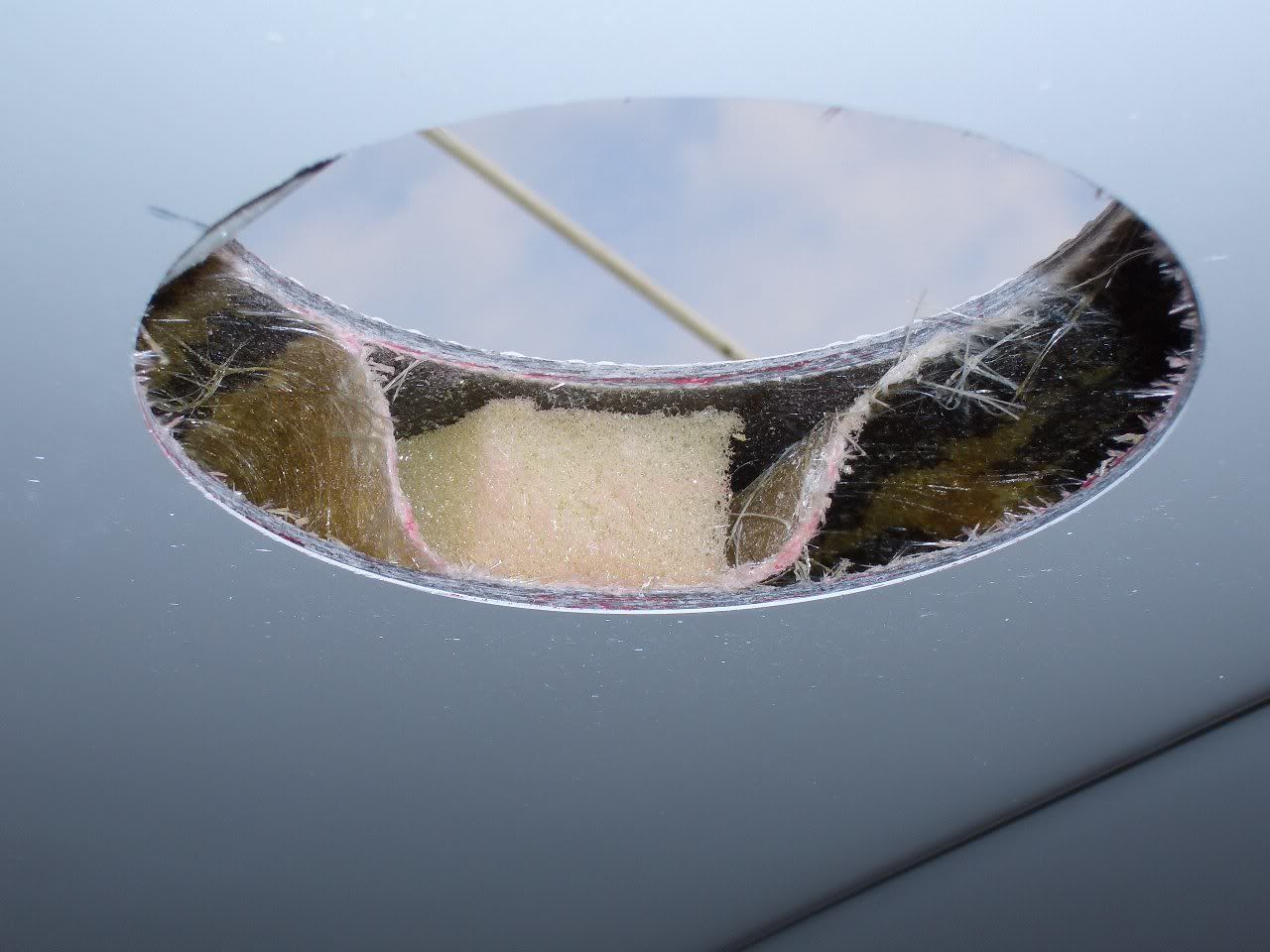

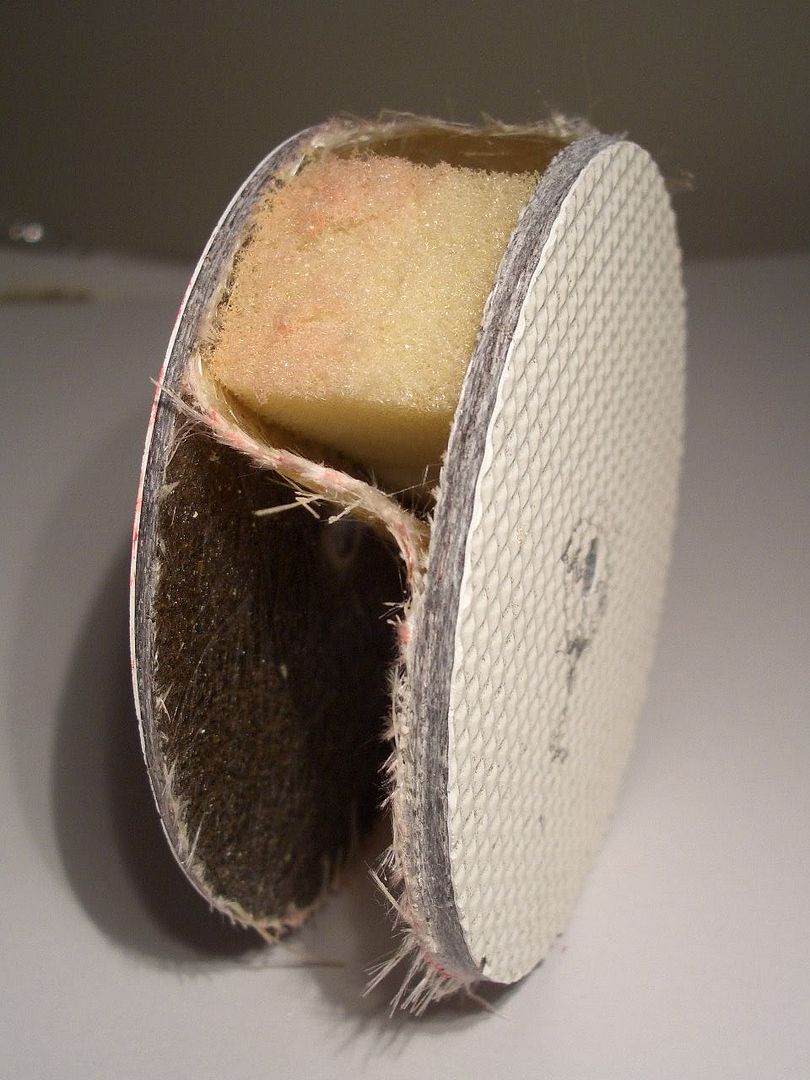
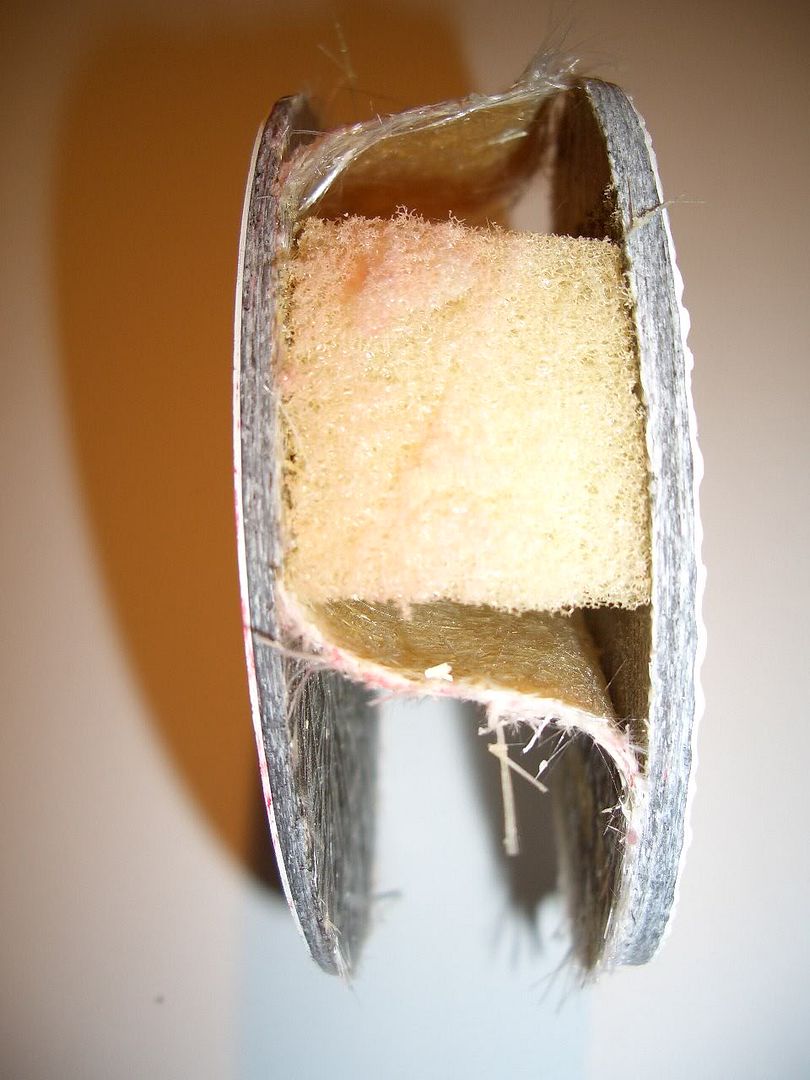
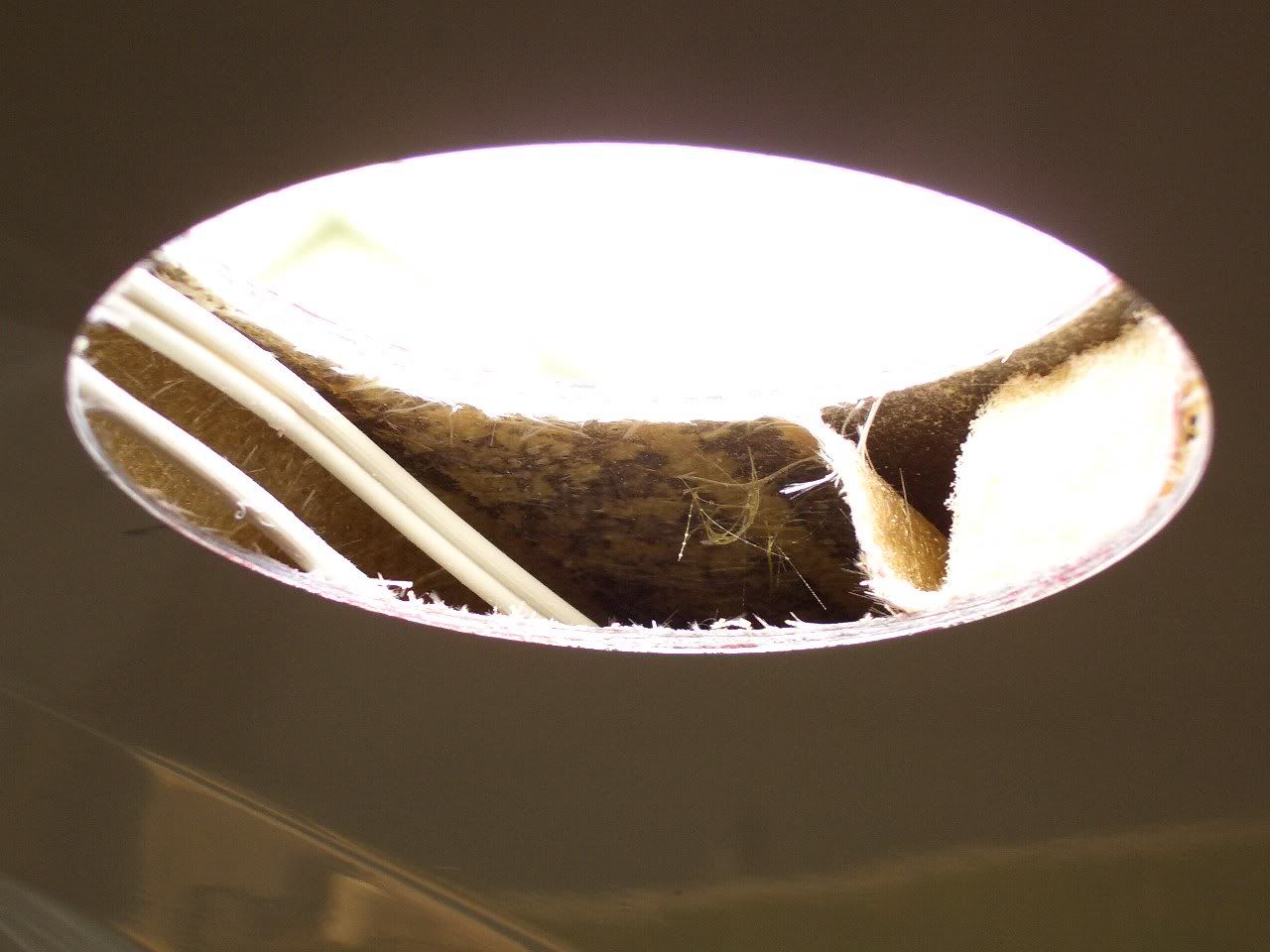
Last edited by ALX357 on Wed Jul 18, 2007 7:58 pm, edited 1 time in total.
-
Frank C
Mike has maybe forgotten about the following page that appeared
on Roger's website in November, 1999 (here's one related thread).
The only wood I've found in my hull is in the fore-hatch (balsa) and the transom (plywood).
on Roger's website in November, 1999 (here's one related thread).
Many owners of '99 boats have reported this factory change was implemented. My 2000 is definitely a foam sandwich model. Pull a couple of the plastic liner plugs under the jib tracks. You can look inside with a flashlight to determine the sandwich structure in your particular boat.This is from the MacGregor website - dated November 20, 1999
NEW DECK STRUCTURE. For quite a few months, we have been building decks with an entirely new layup system. Much of the balsa wood has been replaced with a system of molded beams that make the deck liner a functional part of the deck structure.
The only wood I've found in my hull is in the fore-hatch (balsa) and the transom (plywood).


I dont have Mike's access to Roger, so I'll defer to him. But, I would be shocked if my 2005 M had balsa-core anywhere...
Yes, I KNOW I have plywood in the cockpit sole and the pedestal base (with the SST tube therebetween). But, it looks to me that the rest of the "built up" parts are F/G mat, not balsa(such as the V-berth hatch and the companionway sliding hatch)...
I also KNOW that I have the foam/rib structure in some places (such as the space under the deck, starboard of the dagger board trunk)...
Yes, I KNOW I have plywood in the cockpit sole and the pedestal base (with the SST tube therebetween). But, it looks to me that the rest of the "built up" parts are F/G mat, not balsa(such as the V-berth hatch and the companionway sliding hatch)...
I also KNOW that I have the foam/rib structure in some places (such as the space under the deck, starboard of the dagger board trunk)...


-
mikelinmon
- First Officer
- Posts: 357
- Joined: Fri Jan 05, 2007 3:34 pm
- Location: Marina Del Rey, CA
-
ALX357
- Admiral
- Posts: 1231
- Joined: Thu Jul 22, 2004 6:09 am
- Location: Nashville TN -- 2000 MacGregor 26X, Mercury two-stroke 50hp
Whenever you drill thru a deck and find wood, the procedure is to gouge out the wood around the hole until you can fill the area solid with resin, and then drill thru the resin, keeping the wood hermetically sealed away from any water that could "ever" pass down thr the hole along the bolt/screw etc.
When I reinstalled the dodger hardware I did drill larger holes, fill them with a mix of epoxy and high density filler, then drill proper size holes. How about the factory installed stuff? Was it done right? Do I need to remove it to check, and reseal? Or are they installed in solid glass areas? If anyone has done this already it would save me a lot of work.