This is what I use for bleeding the brakes:
Gunson's Eezibleed
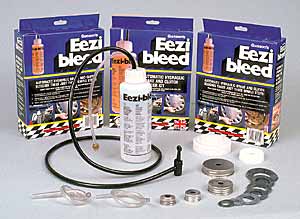
The way it works is that a small amount of pressure (a car tire works nicely) is introduced into the top of the bottle, which is filled with fresh brake fluid... this forces the brake fluid into another hose which exits the bottle and goes into the top of the master cylinder... this then pushes past the master's relief valve and into the brake lines... so it's like having someone constantly pressing on the pedal. So long as you keep the Eezibleed filled with fluid, you're good to bleed. Just open each bleeder screw until it runs clear and free of bubbles and work your way around the car or trailer until all are done.
I modified a spare cap for my trailer's master cylinder so I am able to do the entire job very nicely, and single handedly. I've used this system for over 25 years on my English cars and it has always worked perfectly. It's particularly useful for systems where there can be trapped air, like in wheel cylinders that have an air pocket at the top... you can bleed the cylinder while unmounted so that it can be turned to eliminate the bubble. Other advantages of 'pressure bleeding' are that it prevents foaming, which can easily occur when pumping the brakes, and that one can bleed a 'dry' master very quickly with no priming.
The Gunson's product may be difficult to get off the shelf in the States, but Motive makes a similarly designed system that's available via Amazon and other outlets. Instead of using tire pressure, it uses a hand pump, which may be an advantage to some. At only $50 it's a good value if only for the aggro reduction.
http://www.amazon.com/Motive-Products-B ... -2-catcorr

You could easily drill a hole in the standard reservoir cap for the hose fitting, and when done just plug the hole with a bolt and rubber washer.
A pressure bleeder like this makes the job so easy that regular changing of the brake fluid - which is what the manufacturer's recommend - is more likely to be done. I change my antique cars' fluid every two years and it only takes about 30 minutes per car. You should change your trailer's fluid on a similarly regular basis.


 ). A small burst of air and old fluid will come out. Then tighten the nipple nut. Then back to the truck and pull forward against a second brick in front of the trailer tire (again just 2-3"). This will release the cylinder. Open the reservoir and top-off the fluid if necessary.


