Solar install - Check my work?

A forum for discussing boat or trailer repairs or modifications that you have made or are considering.
Chumpy36
First Officer
Posts: 245
Joined: Thu Oct 27, 2022 7:54 pm
Sailboat: MacGregor 26S
Location: Atlanta

Solar install - Check my work?

Post by Chumpy36 »

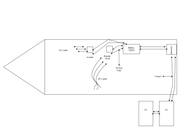
Hi everyone. I have assembled most of the components for this project and am ready to wire it up for a test. I have a couple of questions...
Please refer to the attached pdf for my diagram.
Question 1 - Do I need fuses between the Panels and the controller? I'll be using y cables to connect two panels to the controller.

2. The fuse panel is connected to battery directly yes? And then the 12 volt loads out from there?
3. The inverter is connected directly to battery as well?
4. I currently have a 30 amp fuse connected to the positive side of the battery. Is that sized correctly? The controller is rated at 40 amps and I expect the maximum current draw to be around 10 amps max.
5. The outboard motor I am going to use has an alternator that will charge batteries while it is running. Do I connect that directly to the battery as well and does it need any circuit protection?
Other details. the connecting cables are all 10awg (sized with an online calculator, the controller is a Renogy Rover. The battery is a 100ah lifepo4 with BMS. The inverter is BESTEK 500W Pure Sine Wave Power Inverter DC 12V to AC 110V Car Plug Inverter Adapter Power Converter with 4.2A Dual USB Charging Ports and 2 AC Outlet. The panels are two 200watt (surely overrated). The breaker panel is rated for 4.2 amps.

Thank you for your help!
Attachments
Image
User avatar
BOAT
Admiral
Posts: 4969
Joined: Fri Oct 19, 2012 5:12 pm
Sailboat: MacGregor 26M
Location: Oceanside, CA MACMJ213 2013 ETEC60

Re: Solar install - Check my work?

Post by BOAT »

Don't see the circuit for charging the batteries from the outboard or the circuit for charging the batteries from AC.
Not sure the outboard is going to output the proper voltage for a lithium battery - lithium batteries usually need a stepper box or B2B to charge from the motor.

400 of solar is way too much for one 100A battery. 400 would be able to keep three of those batteries charged.

You can't use the lithium battery to start the motor so there is a big part of the system not shown.

I like to talk to the folks at BattleBorn batteries when I set up of alter my solar setup - they are really good at managing all the details.
Chumpy36
First Officer
Posts: 245
Joined: Thu Oct 27, 2022 7:54 pm
Sailboat: MacGregor 26S
Location: Atlanta

Re: Solar install - Check my work?

Post by Chumpy36 »

hmmm, good call on the AC battery charging, I assumed when I did have shore power I would just run an extension cord in and use a charger like a noco or something?

Not sure what you mean by stepper box or b2b?

Someone on another forum suggested I might need to use a Lead Acid battery for the motor, then charge the lithium from a DC to DC charger off the Lead Acid battery?

This the is the solar panels I have:

I just can't believe they are 200 watts each. I assume they are way over rated.

I didn't realize the lifepo4 wouldn't start the motor. So above might make sense?

thanks
User avatar
BOAT
Admiral
Posts: 4969
Joined: Fri Oct 19, 2012 5:12 pm
Sailboat: MacGregor 26M
Location: Oceanside, CA MACMJ213 2013 ETEC60

Re: Solar install - Check my work?

Post by BOAT »

B2B charger means Battery To Battery charger. It allows you to send a separate voltage to another battery bank without changing the way you charge the primary battery. That way you can have a lead battery for starting and lithium for cabin.

I recommend you run your solar panel choice by the guys at BattleBorn. They look fine to me but I am no expert.

The guys at BattleBorn are real smart and they can provide the B2B unit too.
User avatar
Wyb2
Engineer
Posts: 170
Joined: Tue Jul 06, 2021 8:02 pm
Sailboat: MacGregor 25
Location: Northeast US

Re: Solar install - Check my work?

Post by Wyb2 »

Why won’t a LiFePO4 start the motor? They are used as direct replacements (size for size) for powersports batteries all the time.

For question (1), you don’t need a fuse between the panels and the controller. The wires and the the controller should be sized to handle the max output of the panels. If you have a short, the panels can only pump out 400w max. With a battery on the other hand, if you have a short, the battery will happily supply 1000’s of watts until the resulting fire interrupts the circuit (or the battery self-destructs).

(2) sort of. If you have a ‘main’ fuse very close to the battery, which it sounds like you are describing in (4), than the panel would be downstream of that.

(3) same as (2). If the inverter doesn’t have built in DC fusing, than having some sort of fuse isn’t optional.

(4) if your inverter is 500w, than it will be capable of pulling ~41 amps at 12v DC. Sounds like you might want a 40 or 50 amp fuse here. I’m guessing you aren’t using the dinky little car plug for this? These devices from China tend to undersize their lead wires to cut costs, maybe stick with the 30 and see how it goes.

(5) basically same as (2) and (3), the charge circuit should pass through the main fuse.
User avatar
Be Free
Admiral
Posts: 1890
Joined: Fri Nov 23, 2012 6:08 pm
Sailboat: MacGregor 26X
Location: Steinhatchee, FL

Re: Solar install - Check my work?

Post by Be Free »

Chumpy,
Since you are on a 26S I'm going to assume that you have a relatively small outboard. It may be possible to reliably start the engine with it but I'd need to know the specs of the engine and the battery to give an opinion. In any case it is probably not optimal to use lithium as a start battery but if weight is critical it may be possible.

Boat is correct re: charging. Your outboard is almost certainly designed to charge a small FLA battery and not lithium. It may not be able to supply the correct voltage to properly charge the battery and it certainly won't be able to supply the amps it need to charge quickly if you are drawing it down significantly. It probably won't hurt it (much) but again, it's not optimal.

Regarding shore charging, make sure that you are using a proper marine rated charger, not a clip-on car charger. Car chargers expect more ventilation and a lot less moving around while they are in use. They are OK in a pinch on shore but when the boat is moving around the connections really should be bolted on.

For your shore power connection you really should have a properly designed locking plug, not an extension cord while you are in the water. I'm not saying I have not done it myself, but it's really not safe.
Bill
2001 26X Simple Interest
Honda BF40D
"If I were in a hurry I would not have bought a sailboat." Me
User avatar
BOAT
Admiral
Posts: 4969
Joined: Fri Oct 19, 2012 5:12 pm
Sailboat: MacGregor 26M
Location: Oceanside, CA MACMJ213 2013 ETEC60

Re: Solar install - Check my work?

Post by BOAT »

Wyb2 wrote: Sat Dec 24, 2022 5:27 am Why won’t a LiFePO4 start the motor? They are used as direct replacements (size for size) for powersports batteries all the time.
Not sure - that's what the battery guys told me but then it could be that the motor is a 60 hp motor and it requires a lot of power to turn it over. SO I can only say that the lithium is no good for starting my large motor but I really don't know if it's okay for chumpys motor.

I'm not much of an expert - I go by what the battery people tell me.
User avatar
Wyb2
Engineer
Posts: 170
Joined: Tue Jul 06, 2021 8:02 pm
Sailboat: MacGregor 25
Location: Northeast US

Re: Solar install - Check my work?

Post by Wyb2 »

BOAT wrote: Sat Dec 24, 2022 8:32 am
Not sure - that's what the battery guys told me but then it could be that the motor is a 60 hp motor and it requires a lot of power to turn it over. SO I can only say that the lithium is no good for starting my large motor but I really don't know if it's okay for chumpys motor.

I'm not much of an expert - I go by what the battery people tell me.
Got it. Yeah I would imagine the starter draw is roughly linear with engine size. I would still think a 100ah could handle it, but maybe it’s not great for the battery, so they advise against it. I’m not an expert either, I just know that little ~10ah LFP batteries are used to start 100+ hp motorcycle engines.
User avatar
BOAT
Admiral
Posts: 4969
Joined: Fri Oct 19, 2012 5:12 pm
Sailboat: MacGregor 26M
Location: Oceanside, CA MACMJ213 2013 ETEC60

Re: Solar install - Check my work?

Post by BOAT »

Wyb2 wrote: Sat Dec 24, 2022 8:49 am
BOAT wrote: Sat Dec 24, 2022 8:32 am
Not sure - that's what the battery guys told me but then it could be that the motor is a 60 hp motor and it requires a lot of power to turn it over. SO I can only say that the lithium is no good for starting my large motor but I really don't know if it's okay for chumpys motor.

I'm not much of an expert - I go by what the battery people tell me.
Got it. Yeah I would imagine the starter draw is roughly linear with engine size. I would still think a 100ah could handle it, but maybe it’s not great for the battery, so they advise against it. I’m not an expert either, I just know that little ~10ah LFP batteries are used to start 100+ hp motorcycle engines.
You know Bill, he has a point there. I have one of those little hand held portable starter thingy's and it can crank the diesel engine in my Sprinter van! But the lithium battery people always tell me not to start my motors with their batteries!

I wonder what the deal is?
Chumpy36
First Officer
Posts: 245
Joined: Thu Oct 27, 2022 7:54 pm
Sailboat: MacGregor 26S
Location: Atlanta

Re: Solar install - Check my work?

Post by Chumpy36 »

Be Free wrote: Sat Dec 24, 2022 8:25 am Chumpy,
Since you are on a 26S I'm going to assume that you have a relatively small outboard. It may be possible to reliably start the engine with it but I'd need to know the specs of the engine and the battery to give an opinion. In any case it is probably not optimal to use lithium as a start battery but if weight is critical it may be possible.

Boat is correct re: charging. Your outboard is almost certainly designed to charge a small FLA battery and not lithium. It may not be able to supply the correct voltage to properly charge the battery and it certainly won't be able to supply the amps it need to charge quickly if you are drawing it down significantly. It probably won't hurt it (much) but again, it's not optimal.

Regarding shore charging, make sure that you are using a proper marine rated charger, not a clip-on car charger. Car chargers expect more ventilation and a lot less moving around while they are in use. They are OK in a pinch on shore but when the boat is moving around the connections really should be bolted on.

For your shore power connection you really should have a properly designed locking plug, not an extension cord while you are in the water. I'm not saying I have not done it myself, but it's really not safe.
The outboard is a 2017 mercury 20hp the alternator outputs 12amps/138 watts

The battery is 100ah with BMs 50a maximum discharge current of 50a

I can get the right charger rather than clip on. As for shore power how would I tie that in to this system with locking receptacle?

Thx
User avatar
BOAT
Admiral
Posts: 4969
Joined: Fri Oct 19, 2012 5:12 pm
Sailboat: MacGregor 26M
Location: Oceanside, CA MACMJ213 2013 ETEC60

Re: Solar install - Check my work?

Post by BOAT »

The battery is 100ah with BMs 50a maximum discharge current of 50a


Okay, there is your problem right there. Now I understand why the BattleBorn guy did not want me to use his lithium batteries to start motors.

50 amp just aint enough - when a motor is cranking over and over you need almost all the amperage available to push the pistons past the compression stroke again and again - it takes WAY more than 50% of the battery on my lead acid to start the motor - on crank it pulls close to 75 amps.

I guess the BattleBorn guy was right - you can't really use lithium to start motors - not if there is a BMS in there that limits the output by FIFTY PERCENT!?! :o
User avatar
jimmy alonso
Engineer
Posts: 196
Joined: Mon May 02, 2005 9:27 am
Sailboat: MacGregor 26M
Location: Puerto Rico, 2004 26M,Yamaha 50

Re: Solar install - Check my work?

Post by jimmy alonso »

I agree a dedicated start battery is the way to go. And a battery to battery charger will be the best option when charging from engine. But with 400 watts of solar you may be able to get by without the DC to DC charger (B2B). Will you be running a fridge? A battery monitor will be helpful too. I really like Victron Energy products. Your solar controller should have a setting for lithium batteries which basically stops charging when a certain voltage is reached (14.1 to 14.6) depends on the manufacturer. The BMS will shutdown the battery if voltage gets too High/Low. The battery data sheet has the specs.

If the 500 watt inverter is going to get heavy use best to get it hardwired in and fused. Those 12 volt plugs don't do good at high amps.
Also a proper marine battery charger is best for safety reasons especially if used at the dock. Again I have 320 watts of solar and when at a marina I never need shore power.

10 AWG for the solar is good. Blue Sea makes good fuse holders that goes right on the battery terminal. ST Blade 5023 (4 fuses) and MRBF for larger loads.
Get a crimper and use ring terminals.
Chumpy36
First Officer
Posts: 245
Joined: Thu Oct 27, 2022 7:54 pm
Sailboat: MacGregor 26S
Location: Atlanta

Re: Solar install - Check my work?

Post by Chumpy36 »

jimmy alonso wrote: Sat Dec 24, 2022 5:09 pm I agree a dedicated start battery is the way to go. And a battery to battery charger will be the best option when charging from engine. But with 400 watts of solar you may be able to get by without the DC to DC charger (B2B). Will you be running a fridge? A battery monitor will be helpful too. I really like Victron Energy products. Your solar controller should have a setting for lithium batteries which basically stops charging when a certain voltage is reached (14.1 to 14.6) depends on the manufacturer. The BMS will shutdown the battery if voltage gets too High/Low. The battery data sheet has the specs.

If the 500 watt inverter is going to get heavy use best to get it hardwired in and fused. Those 12 volt plugs don't do good at high amps.
Also a proper marine battery charger is best for safety reasons especially if used at the dock. Again I have 320 watts of solar and when at a marina I never need shore power.

10 AWG for the solar is good. Blue Sea makes good fuse holders that goes right on the battery terminal. ST Blade 5023 (4 fuses) and MRBF for larger loads.
Get a crimper and use ring terminals.
I don’t have any confidence I’ve really got 400watts. The panels are smaller than I would expect and putting out less amps than I would think. There’s no rating info on the back tho to tell.

How would I avoid B2b with 400? Just because I wouldn’t need the energy from the alternator?

There will be a fridge. It pulls 4.8 amps on high and can run on DC tho
User avatar
jimmy alonso
Engineer
Posts: 196
Joined: Mon May 02, 2005 9:27 am
Sailboat: MacGregor 26M
Location: Puerto Rico, 2004 26M,Yamaha 50

Re: Solar install - Check my work?

Post by jimmy alonso »

How would I avoid B2b with 400? Just because I wouldn’t need the energy from the alternator?

There will be a fridge. It pulls 4.8 amps on high and can run on DC tho
On my last trip I messed up the stator when replacing the timing belt. :o Engine not charging. :? The solar 320 watts kept the engine running and fridge etc. :D I do have a 200 amp hour lithium battery installed. Lowest discharge was to 40%.(Rained all day)Took 2 days to get to 100%. I used the B2B to charge the start battery by swapping cables and changing the charge profile.

It's more efficient to run fridge with DC. I use a Victron 18 amp B2B. A battery monitor will let you know what % and amp hours used.

My solar is 320 watts but the most I seen is about 250 :!: On the list for replacing with better quality ones.
User avatar
Starscream
Admiral
Posts: 1561
Joined: Tue Nov 03, 2009 10:08 am
Sailboat: MacGregor 26X
Location: Montreal, Quebec. 2002 26X - Suzi DF90A

Re: Solar install - Check my work?

Post by Starscream »

Chumpy36 wrote: Fri Dec 23, 2022 3:11 pm Hi everyone. I have assembled most of the components for this project and am ready to wire it up for a test. I have a couple of questions...
Please refer to the attached pdf for my diagram.
Question 1 - Do I need fuses between the Panels and the controller? I'll be using y cables to connect two panels to the controller.

2. The fuse panel is connected to battery directly yes? And then the 12 volt loads out from there?
3. The inverter is connected directly to battery as well?
4. I currently have a 30 amp fuse connected to the positive side of the battery. Is that sized correctly? The controller is rated at 40 amps and I expect the maximum current draw to be around 10 amps max.
5. The outboard motor I am going to use has an alternator that will charge batteries while it is running. Do I connect that directly to the battery as well and does it need any circuit protection?
Other details. the connecting cables are all 10awg (sized with an online calculator, the controller is a Renogy Rover. The battery is a 100ah lifepo4 with BMS. The inverter is BESTEK 500W Pure Sine Wave Power Inverter DC 12V to AC 110V Car Plug Inverter Adapter Power Converter with 4.2A Dual USB Charging Ports and 2 AC Outlet. The panels are two 200watt (surely overrated). The breaker panel is rated for 4.2 amps.

Thank you for your help!
Attachments
Image
1) No. But you need fuses between the controller and the battery.
2) Yes, and this connection needs to be overcurrent protected (it wasn't from the factory). You can find resettable waterproof breakers on Amazon, like this one:
https://www.amazon.ca/Automotive-Circui ... HJ1ZQ&th=1
3) The inverter can be powered directly from the battery, or from the breaker panel if the battery-to-panel wiring and the panel can handle the high amp draw of the inverter. If it is powered directly from the battery, I recommend the kind of breaker that I linked above, so that you can turn the inverter off when it's not needed. A fuse would allow the inverter to continuously draw power, even on standy mode, and drain the battery. Better to have an accessible breaker. In any case, the line between the battery and the inverter MUST be overcurrent protected.
4) The maximum overcurrent protection equals: 2.25 * (largest load) + (sum of all other loads). The breaker shouldn't be larger than that. So with a 10Amp maximum current draw, 40 amps sounds oversized and a 20 amp breaker would be more appropriate. But still, 40A is waaaay better than the factory no-breaker situation.
5) The alternator is usually connected directly to the batteries. The cables from the battery to the motor are not fused on my boat, but the motor itself has fuses onboard.


As others have said on this thread, the current problem with lithium batteries is the cold-cranking amps (pun intended). Most modern lithium batteries of reasonable size have a maximum output of about 100amps, and 200Ah lithium batteries can usually hit 200 amps max discharge. Still nowhere near the 800 to 1000 amps that a traditional starting battery can pump out when starting a motor. So lithium is not necessarily the right battery, yet, for our Macs because of the large motors we use. The solution is a two-battery system: lithium for house loads and traditional for starting. I would love a lithium battery for the weight and added Ah, but then, I would need to be careful with the battery selector, and add a DC to DC charger to maintain both battery types, and then I could no longer use an ACR to automatically take care of all charging needs regardless of the selector position. So I'm staying with my traditional AGM system for now, until Lithium can give me starting amps I need.

Are you considering shore power, and/or a 120V battery charger?
Post Reply