Chumpy36 wrote: ↑Fri Dec 23, 2022 3:11 pm
Hi everyone. I have assembled most of the components for this project and am ready to wire it up for a test. I have a couple of questions...
Please refer to the attached pdf for my diagram.
Question 1 - Do I need fuses between the Panels and the controller? I'll be using y cables to connect two panels to the controller.
2. The fuse panel is connected to battery directly yes? And then the 12 volt loads out from there?
3. The inverter is connected directly to battery as well?
4. I currently have a 30 amp fuse connected to the positive side of the battery. Is that sized correctly? The controller is rated at 40 amps and I expect the maximum current draw to be around 10 amps max.
5. The outboard motor I am going to use has an alternator that will charge batteries while it is running. Do I connect that directly to the battery as well and does it need any circuit protection?
Other details. the connecting cables are all 10awg (sized with an online calculator, the controller is a Renogy Rover. The battery is a 100ah lifepo4 with BMS. The inverter is BESTEK 500W Pure Sine Wave Power Inverter DC 12V to AC 110V Car Plug Inverter Adapter Power Converter with 4.2A Dual USB Charging Ports and 2 AC Outlet. The panels are two 200watt (surely overrated). The breaker panel is rated for 4.2 amps.
Thank you for your help!
Attachments
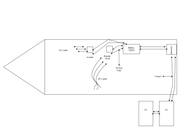
1) No. But you need fuses between the controller and the battery.
2) Yes, and this connection needs to be overcurrent protected (it wasn't from the factory). You can find resettable waterproof breakers on Amazon, like this one:
https://www.amazon.ca/Automotive-Circui ... HJ1ZQ&th=1
3) The inverter can be powered directly from the battery, or from the breaker panel if the battery-to-panel wiring and the panel can handle the high amp draw of the inverter. If it is powered directly from the battery, I recommend the kind of breaker that I linked above, so that you can turn the inverter off when it's not needed. A fuse would allow the inverter to continuously draw power, even on standy mode, and drain the battery. Better to have an accessible breaker. In any case, the line between the battery and the inverter MUST be overcurrent protected.
4) The maximum overcurrent protection equals: 2.25 * (largest load) + (sum of all other loads). The breaker shouldn't be larger than that. So with a 10Amp maximum current draw, 40 amps sounds oversized and a 20 amp breaker would be more appropriate. But still, 40A is waaaay better than the factory no-breaker situation.
5) The alternator is usually connected directly to the batteries. The cables from the battery to the motor are not fused on my boat, but the motor itself has fuses onboard.
As others have said on this thread, the current problem with lithium batteries is the cold-cranking amps (pun intended). Most modern lithium batteries of reasonable size have a maximum output of about 100amps, and 200Ah lithium batteries can usually hit 200 amps max discharge. Still nowhere near the 800 to 1000 amps that a traditional starting battery can pump out when starting a motor. So lithium is not necessarily the right battery, yet, for our Macs because of the large motors we use. The solution is a two-battery system: lithium for house loads and traditional for starting. I would love a lithium battery for the weight and added Ah, but then, I would need to be careful with the battery selector, and add a DC to DC charger to maintain both battery types, and then I could no longer use an ACR to automatically take care of all charging needs regardless of the selector position. So I'm staying with my traditional AGM system for now, until Lithium can give me starting amps I need.
Are you considering shore power, and/or a 120V battery charger?


 The solar 320 watts kept the engine running and fridge etc.
  I do have a 200 amp hour lithium battery installed. Lowest discharge was to 40%.(Rained all day)Took 2 days to get to 100%. I used the B2B to charge the start battery by swapping cables and changing the charge profile.
 On the list for replacing with better quality ones.